CNC Busbar Machine Operator Training: A Commissioning Handover Plan
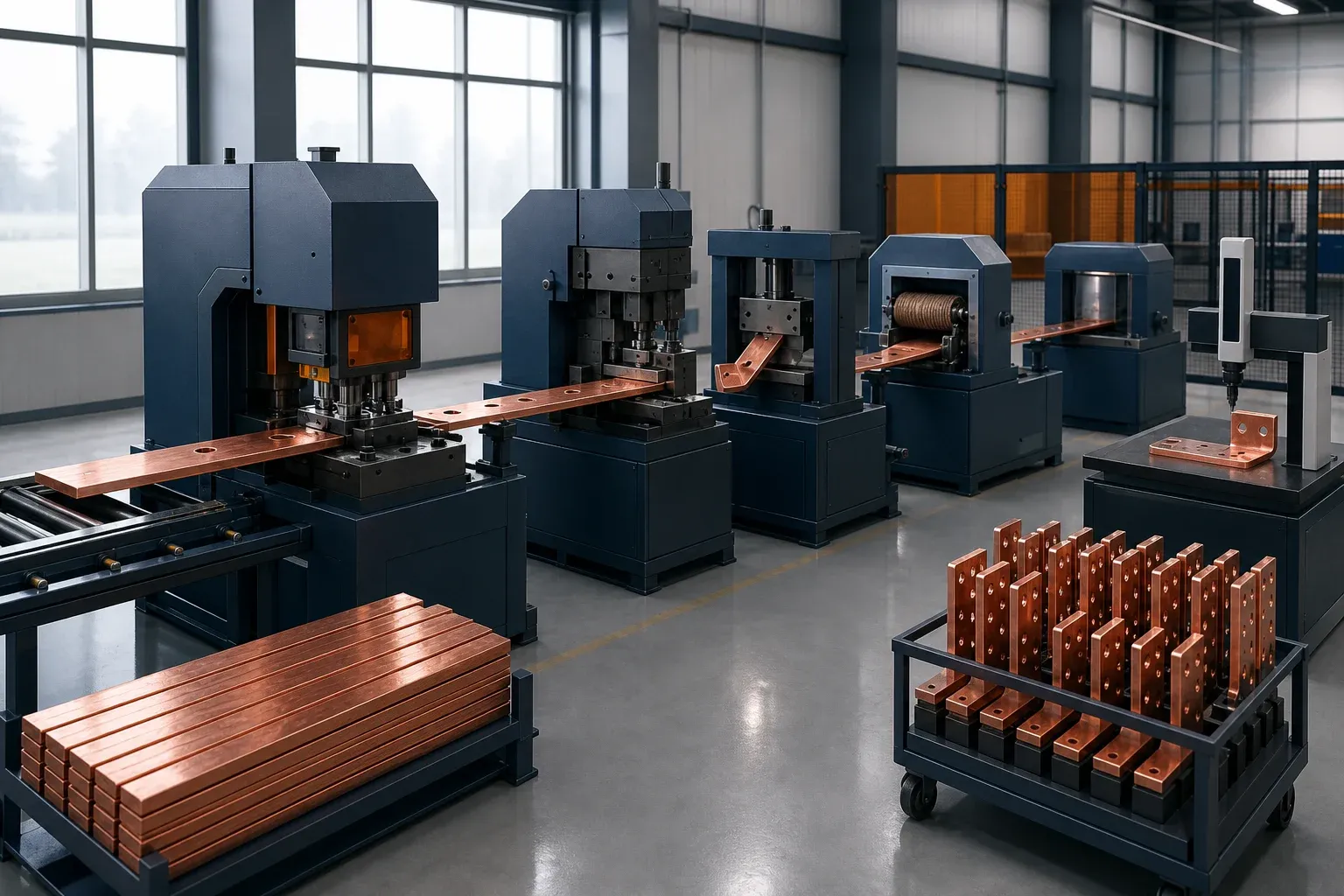
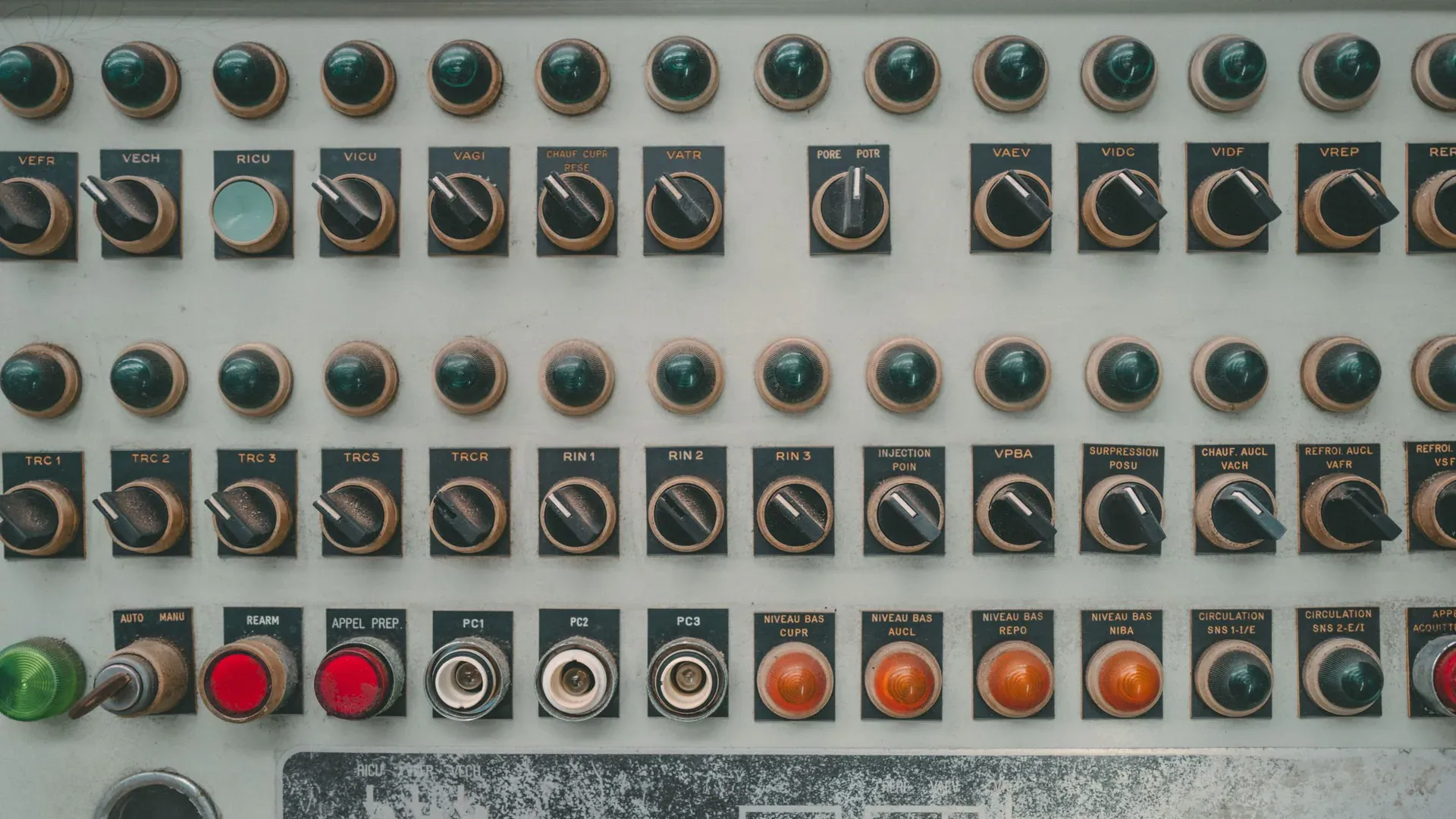
Convert CNC busbar machine commissioning into role-based operator, programmer, maintenance, and supervisor competence verified through teach-back and representative parts.
Explore comprehensive publications, factory direct specifications, and engineering assessments categorized under Engineering Guides.

Convert CNC busbar machine commissioning into role-based operator, programmer, maintenance, and supervisor competence verified through teach-back and representative parts.

Qualify copper busbar laser marking from identifier and mark zone through surface state, Data Matrix quality, MES transaction control, finishing, and final scan.

Design busbar holes around the real bend-deformation zone, contact pad, fastener access, material state, tooling, and a supplier-qualified capability envelope.

Build a practical hydraulic busbar bender maintenance plan around safe isolation, oil cleanliness, measured condition, bend quality, and controlled return to service.

Define CNC-to-MES responsibilities, busbar production data, interface choices, offline behavior, cybersecurity, and FAT tests before buying an Industry 4.0 connection.

Use XRF responsibly for tin- or silver-plated copper busbars by controlling coating models, calibration, geometry, sampling locations, uncertainty, and supplier records.

Create busbar drawings around functional datums, hole patterns, formed terminal planes, contact faces, coating, and first-article inspection without over-tolerancing.

Plan a reproducible busbar temperature-rise verification with controlled assembly configuration, loading, sensor locations, stability rules, acceptance limits, and records.

Calculate busbar bend allowance, separate tangent and outside dimensions, and calibrate a bend table before releasing CNC flat patterns.

Separate short-time thermal withstand from peak mechanical loading, then check busbar supports against the verified assembly configuration.

Calculate busbar thermal movement, distinguish fixed and sliding supports, and specify expansion joints without using bolted contacts as slip joints.

Diagnose punching burrs, choose a deburring route, and inspect busbar edges without rounding contact faces or leaving abrasive contamination.

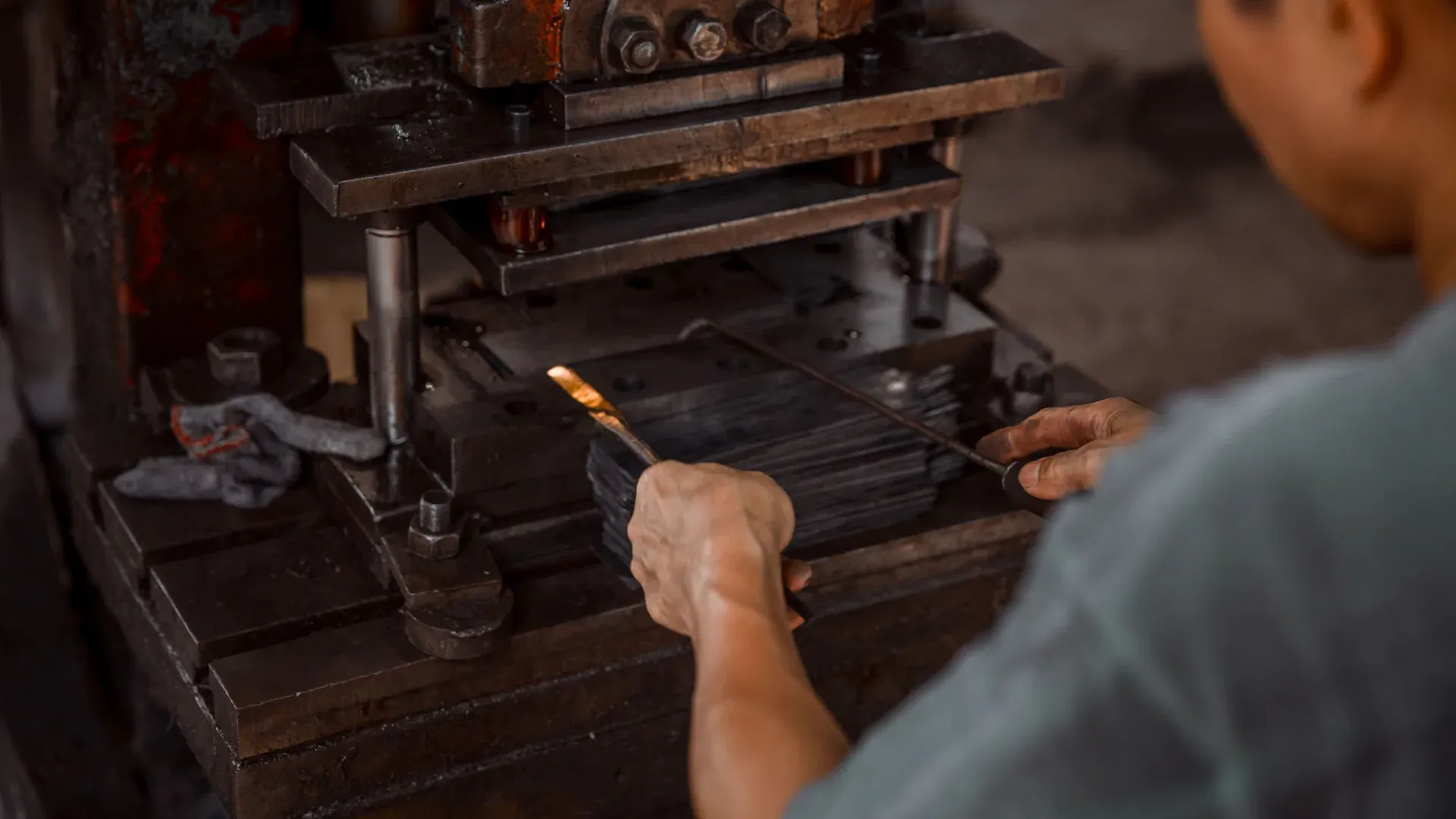
Follow copper busbar fabrication from material control and nesting through punching, shearing, bending, deburring, finishing, inspection, and traceability.

Understand how contact force, surface condition, plating, hole accuracy, flatness, torque procedure, and micro-ohm testing affect bolted busbar joints.

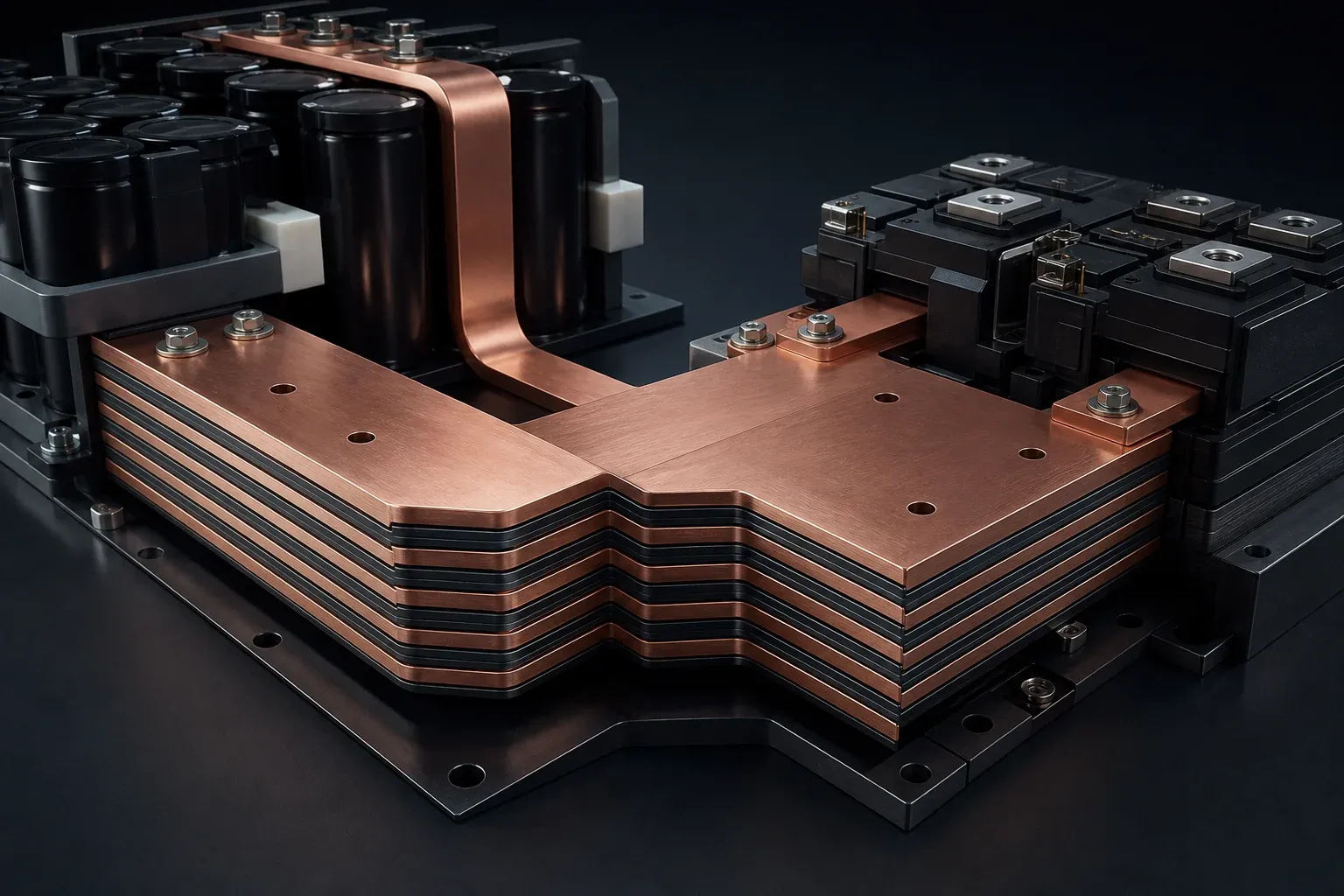
Plan low-inductance laminated busbars from current-loop geometry and dielectric stack-up through terminals, copper fabrication, lamination, and validation.

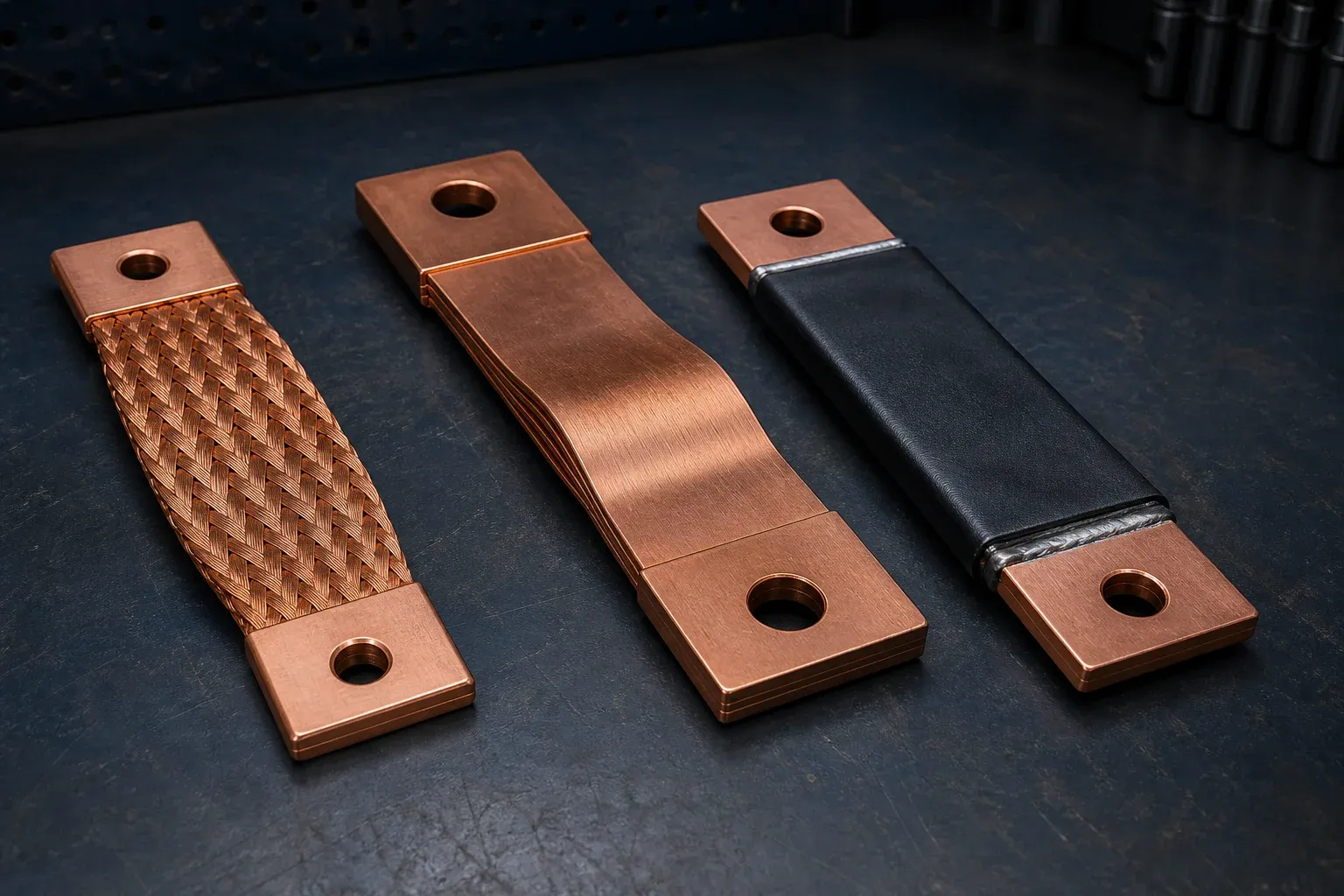
Compare foil, braided, and insulated flexible busbars by current path, movement, vibration, thermal expansion, terminal design, manufacturing, and inspection needs.

Compare NC and CNC busbar machines by program control, axis feedback, changeover, inspection data, maintainability, and the work each architecture suits.

Separate photovoltaic ribbon lines, junction-box forming equipment, and rigid busbar CNC machines before specifying equipment for a solar manufacturing project.

Calculate busbar punching force in kN from cut perimeter, thickness, and material shear resistance, then verify tooling, clearance, and machine capacity.

A B2B industrial engineering analysis on specifying precision servo-hydraulic busbar bending, tight insulation clearances, and laminated copper processing for high-power EV superchargers and battery packs.

An industrial guide for B2B switchgear manufacturers and cabinet design engineers on calculating busbar spacing layouts, joint contact resistance, and complying with international standards.

A highly technical B2B engineering guide for switchboard and panel builders on configuring turret die clearances, coordinates margins, and punch-and-die configurations for clean, burr-free red T2 copper processing.
Bypass standard trading companies. Speak directly with our chief application engineers to configure precise machine voltages, die tooling tolerances, and secure direct volume quotes.