
CNC Busbar Machine MES Integration: Build a Usable Data Contract
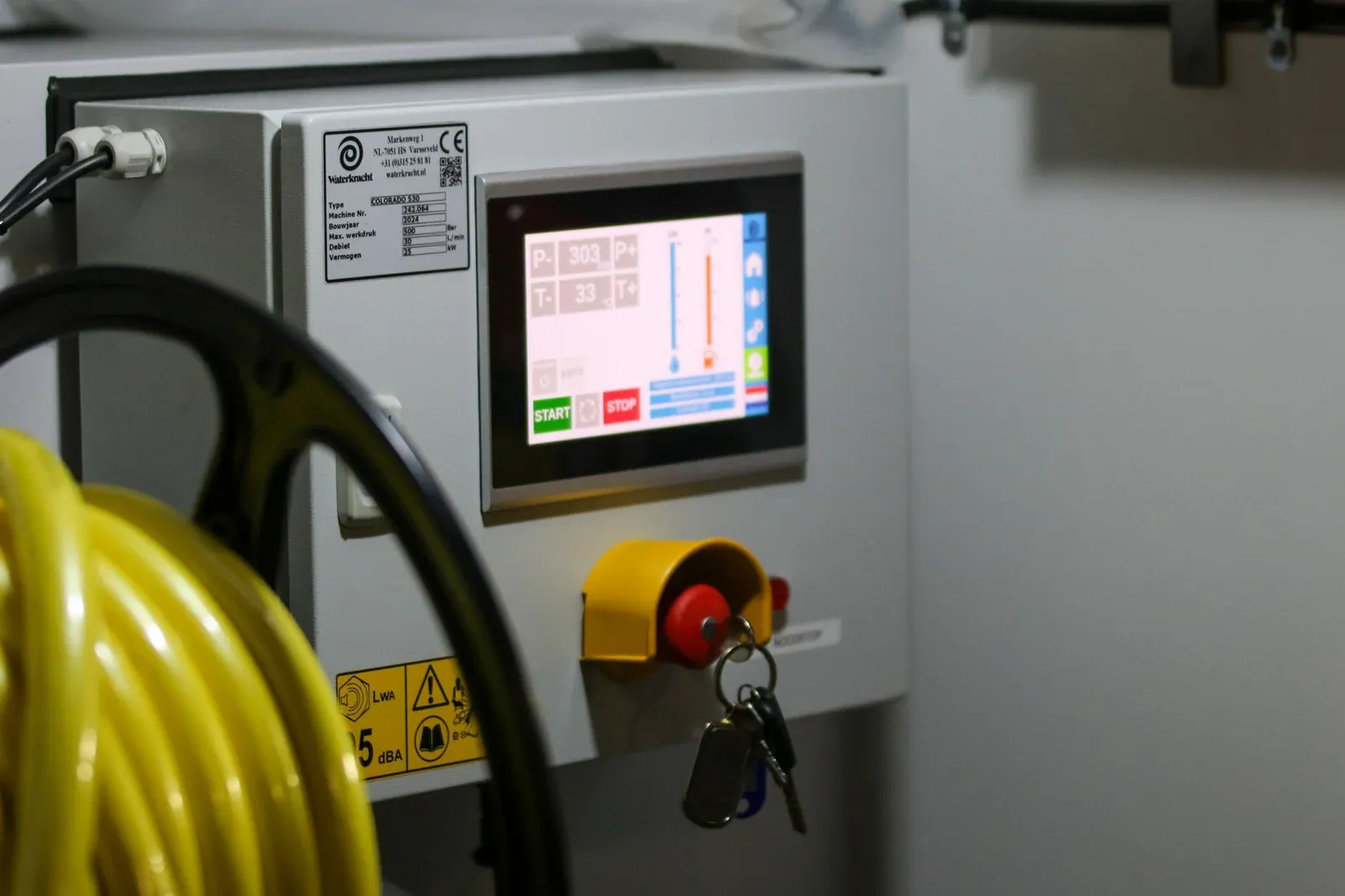
“Industry 4.0 ready” is not an interface specification. A CNC controller can expose data while the MES cannot identify which part was produced, which copper lot was used, or whether an uploaded completion message is a duplicate. Conversely, an over-ambitious integration can allow a business system to change machine behavior without adequate control.
A successful CNC busbar machine MES integration starts with the production decision the data must support. It then assigns responsibilities to ERP, MES, machine control, operators, and quality systems; defines a stable data contract; chooses a transport; and proves normal and abnormal behavior during acceptance.
Begin With the Production Decision the Data Must Support
Do not start by requesting “all PLC tags.” Start with one or two operational outcomes. Common projects include:
- releasing the correct drawing and program revision to the machine;
- linking each part or batch to a copper lot and production job;
- preventing use of an unapproved tool or material;
- collecting cycle, alarm, and completion events for capacity analysis;
- attaching inspection results and nonconformance disposition;
- providing downtime categories for maintenance or OEE reporting.
Each outcome needs different data and authority. Traceability may need reliable identifiers and timestamps but no remote machine commands. Program release may require a controlled download and positive revision check. OEE reporting needs a state model that distinguishes running, planned stop, starved, blocked, faulted, and offline conditions rather than a single “machine on” bit.
Define the first business question in plain language: “Can we prove which material lot and program produced this serial number?” That question becomes the acceptance criterion for the interface.
Place Each System at the Right ISA-95 Boundary
The ISA-95 standard series provides models and terminology for integrating enterprise and control systems. It helps teams separate production planning and operations management from direct process control.
For a typical busbar cell, ERP may own the customer order and high-level material demand. MES may own the production order, dispatch status, genealogy, and production result. The machine HMI and PLC own safe execution of the approved cycle, interlocks, motion, and local alarms. Quality systems may own inspection plans, calibrated equipment records, and nonconformance disposition.
The exact architecture varies, but the boundary must be explicit. An MES should not bypass a guard interlock or directly manipulate a hydraulic motion output. A PLC should not invent a new commercial order number when the network is unavailable. Operators need a defined local fallback that does not erase the record of who authorized it.
This is also why the label difference discussed in the NC versus CNC busbar machine guide is insufficient for integration procurement. Controller capability, data ownership, and the implemented interface must be verified at model and software-version level.
Define the Minimum Busbar Production Data Model
Use durable identifiers rather than filenames or free-text notes. A practical first version can be small:
| Object | Minimum fields | Why it matters |
|---|---|---|
| Production job | job ID, quantity, priority, status | connects machine work to the released order |
| Part | customer part, internal part, drawing revision | prevents production to an obsolete definition |
| Material | grade/temper where required, section, lot or heat ID | establishes genealogy and process context |
| Program | program ID, revision, checksum or approval state | proves which instructions were executed |
| Tooling | tool ID and required configuration | links quality and maintenance to the setup |
| Execution | machine, operator, start/end, result, quantity | creates the production event |
| Quality | inspection plan/result, nonconformance, disposition | separates produced from accepted quantity |
| Alarm/state | code, start/end, acknowledged state | supports diagnosis and capacity analysis |
Define field type, length, units, required/optional status, source system, allowed values, and time zone. Decide whether one execution record represents a single serialized busbar, a bundle, or a batch. If parts are not serialized, the genealogy model must still make the lot boundary clear.
Material identity deserves special treatment. Scanning a copper lot at the cell should validate it against the released job, but the machine should not infer grade from bar color or section. The supplier traceability protocol provides the wider quality context for controlled material and inspection records.
Choose a Transport Only After the Semantics Are Clear
OPC UA, REST APIs, message brokers, database interfaces, CSV/SFTP transfers, and barcode transactions can all be appropriate. The choice depends on latency, equipment capability, site standards, security, support, and lifecycle ownership.
The OPC Foundation publishes an information model for CNC systems and a separate OPC UA model for machine tools. These provide useful common structures, but naming a protocol does not define the buyer’s part revision, material genealogy, quality disposition, or recovery rule.
For every message or object, specify:
- who creates and owns it;
- the unique key and revision behavior;
- whether the operation is read, write, command, or acknowledgement;
- delivery and retry behavior;
- how the receiver detects duplicates;
- how errors are reported and reconciled;
- how backward compatibility is maintained after a software update.
A daily CSV may be sufficient for traceability reporting but unsuitable for program-release interlocks. A fast OPC UA connection may expose live states yet still fail genealogy if identifiers are inconsistent.
Design for Offline Operation, Duplicates, and Revision Conflicts
Networks fail. Servers restart. Operators scan twice. A job may be revised while the machine is disconnected. These are normal design cases, not rare exceptions.
Define whether already-released work can continue offline and for how long. Store pending events locally with unique transaction IDs and original timestamps. On reconnection, resend safely and make the receiver idempotent so the same completion does not double the produced quantity.
Protect revisions. If the MES sends revision C while revision B remains at the machine, the HMI should show a clear conflict and follow an approved resolution path. Do not silently overwrite an active program. Record who accepted any manual override and why.
Separate “MES unavailable” from “machine faulted.” Otherwise a network outage corrupts downtime data and may trigger unnecessary maintenance. The local operator screen should show connection state, last successful synchronization, queued records, and any job that cannot be reconciled.
Protect the Machine Network and Change Authority
Put industrial equipment on a managed network segment. Use authenticated accounts or certificates, least privilege, encrypted communication where supported, controlled remote access, and documented firewall rules. Disable unused services and avoid shared default credentials.
Read-only production monitoring is lower risk than remote commands. If the MES can release programs or parameters, define an approval workflow, permitted range, local confirmation, and audit trail. Safety functions remain in the machine’s validated control architecture; an enterprise application must not become an undocumented safety controller.
Back up the PLC/HMI application, interface configuration, certificates, data dictionary, and recovery procedure. State who owns the source code or configuration needed to maintain the connector. A custom gateway that only one contractor understands is a lifecycle risk even if the demonstration works.
Prove the Integration During FAT and Site Acceptance
Add interface tests to the broader CNC busbar machine FAT and SAT protocol. Use a simulator if the production MES is unavailable at the supplier’s factory, but keep the same schema and error behavior planned for the site.
The test set should cover more than a successful job:
- download an approved order and confirm every identifier;
- reject an unknown material lot or wrong part revision;
- run an approved job and upload completion plus quality status;
- interrupt the network during a cycle and verify local buffering;
- reconnect and confirm one—and only one—completion record;
- send a duplicate or out-of-order message and verify handling;
- change a program revision and verify the authorization path;
- reconcile machine, MES, and quality quantities at the end.
Retain message logs with sensitive credentials removed. Record software versions and configuration hashes so a later update can be compared with the accepted baseline.
The MES record becomes more useful when it is bound to the physical part by a verified identifier. The copper busbar laser-marking workflow covers mark-zone selection, Data Matrix quality, duplicate control, rework states and full-route scan qualification without assuming that a machine’s network connection includes a marking system.
Phase the Project Without Building an Unmaintainable Custom Stack
Begin with a narrow traceability loop: released job, part revision, material lot, execution result, and quality disposition. Once identifiers and recovery behavior are stable, add state analysis, tooling life, maintenance, or automatic program distribution.
When evaluating equipment through the busbar machinery catalogue, request the interface manual and a model-specific demonstration. Do not assume that a familiar PLC brand, Ethernet socket, or HMI export button provides the required OPC UA objects, security, licenses, or MES connector.
The deliverable is not a dashboard. It is an owned and tested data contract that survives network loss, software revisions, staff turnover, and the daily exceptions of production.
Frequently Asked Questions (FAQs)
Does an OPC UA port make a CNC busbar machine MES-ready?
No. OPC UA can provide a transport and information-model framework, but the project still needs defined tags or objects, identifiers, units, event behavior, write permissions, security, buffering, and acceptance tests that match the MES workflow.
What is the minimum useful MES dataset for busbar production?
Begin with a unique job and part revision, material lot, approved program revision, tooling identity, machine and operator, cycle timestamps, completion status, alarms, and the inspection or disposition linked to the produced part or batch.
Should a busbar machine stop when the MES connection is lost?
That is a controlled business and safety decision. Define which approved work may continue offline, how records are buffered, how duplicate uploads are prevented, how revisions are protected, and who authorizes recovery after the connection returns.
When should CNC-to-MES integration be tested?
Test the interface during FAT with simulated messages and failures, then repeat a site-acceptance set on the production network. Include wrong revisions, unknown lots, disconnect and recovery, duplicate messages, and result reconciliation—not only one successful order download.