
NC vs CNC Busbar Machines: Controls and Upgrade Decisions
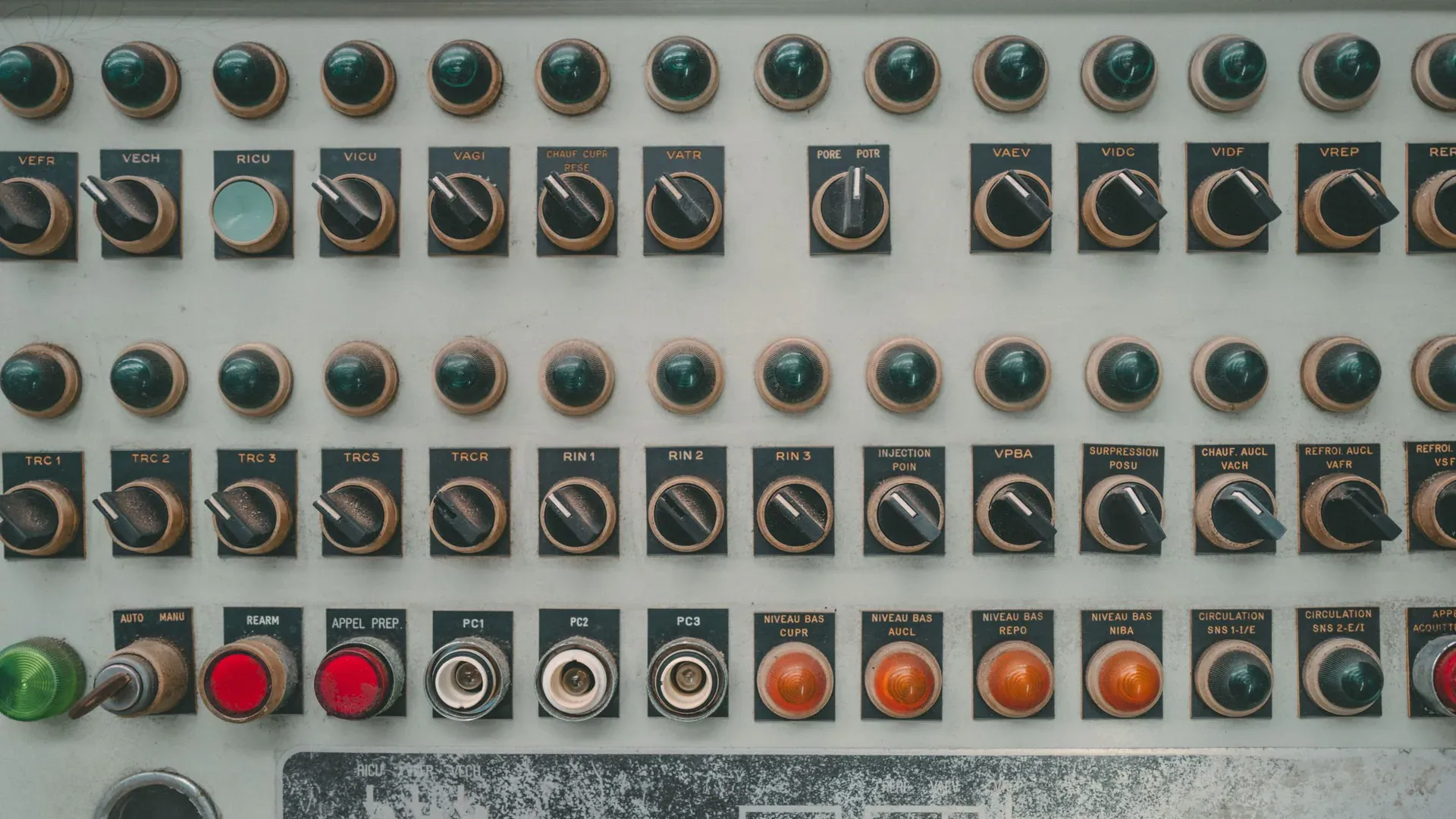
In busbar machinery, “NC” and “CNC” are often used as sales tiers rather than precise engineering descriptions. One supplier may call a PLC-controlled bender “NC”; another may sell a similar HMI and servo arrangement as “CNC.” The reliable comparison is therefore not the badge on the cabinet but the functions behind it.
CNC normally means that a computer stores and executes editable numerical programs. It does not automatically mean closed-loop control, ±0.1 mm accuracy, springback compensation or per-piece traceability. Those capabilities must be specified and verified separately.
Start with control, then inspect the machine architecture
Numerical control is the use of coded instructions to command machine motion or operations. Computer numerical control adds a computer-based controller that can store, edit and reuse programs. PTC’s explanation of CNC emphasizes computer control and reprogrammability; it also treats sensors and feedback as capabilities that can be integrated, not as the definition of CNC itself.
In a busbar shop, a practical control hierarchy might look like this:
| Control level | Typical operator task | What must still be checked |
|---|---|---|
| Manual stops and push buttons | Position material and trigger each operation | Stop accuracy, operator dependence, setup records |
| Simple PLC or vendor-described “NC” | Enter dimensions or select a fixed sequence | Program storage, axis feedback, correction method |
| CNC with stored part programs | Load or edit dimensions, hole patterns and sequences | Import format, simulation, permissions, backups |
| CNC with process integration | Reuse CAD-derived data and collect production records | Which axes are closed-loop, what is logged, data export |
The names overlap. Put the required behaviour in the RFQ instead of asking only whether the machine is CNC.
Open-loop and closed-loop are separate questions
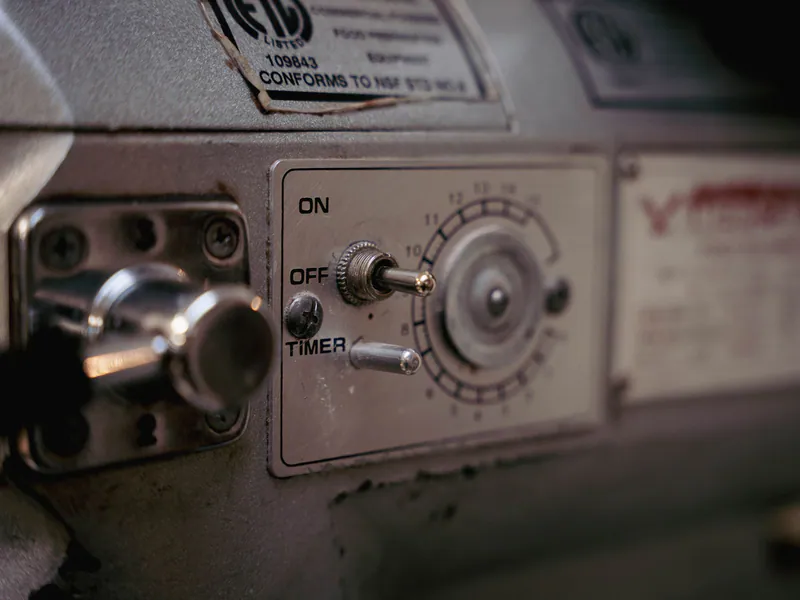
An open-loop axis sends a command without measuring whether the commanded position was reached. A closed-loop axis measures an output—commonly position, velocity, pressure or angle—and uses that feedback in its control strategy.
A machine can mix both approaches. For example, an X-axis may use an encoder for closed-loop positioning while the hydraulic punching stroke is controlled by pressure switches and fixed limits. A bending machine may measure ram travel accurately but still depend on an operator-entered springback correction. Conversely, a dedicated older controller may use position feedback even if the supplier calls the machine NC.
Ask for an axis-by-axis control diagram:
- What is commanded?
- What sensor measures the result?
- Where is the feedback loop closed?
- What resolution does the sensor provide?
- What accuracy is guaranteed at the finished part?
- How is calibration performed and recorded?
- What happens after a sensor or communication fault?
Accuracy comes from the complete process
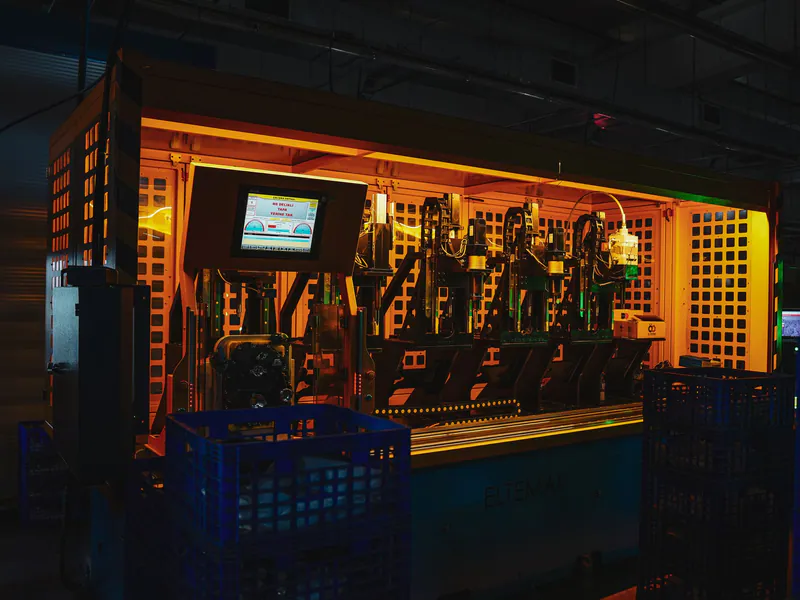
The controller influences repeatability, but it is only one element. Hole-pitch accuracy also depends on material clamping, guide alignment, backlash, bar straightness, tool clearance and how the measurement is referenced. Bending accuracy depends on material temper, thickness variation, tooling, ram measurement, springback logic and part support.
This is why “NC equals ±0.3 mm and CNC equals ±0.1 mm” is not a defensible rule. The current DHCNC-BP-60 product specification states ±0.20 mm/m hole-pitch accuracy. The DH303-8P multi-function machine states ±0.5° bending accuracy, while the dedicated DHAC-BB-H bender states ±0.2°. Those are model-level specifications, not generic CNC values.
For FAT, give every supplier the same material, thicknesses and drawings. Measure a batch after the machine reaches normal operating temperature, and report the distribution rather than a single best part.
CNC mainly changes programming and changeover economics
The strongest case for CNC is usually high mix, not a universal speed claim. Stored programs reduce repeated data entry, and a validated part can be recalled without rebuilding a manual stop setup. CAD or DXF import can further reduce transcription if the implementation validates geometry, units, tool availability and collision limits.
The benefit is largest when a shop:
- runs many part numbers in small batches;
- repeats legacy parts at irregular intervals;
- changes hole patterns and dimensions frequently;
- needs controlled program revisions;
- wants role-based access and backups;
- needs production records linked to work orders.
A dedicated line running one stable part may gain little from a sophisticated interface. In that case, mechanical reliability, cycle time, serviceability and poka-yoke can matter more than program flexibility.
Data logging is optional, not inherent to CNC
A CNC can make traceability easier because the controller already knows the selected program and cycle state. It still needs software, identifiers, storage and an export method to create useful records.
Specify the actual data contract. Examples include program revision, operator ID, material lot, cycle timestamp, alarm history, inspection result and measured angle. Confirm retention period, file format, network security and whether records can be tied to a serial number or batch.
For projects that must exchange those records with production systems, the CNC busbar machine MES integration guide defines ISA-95 responsibilities, minimum data objects, offline recovery, interface security, and FAT test cases. A CNC label or Ethernet port does not establish that capability.
IEC 61439 does not require every busbar to be made on a closed-loop CNC or logged per piece. It establishes requirements and verification for low-voltage switchgear and controlgear assemblies; the latest IEC 61439-1 scope should not be turned into a machine-feature mandate. Automotive PPAP or a customer drawing may create stricter evidence requirements, but those come from the customer and quality plan.
Maintenance risk changes rather than disappears
Simpler controls can be easier to troubleshoot locally, but aging proprietary boards, obsolete displays and undocumented ladder logic can make an old machine difficult to support. CNC adds software, storage, network and sensor dependencies, while potentially improving diagnostics and reducing manual setup.
Compare the lifecycle package:
- controller, drive and sensor model numbers;
- backup and restore procedure;
- availability of PLC and HMI source or service access;
- replacement-part lead times;
- remote-access security and owner control;
- calibration tools and intervals;
- ability to run safely if optional network services are unavailable.
“Less electronics” and “more automation” are not sufficient maintenance strategies.
Use production evidence to decide on an upgrade
Keep an existing machine if it is safe, supportable and consistently makes the required parts. Consider a CNC replacement when evidence shows that control limitations are becoming a production constraint.
| Evidence from the shop | Likely response |
|---|---|
| One stable part, low changeover, acceptable capability | Maintain and calibrate the existing machine |
| Frequent manual coordinate entry errors | Add program control or replace with stored-program CNC |
| Long mixed-batch changeovers | Evaluate CNC, tooling layout and offline preparation together |
| Rework rises after warm-up | Diagnose hydraulics, tooling, feedback and compensation before blaming the NC label |
| Customer requires program revision and batch records | Specify logging and data export explicitly |
| Critical control parts are obsolete | Compare retrofit risk with replacement TCO |
Use changeover time, first-piece scrap, batch capability, downtime and support cost as the business case. Do not rely on unsupported claims that CNC automatically halves production time or raises profit by a fixed percentage.
The broader CNC busbar machine buyer’s guide explains how to turn these requirements into an RFQ and FAT. The upgrade decision should follow the work mix and evidence, not the age of the control panel.
Frequently Asked Questions (FAQs)
What is the main difference between an NC and CNC busbar machine?
CNC denotes computer-based numerical control with stored, editable programs and a programmable user interface. NC is the broader numerical-control concept and is often used by busbar vendors for simpler controllers or fixed sequences. The labels do not, by themselves, prove accuracy, feedback, or data-logging capability.
Is every NC busbar machine open-loop and every CNC machine closed-loop?
No. Open-loop or closed-loop describes the axis and process-feedback architecture, not whether the controller is called NC or CNC. A CNC machine can have closed-loop positioning on one axis and open-loop control on another, while an older numerical-control system may also use feedback.
Is CNC always more accurate than NC?
No category-level tolerance is guaranteed. Accuracy depends on the frame, tooling, guides, feedback devices, calibration, control logic, material support and inspection method. Compare measured results on your parts rather than accepting an NC-versus-CNC tolerance claim.
When should a shop replace an older NC busbar machine?
Consider replacement when changeovers, programming limits, unavailable parts, recurring calibration loss, manual transcription, or missing production records prevent the shop from meeting current work. A stable machine running one repeat part can remain economical if it still meets safety and quality requirements.
DHCNC-BP-60 CNC Punching & Shearing Workstation
Discover details, parameters, standard dies packages, and factory quotes.