
How to Import a CNC Busbar Machine: Procurement Guide
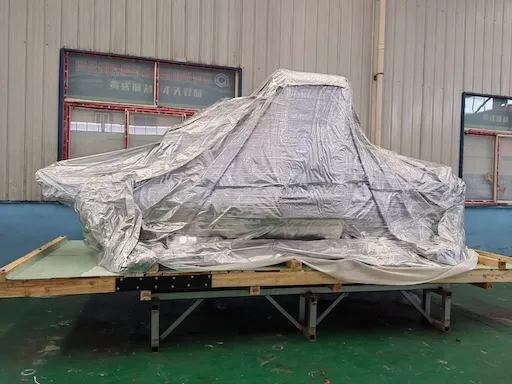
Importing a CNC busbar machine from China is a connected engineering and logistics project. The machine specification, payment milestones, FAT, packing, customs record and installation plan must describe the same configuration. When one document is vague, risk reappears later as a charge, delay or acceptance dispute.
This guide follows the project from requirement definition to handover. Destination-specific laws, duties and taxes change; use a licensed customs broker, bank and legal adviser for current transaction advice.
Phase 1: Define the Machine and Destination
Create a controlled requirement sheet before asking for freight or duty estimates. Include:
- machine function and model architecture;
- material grade, width and thickness by operation;
- representative drawings and required tolerances;
- tooling, software, guarding and documentation scope;
- machine dimensions, net/gross weight and lifting method;
- plant voltage, frequency, phase and control voltage;
- final delivery address and access restrictions;
- requested installation, training and commissioning scope.
Use the CNC busbar machine selection guide to compare a three-station workstation, dedicated CNC bender and punching/shearing center. Freight estimates based on an unconfirmed model are rarely reliable.
Phase 2: Qualify the Supplier
Verify that the legal seller, manufacturing location, bank beneficiary and export documents are consistent. Then audit the technical organization:
- observe assembly, electrical integration and testing live or through an independent inspector;
- record the proposed PLC/CNC, HMI, drives, hydraulics and safety components;
- confirm which processes are in-house and how outsourced work is accepted;
- review serial-number, inspection and software-backup controls;
- verify service ownership and critical-spare availability.
Use the detailed CNC busbar machine factory audit checklist and retain its findings with the order file.
At this stage, decide whether application engineering, import coordination and local service will come from the manufacturer, a distributor or a documented hybrid arrangement. The factory-direct versus distributor buying guide provides a responsibility matrix for making the two channels commercially comparable.
Phase 3: Normalize the Commercial Offer
Ask the supplier to separate the quotation into clear lines:
| Cost block | Required detail |
|---|---|
| Machine | model, serial/configuration schedule and options |
| Tooling | included sizes, quantities, material and custom drawings |
| Software | licenses, expiry, device binding, backup and updates |
| FAT | sample material, inspection, retest and third-party access |
| Export packing | preservation, case, lifting supports and markings |
| Origin logistics | inland haulage, export clearance and port handling |
| Main transport | mode, route basis, insurance and validity |
| Destination | excluded terminal, clearance, delivery and rigging costs |
| Services | installation days, travel, training and buyer prerequisites |
The CNC busbar machine price guide contains a landed-cost worksheet. Do not compare EXW, FOB, CIF and delivered quotes as if their scope were the same.
Phase 4: Select the Incoterm Deliberately
Incoterms allocate tasks, cost and risk; they do not determine title, payment, customs classification or warranty.
| Term | Seller’s core delivery point | Buyer planning focus |
|---|---|---|
| EXW | seller’s named premises, subject to the agreed rule | origin loading, export formalities, all transport and import work |
| FOB | loaded on the named vessel at the origin port | main freight, insurance choice, import and onward delivery |
| CIF | freight and minimum insurance arranged to named destination port; risk transfers under the rule | insurance adequacy, import, terminal charges and inland delivery |
| DAP | ready for unloading at the named destination place | import clearance, duties/taxes, unloading and site access |
State the named place or port and the applicable Incoterms edition in the contract. Ask the forwarder to list charges that are not included, particularly destination terminal, storage, examination, demurrage and special handling.
Phase 5: Confirm Customs Classification and Controls
Classification depends on the machine’s principal function and destination tariff schedule. Provide the broker with:
- technical description and brochure;
- photos and process video;
- functions performed and how they are integrated;
- power, controls and major components;
- country of origin and transaction value;
- proposed HS/HTS code from the supplier, clearly marked as a proposal.
Request a written broker opinion or binding ruling where justified. Also check current import controls, additional duties, taxes, product-safety obligations and documentation requirements. Reconfirm them shortly before shipment because trade measures can change between quotation and arrival.
Phase 6: Write Acceptance and Payment Gates
Payment percentages are commercial decisions, not a fixed industry law. Link payment to evidence that can be inspected:
| Gate | Evidence |
|---|---|
| Order release | signed specification, approved drawings and beneficiary verification |
| Production milestone | serial-numbered build record or agreed progress inspection |
| FAT release | signed raw results and closed deviation list |
| Shipment release | approved packing list, preservation photos and document draft |
| Final handover, if retained | receiving or commissioning record defined in the contract |
Define remedies and retest responsibility before the deposit. A FAT clause is incomplete if it does not state the sample, method, limit and response to failure.
Phase 7: Conduct a Buyer-Specific FAT
Use actual material grades and representative drawings. Record:
- sample IDs and drawing revisions;
- tooling and machine settings;
- hole position, bend angle, cut length and edge-condition results as applicable;
- repeated-part data rather than a single best part;
- measured cycle boundaries and operator work;
- alarm, restart, backup and restore checks;
- safety tests required by the purchase specification;
- deviations, owner, due date and retest evidence.
Do not release the machine on edited demonstration footage alone. Retain raw measurement sheets and connect them to the serial number.
Phase 8: Control Preservation and Packing
Heavy machinery can arrive undamaged only if its moving assemblies, corrosion-sensitive surfaces, moisture exposure and lifting loads are addressed.
Before closing the case, verify:
- rust preventive on exposed machined surfaces;
- moisture barrier and desiccant plan suited to the route;
- blocked moving heads, tables and accessories;
- separately secured tooling and spares;
- safe lifting points and center-of-gravity instructions;
- serial number, case number, dimensions and gross weight markings;
- complete photo set before wrapping, after wrapping and after case closure.
The packing list should identify each loose item well enough for receiving inspection.
Phase 9: Prepare the Shipping Document Set
Exact requirements vary by destination and payment method, but the working document register commonly includes:
- commercial invoice;
- packing list;
- transport document draft and final copy;
- certificate of origin when required;
- insurance evidence when included;
- machine serial-number and configuration schedule;
- wood-packaging compliance evidence where applicable;
- broker-requested technical description;
- manuals, electrical/hydraulic drawings and software backups.
Review names, addresses, values, marks, quantities and weights across all documents before final issuance. Small inconsistencies can delay clearance.
Phase 10: Make the Receiving Site Ready
Complete these checks before the machine arrives:
- doorway, dock, aisle and turning clearances;
- floor loading and foundation requirements;
- crane/forklift capacity, fork spacing and lifting accessories;
- electrical isolation, cable size, phase sequence and grounding;
- hydraulic oil, air, cooling or extraction utilities where required;
- network and remote-support permission;
- operators, maintenance staff and sample material available for commissioning.
Photograph the unopened case on arrival. Record visible damage on the carrier document before moving or opening it, then check every loose item against the packing list.
Phase 11: Close the Handover
The project is complete when the buyer can operate, maintain and recover the machine—not merely when it powers on. Close out:
- installation and level/alignment record;
- site acceptance parts and measurements;
- operator and maintenance training attendance;
- program, parameter and PLC/HMI backups supplied under the contract;
- spare-parts and consumables inventory;
- open issues with owners and dates;
- warranty start point and support contacts.
Import Project Control Sheet
Use one shared register with these columns: requirement, responsible party, due date, evidence link, acceptance status and exception owner. The register should cover engineering, commercial, freight, customs and site-readiness tasks. This prevents a locally “complete” activity from hiding a downstream dependency.
When you are ready to quote, send the machine type, material range, drawings, power supply and destination together. That information produces a more useful offer than asking only for the price of a “CNC busbar machine.”
Frequently Asked Questions (FAQs)
Which Incoterm is best for importing a CNC busbar machine?
There is no universal best term. FOB often gives experienced buyers control of the main freight; CIF can simplify origin freight pricing but still transfers risk under the Incoterms rule; DAP can reduce coordination work while the buyer remains responsible for import clearance and duties. Compare written scope, risk transfer and excluded destination charges.
How should import duties be estimated?
Give the machine description, function, origin, value and proposed classification to a licensed customs broker in the destination country. Rates and trade measures can change, and similar machines may fall under different subheadings. Do not use an undated online percentage as a purchase-order assumption.
What should be completed before the final shipment release?
Close FAT deviations, approve the serial-numbered configuration, verify tooling and spares against the packing list, receive program backups and manuals, inspect preservation and case markings, and confirm transport documents and receiving-site readiness.
DHCNC-BP-60 CNC Punching & Shearing Workstation
Discover details, parameters, standard dies packages, and factory quotes.