
CNC Busbar Machine RFQ: A Specification Checklist for Comparable Quotes

A useful CNC busbar machine quotation starts with the buyer’s parts, not the supplier’s model name. If the RFQ only asks for a “three-in-one busbar machine,” suppliers can quote different material ranges, tool packages, control levels and service boundaries under apparently similar descriptions. The lowest price may simply contain the most exclusions.
The objective is not to make the longest specification. It is to create one set of inputs that lets engineering, production and purchasing compare compliant offers on the same basis.
Define the Part Family Before Defining the Machine
Start with the work the equipment must accept. A representative-part pack should include controlled drawings or neutral CAD files, revision status, annual or monthly demand, batch size and the conductor specification. Remove customer identifiers if necessary, but do not remove the geometry that makes the part difficult.
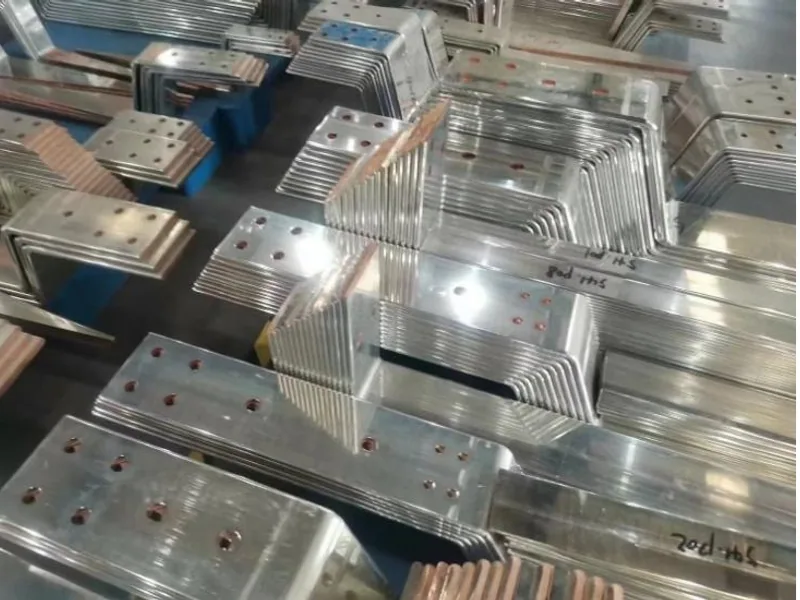
Build a part-family table with these fields:
| Input | What the supplier needs to know | Why it changes the offer |
|---|---|---|
| Material | copper or aluminum grade, temper and finish | affects punching, shearing and springback behavior |
| Size envelope | minimum and maximum width and thickness | sets capacity and handling boundaries |
| Features | holes, slots, embossing, corner forms and cut profiles | determines standard and custom tooling |
| Bends | flat, edge, offset, U-bend and sequence constraints | determines tooling access and bend capability |
| Tolerances | drawing characteristic and governing datum | makes acceptance measurable |
| Production mix | volume by family, lot size and change frequency | influences automation and tool-change needs |
Do not submit only the largest bar. A narrow part with closely spaced holes or a short return bend may be more demanding than the maximum cross-section. Include frequent parts as well as boundary parts so the supplier can propose a practical configuration rather than a machine that passes one extreme test but is inefficient for daily production.
The CNC busbar machine selection guide can help separate multi-function workstations, dedicated punching-and-shearing lines and bending centers before the RFQ is released.
Convert Demand Into a Production Requirement
Avoid using a strokes-per-minute figure as the required output. Ask the supplier to estimate cycle time for identified sample parts and state what the estimate includes: loading, positioning, punching, shearing, bending, tool changes, unloading and operator work.
Provide a demand profile rather than one annual total:
- normal weekly requirement by part family;
- peak requirement and duration;
- shifts and planned production minutes;
- expected batch sizes and changeovers;
- required good-part yield;
- upstream and downstream constraints;
- growth case used for capital approval.
This allows the supplier to identify the likely bottleneck and lets the buyer test the assumption later. For a formal capacity model, use the busbar machine capacity and OEE method rather than treating nominal strike frequency as finished parts per hour.
Specify Operations, Tooling and Accepted Outputs
Create one row for every required operation. State the part reference, material, characteristic, tolerance source, inspection method and whether the tool is included in the base quote.
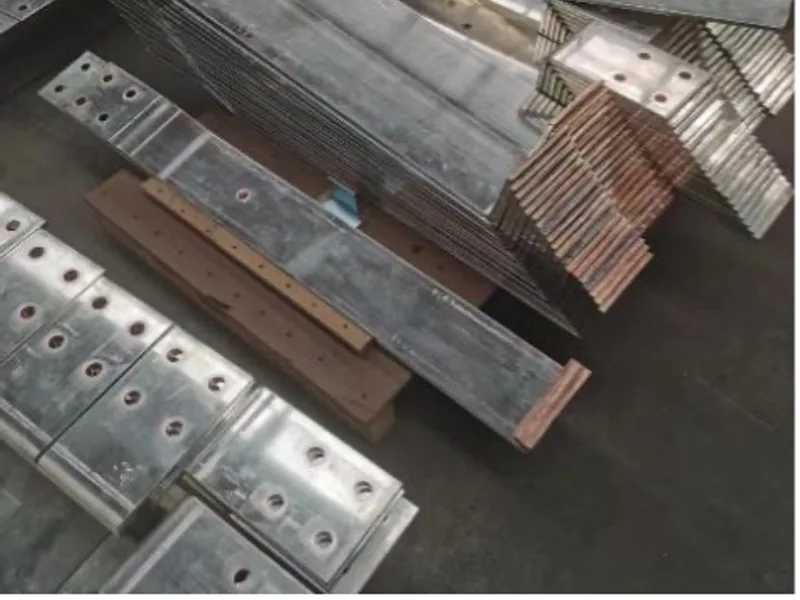
For punching, identify round-hole diameters, slots, notches, embossing and any custom shape. For shearing, define length and edge requirements. For bending, specify the bend family, internal radius or tooling constraint, angle, location, orientation and any springback-compensation expectation.
Then request a tooling schedule containing:
- tool identification and drawing where custom;
- compatible operation and material range;
- quantity supplied with the machine;
- holder, adaptor and storage requirements;
- expected setup method;
- resharpening or replacement criteria;
- consumable lead time and reorder reference.
A vague line such as “standard tools included” is not comparable. One supplier may include the buyer’s working hole library while another includes only demonstration sizes. The detailed busbar machine tooling package guide explains how to turn the part-family table into an initial tool set.
Make Controls and Data Deliverables Explicit
Controls are often described with broad terms such as CNC, automatic or smart. Ask what the operator can actually do and what files the buyer receives.
The RFQ should address program creation and editing, drawing import if required, language, recipe storage, user roles, parameter backup, alarm history, production counters, remote-support method and software licensing. If the equipment will connect to a plant network, define the permitted interfaces and cybersecurity review boundary. Do not assume an internet-connected service feature is acceptable to the buyer’s IT team.
State the destination electrical supply, frequency, phase arrangement and plant standards. Require the supplier to identify any transformer, stabilizer, air supply, hydraulic medium, extraction or network dependency rather than leaving it for installation day.
Separate Machine Scope From Site Scope
Ask every bidder to complete a responsibility matrix. Useful rows include packing, inland transport, export documents, marine freight, insurance, customs clearance, unloading, rigging, foundation, electrical connection, commissioning, test material, training and disposal of packaging.
Use a named Incoterms rule with a named place and edition, but do not let the Incoterm stand in for a complete scope. It allocates particular delivery obligations; it does not define tooling, performance, site readiness or acceptance.
Also require a list of exclusions. An explicit exclusion can be priced and assigned. An unstated assumption becomes a late change order.
Attach the Acceptance Method to the RFQ
Performance requirements need a verification route. The RFQ should identify the representative materials and parts for factory acceptance, the measurements to be recorded, the run conditions, witness arrangements and the treatment of failed or open items.
The CNC busbar machine FAT and SAT protocol provides a detailed test structure. Keep that test protocol separate from the RFQ compliance matrix: the RFQ defines what is required; the acceptance document defines how delivery will be judged.
Commercial equipment contracts commonly rely on annexes for the technical description, schedule, documentation, tests, spares and training. The ICC Model Contract for the Turnkey Supply of an Industrial Plant illustrates that annex-based structure. A publicly filed set of capital-equipment purchase terms likewise shows why the purchase specification and scope of work must be identified contractually. These are drafting references, not substitutes for project-specific legal review.
Normalize the Commercial Offer
Before comparing totals, place every quote into the same cost structure:

| Cost block | Base quote | Option | Buyer-supplied | Excluded |
|---|---|---|---|---|
| machine and selected options | ||||
| working tool package | ||||
| critical spares and consumables | ||||
| packing and transport | ||||
| duties, taxes and brokerage | ||||
| installation and commissioning | ||||
| operator and maintenance training | ||||
| acceptance support and travel | ||||
| software, licenses and remote support |
Record quote currency, validity, payment milestones, production lead time, shipment basis and warranty start trigger. Compare delivered, commissioned scope—not just the machine line.
Use a Compliance Matrix That Forces Clear Answers
For each requirement, provide columns for Comply, Deviate and Not Included, plus the supplier’s evidence and quotation reference. A bidder should not be able to answer the whole specification with “confirmed.”
Pay particular attention when:
- a claimed range is not demonstrated on the specified material;
- accuracy is stated without a datum, length or test method;
- cycle time excludes normal handling or tool change;
- custom tools have no drawings or replacement route;
- installation is offered before site inputs are known;
- warranty coverage lacks response and remedy terms;
- software or backups remain controlled only by the supplier.
The final RFQ pack should contain the scope statement, part-family data, operation matrix, utility information, documentation list, responsibility matrix, commercial response form and draft acceptance plan. Suppliers can then propose different technical solutions, but purchasing still receives offers that can be compared and defended.
Frequently Asked Questions (FAQs)
What information should a CNC busbar machine RFQ include?
Include representative parts, conductor grades and sizes, required punching, shearing and bending operations, tolerance sources, production mix, utilities, tooling, controls, documentation, acceptance tests, training, spares, delivery terms and supplier exclusions.
Should an RFQ specify machine force or finished-part performance?
Use both where relevant, but make accepted-part performance the commercial outcome. Rated force alone does not prove that the machine can make the buyer's hole, cut and bend families within the required tolerance and cycle conditions.
How can buyers compare quotations from different busbar machine suppliers?
Issue one compliance matrix, require each supplier to answer every line with Comply, Deviate or Not Included, and normalize tooling, freight, installation, training, spares, warranty and acceptance scope before comparing price.
Which parts should be sent to suppliers during the RFQ stage?
Send a controlled sample set covering the practical production envelope: common runners, the thickest and widest material, difficult hole-to-bend relationships, recurring custom features and at least one changeover-heavy family.