
FOB vs CIF vs DAP: Complete Shipping Guide for CNC Busbar Machines from China
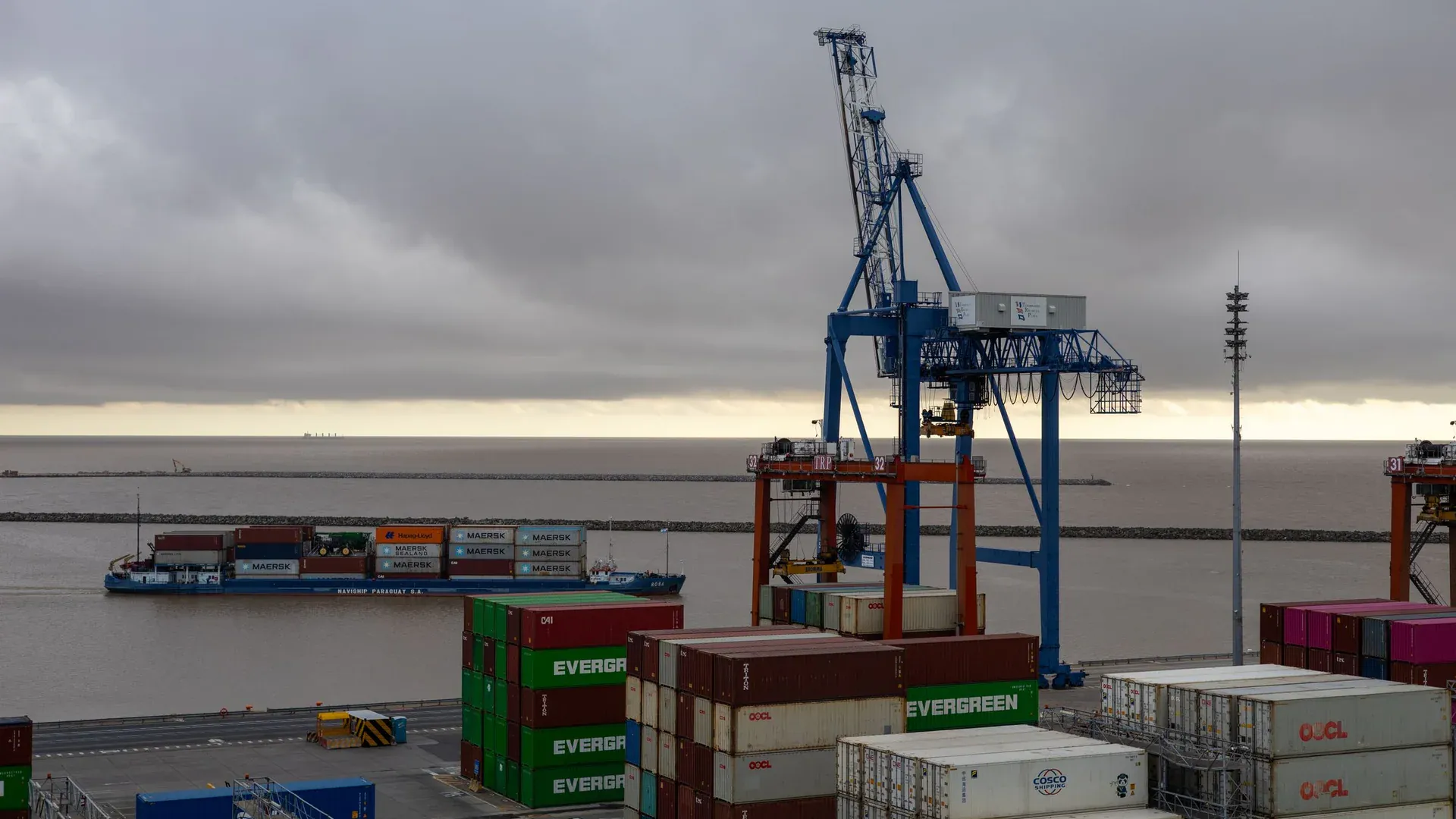
Importing a 3-in-1 CNC busbar processing machine from China in 2026 involves navigating three critical logistics layers: Incoterm selection, container loading compliance, and destination-side customs clearance. Under FOB Qingdao, you pay the ex-works machine cost plus local port charges (approximately $800-1,200 for documentation, THC, and customs export filing), then contract your own ocean freight at current spot rates of $2,800-$4,200 for a 20ft container to US West Coast ports. CIF (Cost, Insurance, Freight) bundles the ocean freight and minimum marine insurance (0.3% of cargo value) into the supplier’s invoice, simplifying the transaction but typically adding a 3-7% markup over negotiated spot rates. DAP (Delivered at Place) extends supplier responsibility all the way to your factory door, including inland trucking from the destination port. According to Freightos Baltic Index data, Asia-US West Coast rates have stabilized around $2,800-$3,500 per FEU in mid-2026. For busbar machines classified under HS 8462.XX, US importers face base MFN duty rates of 4.4% plus the active Section 301 tariff of 25% on Chinese-origin machine tools. Our factory in Jinan has shipped machines to 40+ countries, and I will walk you through every cost line item, container loading constraint, and customs clearance pitfall that affects your landed cost calculation.
How Do FOB, CIF, and DAP Incoterms Actually Affect Your Landed Cost?
Most first-time buyers fixate on the ex-works machine price and ignore the Incoterm selection, but the delivery term you choose can swing your total landed cost by 7-12%. Understanding the practical differences between FOB Qingdao, CIF, and DAP is the single most impactful logistics decision you will make. At DH CNC, we quote all three terms daily, and I have seen customers save thousands of dollars simply by matching the right term to their internal logistics capability.
Here is a real cost breakdown for shipping one DH303-8P 3-in-1 CNC busbar machine from our Jinan factory to three common destination ports: Houston (US Gulf Coast), Rotterdam (Netherlands), and Veracruz (Mexico).
| Cost Component | FOB Qingdao (You Control Freight) | CIF Houston / Rotterdam / Veracruz (Supplier Arranges Freight) | DAP Your Factory (Supplier Delivers to Door) |
|---|---|---|---|
| Ex-Works Machine Price | $42,000 - $48,000 (DH303-8P) | Included in CIF quote | Included in DAP quote |
| Inland Trucking Jinan → Qingdao Port | $350 - $500 (covered by supplier in FOB quote) | Included | Included |
| Chinese Export Customs Clearance & THC | $400 - $600 (Terminal Handling Charge) | Included | Included |
| ISPM 15 Fumigated Wooden Crating | $600 - $900 (vacuum-sealed, moisture barrier) | Included | Included |
| Ocean Freight (20ft Container) | $2,800 - $3,500 (US West Coast) / $3,800 - $4,200 (US Gulf) / $2,400 - $3,200 (Rotterdam) / $3,500 - $4,500 (Veracruz) | Supplier-managed freight (3-7% margin built in) | Included |
| Marine Insurance | 0.3-0.5% of cargo value (you arrange) | Included at minimum 0.3% CIF value | Included (supplier insures full DAP value) |
| Destination Port Charges & Customs Broker | $800 - $1,500 (your broker) | $800 - $1,500 (your broker) | Included |
| Import Duty (US: 4.4% MFN + 25% Section 301) | $12,348 - $14,112 (calculated on CIF value) | $12,348 - $14,112 (calculated on CIF value) | $12,348 - $14,112 (calculated on CIF value) |
| Inland Trucking Port → Your Factory | $600 - $1,800 (distance-dependent) | $600 - $1,800 (distance-dependent) | Included |
| Total Estimated Landed Cost (Houston example) | $59,898 - $72,912 | $64,000 - $77,500 | $72,000 - $86,000 |
The lesson is straightforward: if you have an established freight forwarder, FOB Qingdao gives you the most cost control. Your forwarder can consolidate shipments, negotiate better spot rates, and expedite documentation. If this is your first import and you lack a freight relationship, CIF eliminates complexity and transfers ocean transit risk to the supplier until the vessel reaches your destination port. Choose DAP only when you need a fully hands-off experience and are willing to pay a 15-20% premium over FOB for the convenience.
What Are the Real Container Loading Constraints for Busbar Machines?
This is where I see inexperienced logistics coordinators make expensive mistakes. A CNC busbar machine is not a pallet of consumer goods; it is a heavy, top-heavy piece of industrial equipment with specific weight distribution and center-of-gravity requirements.
The DH303-8P 3-in-1 machine, fully crated, measures approximately 1,950 x 1,750 x 2,050 mm and weighs 1,800 kg net (roughly 2,100 kg gross with ISPM 15 wooden crate). A standard 20ft container has a maximum payload of approximately 28,000 kg and internal dimensions of 5.90 x 2.35 x 2.39 meters. Weight is rarely the limiting factor; crate dimensions and center-of-gravity positioning are.
| Container Type | Internal Dimensions (L x W x H) | Max Payload | DH303-8P Units Fit | Recommended Configuration |
|---|---|---|---|---|
| 20ft Standard (20GP) | 5.90 x 2.35 x 2.39 m | ~28,000 kg | 1 unit | Single DH303-8P centered lengthwise, forklift pockets accessible |
| 40ft Standard (40GP) | 12.03 x 2.35 x 2.39 m | ~26,500 kg | 1-2 units | Two DH303-8P inline, or 1 DH303-8P + 1 DHAC-BB-H bending unit |
| 40ft High Cube (40HC) | 12.03 x 2.35 x 2.69 m | ~26,300 kg | 2 units | Two DH303-8P stacked only if crates are structurally reinforced |
| 20ft Open Top | 5.90 x 2.35 x (open) | ~28,000 kg | 1 unit | For over-height crates with special-voltage transformer modifications |
| 20ft Flat Rack | 5.94 x 2.40 x (sides collapse) | ~28,000 kg | 1 unit | For machines exceeding standard container door height of 2.28 m |
Critical loading rules our factory follows for every shipment:
- Forklift pocket alignment: The crate base must position the forklift pockets parallel to the container doors so your receiving warehouse can unload without rotating the crate inside the container.
- Center-of-gravity marking: Every crate is stenciled with the exact center of gravity and “THIS SIDE UP” in English, Spanish, and Chinese.
- Floor load distribution: We place a 15mm marine-grade plywood load-spreader under the crate to distribute the 2,100 kg across at least 4 container floor cross-members.
- Bracing and lashing: 4-way polyester strapping rated at 2,500 kg breaking strength each, plus timber bracing blocks screwed into the container floor to prevent any lateral shifting during 30+ days at sea.
- Desiccant placement: 8-10 units of 1kg silica gel desiccant bags placed inside the vacuum-sealed wrap and throughout the container to absorb condensation during ocean transit.
What Packaging Standards Protect a CNC Machine During 30 Days at Sea?
Ocean freight exposes your machine to salt spray, extreme humidity swings, and the constant vibration of a container vessel crossing the Pacific. Standard domestic packaging will not survive this environment. Our factory uses a three-layer protection system that we have refined over hundreds of international shipments.
Layer 1: Surface Protection. Before anything goes into the crate, all exposed machined surfaces (guide rails, hydraulic cylinder rods, tooling mounts, and the cast-iron worktable) are coated with Cosmoline rust-preventive compound, a waxy petroleum-based coating used by militaries worldwide for long-term metal preservation. This is the same material used to preserve precision-ground machine tool surfaces during maritime transport. Silicone desiccant packs are placed inside electrical cabinets, and all cable connectors are capped with waterproof junction covers.
Layer 2: Vacuum-Sealed Moisture Barrier. The entire machine is wrapped in aluminum-laminated composite foil barrier film (VCI – Volatile Corrosion Inhibitor). VCI molecules vaporize inside the sealed enclosure and form an invisible, single-molecule-thick protective layer on all metal surfaces. We then heat-seal the barrier and pull a partial vacuum to eliminate trapped humid air. This step is mandatory for any destination with high humidity, including the US Gulf Coast, Southeast Asia, and coastal Latin America.
Layer 3: ISPM 15 Fumigated Wooden Crate. The outer crate is constructed from heat-treated (HT) solid wood stamped with the IPPC ISPM 15 compliance mark. ISPM 15 is the International Standards for Phytosanitary Measures No. 15, mandated by the International Plant Protection Convention (IPPC). Any solid wood packaging material entering the US, EU, Australia, or most WTO member countries must carry this stamp. Non-compliant crates are either fumigated at the destination port (at your expense, often $500-1,200) or impounded and destroyed. Every crate we build carries the CN-XXXX/HT stamp certifying heat treatment to a core temperature of 56 degrees Celsius for a minimum of 30 minutes.
The crate itself is a structural engineered assembly, not a nailed-together box. We use 18mm exterior-grade plywood panels over a 70x70mm pine frame with mortise-and-tenon corner joints. The base skid uses three 100x100mm runners designed for both forklift tine entry and pallet jack access. If your machine includes optional equipment like the DHCNC-BP-60 punch-shear unit or a custom bending die set, those are crated separately inside the same container and strapped to the main crate.
Our container loading team in Jinan documents every shipment with timestamped photographs: crate construction, ISPM 15 stamp close-up, machine wrapped in VCI barrier, container interior before loading, and final lashing configuration. Ask your account manager for the loading photo package before the container seal is affixed.
How Long Does the Full 45-50 Day Lead Time Actually Take?
Our quoted lead time of 45-50 days from confirmed order to vessel departure is not a padded estimate; it reflects the sequential, non-compressible stages of producing a semi-custom industrial machine and preparing it for ocean transit. Here is how those days are allocated.
| Stage | Duration | What Happens | Can It Be Expedited? |
|---|---|---|---|
| 1. Production & Assembly | 20-25 days | Frame welding, monoblock casting machining, hydraulic system assembly, Siemens PLC integration, wiring harness installation, tooling die fabrication | Partially: standard-configuration machines with no voltage customization can ship from buffer stock in 10-12 days |
| 2. Factory Acceptance Testing (FAT) | 2-3 days | Full-cycle test runs on 10x80mm and 12x100mm copper bar, bend angle verification with digital protractor, punching alignment check, hydraulic pressure cycle test at 110% rated pressure, electrical safety test | No: this is a non-negotiable quality gate. Remote video FAT is available if you cannot travel to Jinan |
| 3. Cosmoline Application & VCI Wrapping | 1 day | Rust-preventive coating on all machined surfaces, desiccant placement, VCI barrier wrapping, vacuum sealing | No: must cure 8 hours before crating |
| 4. ISPM 15 Crate Construction & Loading | 1-2 days | Custom crate fabrication, machine positioned and bolted to crate base, crate walls assembled and screwed, IPPC stamp applied, stenciling complete | Partially: crate can be fabricated during FAT to save 1 day |
| 5. Inland Trucking to Qingdao Port | 1-2 days | Flatbed or container truck (620 km from Jinan), port entry documentation, weight-bridge verification | No: transit time is fixed by distance |
| 6. Port Warehousing & Customs Export Clearance | 3-5 days | China Customs export declaration (Form 02), commodity inspection if applicable, port security scanning, container yard positioning | Partially: experienced freight forwarders can clear in 2-3 days during non-peak periods |
| 7. Vessel Loading & Departure | 1-3 days | Container loaded onto scheduled vessel, bill of lading issued | No: determined by vessel cut-off and sailing schedule |
| Total Pre-Departure | 29-41 days | Minimum realistic: 25 days for stock machine with no customization |
Once the vessel departs, ocean transit time depends entirely on your destination. These are the standard port-to-port sailing times from Qingdao as of mid-2026:
| Route | Transit Time | Major Ports Served |
|---|---|---|
| Qingdao → US West Coast | 15-20 days | Los Angeles/Long Beach, Oakland, Seattle/Tacoma |
| Qingdao → US East Coast | 30-35 days | New York/Newark, Savannah, Charleston (via Panama Canal) |
| Qingdao → US Gulf Coast | 28-33 days | Houston, New Orleans, Mobile |
| Qingdao → Northern Europe | 30-35 days | Rotterdam, Hamburg, Antwerp, Felixstowe |
| Qingdao → Mediterranean | 25-30 days | Barcelona, Genoa, Piraeus, Valencia |
| Qingdao → LATAM West Coast | 30-35 days | Manzanillo (Mexico), Callao (Peru), Valparaiso (Chile) |
| Qingdao → LATAM East Coast | 35-40 days | Santos (Brazil), Buenos Aires (Argentina), Montevideo (Uruguay) |
| Qingdao → Middle East | 20-25 days | Jebel Ali (UAE), Dammam (Saudi Arabia) |
| Qingdao → Southeast Asia | 7-12 days | Singapore, Port Klang (Malaysia), Jakarta (Indonesia), Laem Chabang (Thailand) |
Add 13-18 days for the destination-side process covered in the customs clearance section below, and your total purchase-to-delivery timeline for a custom-configured machine to a US Gulf Coast buyer sits at roughly 60-68 days from order confirmation to factory floor.
How Much Does Marine Insurance Cost, and What Does It Actually Cover?
Marine cargo insurance is not optional. Ocean carriers’ liability under the Hague-Visby Rules is limited to roughly $500 per package (or $2 per kilogram, whichever is higher) – an absurdly small amount for a $45,000 machine tool. Without your own cargo insurance policy, a container lost overboard in heavy seas or a crate damaged by rough handling during transshipment becomes a total financial loss.
Insurance costs: A standard Institute Cargo Clauses (A) all-risk policy – the gold standard for industrial machinery – costs 0.3% to 0.5% of the insured cargo value. For a DH303-8P with an insured value of $45,000, your one-time premium is $135 to $225. This is the best money you will spend in the entire logistics chain.
Three coverage levels you need to understand:
| Insurance Clause | Coverage Scope | Premium Rate | What It Does NOT Cover |
|---|---|---|---|
| Institute Cargo Clauses (C) | Total loss, fire, vessel stranding/sinking/collision, cargo jettison, general average sacrifice | 0.15-0.2% | Partial loss, theft, water damage, rough handling, breakage |
| Institute Cargo Clauses (B) | All ICC(C) plus: partial loss from vessel accident, water ingress, earthquake/lightning, washing overboard | 0.2-0.35% | Theft/pilferage/non-delivery, deliberate damage, ordinary leakage/breakage |
| Institute Cargo Clauses (A) | All risk: physical loss or damage from ANY external cause unless specifically excluded | 0.3-0.5% | Inherent vice, ordinary wear and tear, insufficient packing, delay (pure economic loss), war/strikes (separate policy required) |
Always insure at 110% of CIF value. This covers the machine cost (100%) plus 10% to account for the incidental costs you would incur if you had to repurchase and reship a replacement – freight, customs fees already paid, and administrative overhead. The small premium increase is negligible against the $45,000+ exposure.
Verify that your policy includes coverage from “warehouse to warehouse” rather than only port-to-port. The machine must be insured from the moment it leaves our Jinan factory until it is placed on your receiving dock. The inland trucking legs at both origin and destination are where a disproportionate share of damage claims originate.
Our factory partners with Ping An Insurance and PICC (People’s Insurance Company of China) for CIF shipments, but we are equally comfortable with you arranging insurance through your own broker under an open cargo policy, which is often cheaper if you import regularly. Under FOB terms, arranging your own insurance through a broker like Marsh, Aon, or a specialized marine insurer is standard practice.
What HS Code Applies, and How Do You Calculate Import Duties?
CNC busbar processing machines are classified under Chapter 84 of the Harmonized System, which covers nuclear reactors, boilers, machinery, and mechanical appliances. The specific subheading depends on whether you are importing a single-function or multi-function machine.
HS classification for busbar machines:
- 8462.41 – Numerically controlled punching or notching machines (including combined punch and shear). This is the correct classification for the 3-in-1 DH303-8P when the punching station is the primary function, or for a standalone DHCNC-BP-60 punch-shear unit.
- 8462.21 – Numerically controlled bending, folding, straightening, or flattening machines. This applies if importing a standalone DHAC-BB-H CNC busbar bending center.
- 8462.99 – Other machine tools for working metal, not numerically controlled. This may apply to simpler hydraulic-only machines without CNC control.
For the United States, the base Most Favored Nation (MFN) duty rate for machines under 8462.41 is 4.4% of CIF value. However, the critical number for 2026 importers is the Section 301 tariff on Chinese-origin goods. Machines classified under Chapter 84 currently face an additional 25% ad valorem duty under the Section 301 investigation into China’s technology transfer practices. This means your effective duty rate is 29.4% (4.4% MFN + 25% Section 301) on the CIF value.
Example duty calculation for a DH303-8P shipped CIF Houston at $52,000 CIF value:
| Duty Component | Rate | Amount |
|---|---|---|
| CIF Value (machine + freight + insurance) | – | $52,000 |
| MFN Duty (8462.41) | 4.4% | $2,288 |
| Section 301 Additional Duty | 25% | $13,000 |
| Merchandise Processing Fee (MPF) | 0.3464% (min $31.67, max $614.35) | $180.13 |
| Harbor Maintenance Fee (HMF) | 0.125% | $65.00 |
| Total US Customs Charges | $15,533.13 |
For European Union importers, the applicable duty rate under the Common Customs Tariff for CNC machine tools under 8462.41 is generally 2.7% of CIF value, with no equivalent of Section 301 tariffs on Chinese machine tools at this time. However, the EU’s Carbon Border Adjustment Mechanism (CBAM) transitional phase is in effect as of 2026, and while it currently targets cement, iron/steel, aluminum, fertilizers, and electricity, importers should monitor for potential expansion to machinery.
For Mexico (our third-largest market after the US and EU), machine tools under 8462.41 imported from China face MFN duties of 0-5% depending on the specific subheading, plus a 16% IVA (VAT) calculated on CIF value plus duty. Mexico applies anti-dumping duties selectively and has not targeted Chinese machine tools as of mid-2026, but this is subject to change.
Always work with a licensed customs broker in your destination country. HS code classification errors are the leading cause of customs holds, penalty assessments, and delayed delivery. We provide full technical specifications including machine function descriptions, PLC control type, and power rating to help your broker file the correct classification. Request a binding ruling from your customs authority (CBP ruling in the US, BTI ruling in the EU) if there is any ambiguity.
What Does Port Delivery and Inland Transportation Actually Cost?
Once your container arrives at the destination port, a second wave of costs and coordination begins. This is where DAP terms provide the most value – if you do not have a local freight coordinator, the port-to-door leg can turn into a multi-week ordeal of demurrage charges, chassis shortages, and trucking scheduling conflicts.
Destination-side cost breakdown for Houston, TX (typical DH303-8P shipment):
| Charge | Estimated Cost | Notes |
|---|---|---|
| Terminal Handling Charge (THC) at Houston | $350 - $500 | Paid to the port terminal operator for unloading from vessel, moving container to yard |
| Customs Entry Filing (Single Entry Bond) | $150 - $350 | Broker fee for filing CBP Form 3461/7501. Continuous bond holders pay lower per-entry fees |
| Customs Exam (if flagged) | $500 - $1,500 | X-ray exam ($250-500), tailgate exam ($500-800), or intensive exam ($1,000-1,500+). Approximately 3-5% of machine tool shipments are flagged |
| Duty & Tariffs (as calculated above) | ~$15,500 | MFN 4.4% + Section 301 25% on $52,000 CIF value |
| Drayage Port → Houston-area Warehouse | $350 - $600 | Short-haul trucking within 50-mile radius of port |
| Chassis Rental / Split Fee | $150 - $300 | If container must be split from chassis for warehouse unloading |
| Warehouse Unloading (forklift 5-ton capacity) | $200 - $400 | Forklift rental with operator certified for heavy machinery |
Total destination-side costs (excluding duty): approximately $1,700 - $3,650.
For Rotterdam deliveries, the process is generally faster and less expensive. EU customs clearance is largely digitalized, and the Port of Rotterdam’s advanced container tracking system (Portbase) minimizes dwell times. Budget approximately EUR 500-800 for THC, EUR 250-400 for customs broker fees, and EUR 300-600 for drayage within the Netherlands.
For Veracruz, Mexico, expect additional complexity. Mexican customs (Aduana) requires a Pedimento de Importacion filed by a licensed Mexican customs broker (Agente Aduanal). Documentation requirements include the commercial invoice, bill of lading, packing list, and a Norma Oficial Mexicana (NOM) compliance certificate if the machine has electrical components operating above 24V. NOM-001-SCFI for electronic equipment is the most commonly triggered standard. Factor in an additional 5-8 business days for Mexican customs clearance beyond US or EU timelines, and roughly $400-800 USD for the Agente Aduanal’s services plus $200-400 for the pedimento filing fee.
For customers integrating busbar machines into larger production environments – whether a switchgear panel manufacturing line or an EV busbar production cell – we recommend scheduling inland delivery and rigging a minimum of 2 weeks after the vessel’s estimated arrival date to account for customs clearance variability.
How Do You Prepare Your Facility for Machine Receiving and Rigging?
A CNC busbar machine delivery is not an Amazon package. Your receiving dock needs to be prepared before the truck arrives, or you will face detention charges as the driver waits – and potentially a dangerous unloading situation.
Pre-delivery checklist our engineering team provides to every customer:
-
Verify forklift capacity: The crated DH303-8P weighs 2,100 kg. Your forklift must be rated for at least 3,000 kg at a load center of 600mm. The standard fork tines must be at least 1,500mm long to reach the center of the crate. If your forklift cannot handle this, arrange a mobile crane or hire riggers in advance.
-
Confirm doorway clearance: The crate is approximately 2,050mm tall. Measure your receiving bay door height and interior clearance. Industrial facilities typically have 3.0-4.0m bay doors, but older workshops may have lower clearance. Overhead obstructions (conduit, sprinkler pipes, lighting fixtures) along the path from the loading dock to the installation location must be identified and marked.
-
Prepare the foundation: The DH303-8P requires a level concrete floor with a minimum thickness of 150mm and compressive strength of 25 MPa. The machine footprint is approximately 1,850 x 1,650mm. The floor must be flat within 3mm over the machine’s footprint. We provide anchor bolt templates and leveling shim specifications in the installation manual. For upper-floor installations, confirm floor loading capacity with a structural engineer: the DH303-8P exerts approximately 7.5 kN/m² static load.
-
Electrical supply: Standard configuration is 380V/50Hz 3-phase (or 220V/60Hz 3-phase for US-spec machines, 440V/60Hz for LATAM). Verify that your panel has adequate amperage capacity (typically a 32A 3-pole breaker) and that the plug/receptacle matches the machine’s connector. Voltage tolerance is ±10%. If your facility has unstable grid power, we recommend installing a 3-phase voltage stabilizer upstream of the machine.
-
Hydraulic oil and commissioning: The machine ships with hydraulic oil drained for transport safety. You will need approximately 120-150 liters of ISO VG 46 anti-wear hydraulic oil for the initial fill. Our commissioning engineer (if included in your purchase) or our remote commissioning support team will walk you through the fill procedure, pump priming, and initial calibration sequence.
For customers in the transformers and busducts sector or substation and power distribution, where machines may be installed in remote project sites rather than established factories, we strongly recommend DAP terms with on-site commissioning included in the purchase contract.
What Are the Most Common Shipping Mistakes That Delay Delivery?
After shipping CNC busbar machines to over 40 countries, our logistics team has catalogued the failure modes that consistently delay shipments or inflate costs. Learn from the mistakes of previous buyers.
Mistake 1: Incorrect or incomplete consignee information on the bill of lading. The consignee field on the ocean bill of lading must exactly match your company’s legal registration name with your customs broker and tax authority. A single letter off – “Corp” instead of “Corporation,” or a missing “LLC” suffix – can trigger a customs hold that takes 3-5 business days to resolve. We triple-verify this field with every customer before the bill of lading is cut.
Mistake 2: Under-insuring or skipping marine insurance entirely. As detailed above, carrier liability is capped at roughly $500 per package under Hague-Visby Rules. A $135-225 insurance premium protects a $45,000+ asset. We have had exactly two total-loss incidents in 15 years of international shipping (one container lost overboard during a North Pacific storm, one container dropped during discharge at a transshipment hub). Both customers with ICC(A) insurance had claims settled within 30 days. Skip insurance, and you are self-insuring a five-figure asset.
Mistake 3: Not budgeting for Section 301 tariffs. US buyers who calculated their landed cost based on MFN duty rates alone, without factoring in the 25% Section 301 tariff on Chinese-origin machine tools, received a $10,000-13,000 surprise from their customs broker on arrival day. This duty is payable before CBP releases the container. If your company lacks a continuous import bond large enough to cover the total duties, your broker must file a single-entry bond, which adds time and cost.
Mistake 4: Booking container size based on uncrated machine dimensions. The uncrated DH303-8P measures approximately 1,850 x 1,650 x 1,950 mm. The ISPM 15 crate adds 100mm on all sides plus 100mm of height for the base skid. A machine that “fits” in a 20ft container on paper may not fit through the container door (2.28m height) once crated. Our shipping department verifies crate dimensions against container door dimensions for every shipment and will flag any fit issue before container booking.
Mistake 5: Ignoring destination port congestion. The Port of Los Angeles/Long Beach and the Port of Houston have experienced periodic congestion in 2025-2026, adding 3-7 days of vessel waiting time at anchorage. If your project timeline has zero buffer, consider routing through less congested ports: Seattle/Tacoma for West Coast deliveries, Savannah or Mobile for Gulf/East Coast deliveries. Our freight forwarder monitors port congestion data weekly and can recommend alternative discharge ports when your primary port faces backlogs.
Mistake 6: Not communicating voltage/frequency requirements before production. A 380V/50Hz machine shipped to a 220V/60Hz facility requires a transformer and potential motor replacements. We can configure machines for all major voltage-frequency combinations at the factory, but this must be specified in the purchase order. A post-production voltage mismatch is expensive to rectify – we have had exactly one such incident in 15 years, and it taught both us and the customer an expensive lesson in pre-production specification discipline.
Our multi-function CNC busbar processing equipment product page includes electrical specification details for all available voltage configurations. Confirm your facility’s exact voltage, phase, and frequency before placing your order.
Your Next Step: Get a Firm Shipping Quote Before You Commit to a Machine
At DH CNC, we believe logistics transparency is as important as machine quality. Every quotation we issue includes line-item shipping estimates for all three Incoterms (FOB Qingdao, CIF, and DAP), based on real-time ocean freight spot rates to your specific destination port. We do not bury freight margins in the machine price; you see exactly what you are paying for.
If you are evaluating busbar processing machines for a specific project – whether it is expanding EV busbar production capacity, equipping a new switchgear panel manufacturing facility, or setting up a substation component fabrication line – our application engineers will prepare a complete proposal including machine specification, tooling configuration, and a door-to-door logistics plan tailored to your port.
Request a shipping-inclusive quotation with your destination port, and our logistics team will return a detailed cost breakdown within 24 hours. We will also provide the current container loading photo package from our most recent shipment so you can see exactly how your machine will be crated and secured.
Frequently Asked Questions (FAQs)
What is the cheapest Incoterm for importing a CNC busbar machine from China?
FOB Qingdao is typically the cheapest upfront Incoterm because you only pay the ex-works machine price plus local Chinese port charges. However, 'cheapest' depends on your in-house logistics capability. If you have a trusted freight forwarder and can negotiate better ocean freight rates than the factory, FOB saves you 3-7% over CIF. If this is your first import and you lack an established logistics chain, CIF transfers the ocean freight risk to the supplier and simplifies the process significantly.
How many CNC busbar machines fit in a 20ft or 40ft container?
A standard DH303-8P 3-in-1 busbar machine (roughly 1,850 x 1,650 x 1,950 mm and 1,800 kg) fits one unit per 20ft container due to weight distribution and crating clearance requirements. A 40ft High Cube container can accommodate two fully crated DH303-8P machines, or one DH303-8P plus accessory tooling sets, spare die cassettes, and a smaller standalone bending unit (DHAC-BB-H). Always confirm exact crate dimensions with our engineering team before booking containers, as oversized crating for special-voltage configurations may require flat-rack or open-top container solutions.
What HS code applies to CNC busbar processing machines for US customs?
CNC busbar processing machines fall under HS code 8462.XX, which covers machine tools for bending, folding, straightening, or flattening metal. Specifically, numerically controlled punching and shearing machines fall under 8462.41, and numerically controlled bending machines under 8462.21. For the full 3-in-1 multi-function machine, customs brokers typically classify under 8462.41 as the primary function. Under current Section 301 tariffs (2026), machines of Chinese origin classified under Chapter 84 may face an additional 25% duty. Always confirm the final HS classification with a licensed US customs broker before shipment.
DH303-8P 3-in-1 CNC Busbar Processing Machine
Discover details, parameters, standard dies packages, and factory quotes.