
How Big Is the High-Power EV Busbar Market in Asia-Pacific—and What Does It Take to Qualify as a Supplier in 2026?
A busbar that passes a 400V PD test will fail an 800V one. Not because the copper changed—because the electric field stress at 800V DC exposes defects in edge conditioning and insulation quality that 400V testing does not detect. The Asia-Pacific high-power EV busbar market reached $489 million in 2026 and is projected to grow at a 14.6% compound annual growth rate to $1.66 billion by 2035, according to Global Market Insights. China alone holds 55-60% of global EV busbar fabrication capacity with demand growing at 27.1% CAGR—the fastest rate of any region. The global busbar market overall sits at $20.67 billion in 2026 per Precedence Research, and while the EV segment represents a fraction of that total, it commands the highest margins, the strictest quality requirements, and the fastest growth. At DH CNC, our EV busbar tooling inquiries have increased over 200% since Q1 2025, and the specification requirements our application engineers are fielding have shifted from “can your machine punch 10mm copper?” to “can your bending center hold ±0.2° across a 500-piece laminated busbar production batch with documented SPC data?” The question for equipment buyers is not whether the market is growing—it is whether your production line is qualified to serve it.
For context on how the high-power segment fits into the broader EV busbar market across low, medium, and high-power classes—including revenue share, unit volume breakdown, and equipment selection by power class—see our EV busbar power class segmentation and procurement guide.
Why Is the Asia-Pacific High-Power EV Busbar Market Growing at 14.6% CAGR?
The 14.6% growth rate is driven by three structural factors that procurement teams can independently verify by tracking OEM platform announcements.
First, the 800V architecture transition is no longer a forecast—it is production reality. What began with the Porsche Taycan in 2019 has become the baseline for next-generation platforms across Hyundai’s E-GMP, Kia’s EV9, Lucid Air, GM’s Ultium, and a growing number of Chinese OEM platforms from BYD, NIO, and XPeng. The Fortune Business Insights projection that the global 800V EV market grows from $4.28 billion in 2024 to $24.41 billion by 2032 implies roughly a 5.7x increase in the number of vehicles requiring high-power busbars. Each 800V traction inverter uses a laminated busbar assembly with stray inductance below 15nH to protect SiC MOSFETs during 50kV/μs switching transients—a specification that a 400V busbar does not need to meet.
Second, battery pack interconnect complexity is multiplying. A cell-to-pack (CTP) architecture—now dominant in Chinese platforms from BYD Blade Battery and CATL Qilin—can require 40-60 precision-formed busbar segments per pack, compared to 8-12 in a conventional 400V module-level design. Global EV production reached an estimated 23.3 million units in 2026, up 11% year-over-year per BloombergNEF. Multiply 23 million vehicles by an average of 25-35 busbar segments per vehicle across all power classes, and the aggregate unit demand for EV busbars exceeds 700 million individual segments annually—growing toward 1 billion by 2028.
Third, supply chain regionalization is fragmenting the supplier landscape. The US Inflation Reduction Act’s domestic content requirements, the EU Critical Raw Materials Act, and India’s Production-Linked Incentive scheme are each creating regional busbar manufacturing ecosystems where a single global platform may require busbars fabricated on three continents. This fragmentation drives equipment demand: a Tier-1 supplier who previously served North American OEMs from a single Mexican busbar fabrication line now needs parallel production cells in Europe and Southeast Asia.
| High-Power EV Busbar Market Driver | 2026 Status | 2030/2035 Projection | Equipment Implication |
|---|---|---|---|
| 800V platform adoption | 15-20% of new EV platforms | 60-70% by 2030 | Laminated busbar bending capability mandatory |
| CTP battery busbar count per vehicle | 20-40 (module-level) | 40-60 (CTP architecture) | Higher throughput, tighter stacking tolerances |
| Regional supply chain localization | 3 major regions | 5+ by 2030 | Multi-site machine standardization critical |
| China EV busbar demand growth | 27.1% CAGR | Dominant capacity share | Asian production hub equipment investment |
What Specifications Separate a High-Power Busbar from a Standard Industrial Busbar?
A switchgear busbar and an 800V EV traction inverter busbar are both made of copper. They are both punched and bent. The similarity ends there. Here are the four specifications that define the high-power EV busbar category and determine whether your CNC equipment can serve it.
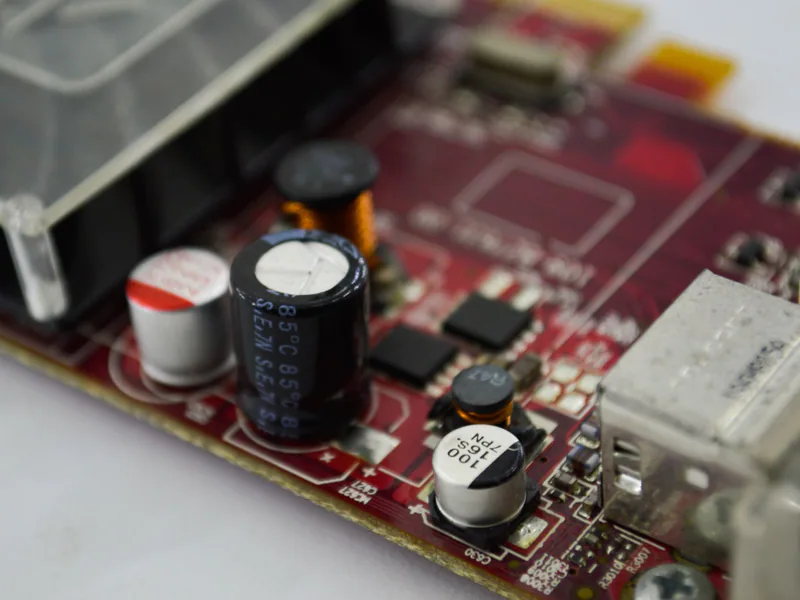
Stray inductance: below 15nH. This is the defining electrical specification for a laminated busbar in an 800V SiC traction inverter. A laminated busbar sandwiches positive and negative conductors with an insulating dielectric layer—typically Nomex, PET film, or polyimide—to minimize the current loop area. The thinner the dielectric and the closer the conductors, the lower the inductance. But those same dimensions also determine the partial discharge inception voltage. The engineering trade-off between low inductance and high PD withstand is the core design challenge that separates laminated busbar manufacturers from industrial busbar fabricators.
Edge conditioning: R≥1.0mm edge radius, ≤0.05mm burr height. At 800V DC, microscopic burrs and sharp edges become corona discharge initiation points. A burr that would be invisible to the naked eye on a 400V switchgear busbar creates localized electric field enhancement at 800V that accelerates insulation degradation. Electropolishing or vibratory finishing with documented process parameters is the minimum acceptable edge conditioning method. Manual deburring with handheld abrasive pads—still common in industrial busbar shops—cannot consistently achieve the edge quality that 800V busbars require.
Partial discharge: <10pC at 1.2kV AC (60-second hold). Per IEC 60270, this is the production pass/fail criterion. A 1-per-100 sampling rate is acceptable for production; 100% testing is standard for PPAP submissions. The test setup requires a PD-free HV power supply, a coupling capacitor, a calibrated PD detector, and a shielded test enclosure—equipment that costs $30,000-80,000 depending on voltage class and automation level. A supplier who does not own this equipment and perform testing in-house does not control their process.
Material traceability to heat number. Each busbar in an EV application must be traceable backward to the copper mill heat number and the plating batch, and forward to the vehicle VIN range. This is not a “best practice”—it is an IATF 16949 requirement with the same compliance weight as the dimensional tolerances on the part drawing. Our ERP system assigns a unique serialized batch code to every production lot, creating a digital chain from raw material certificate through in-process inspection records to final QC report.
| Specification | Industrial Busbar (Switchgear) | High-Power EV Busbar (800V) | CNC Machine Requirement |
|---|---|---|---|
| Stray inductance | Not specified | <15nH (laminated design) | ±0.2° angle repeatability for layer alignment |
| Edge radius (R) | Typically unspecified | ≥1.0mm | Electropolishing or vibratory finishing station |
| Burr height | <0.1mm (typical) | <0.05mm | Servo-controlled punching with optimized die clearance |
| PD testing | Not required | <10pC at 1.2kV, per IEC 60270 | In-house PD test equipment ($30K-80K) |
| SPC requirement | Optional | Ppk ≥1.67 on safety characteristics | CNC with ±0.15mm positional accuracy |
| Traceability | Lot-level | Heat number to VIN range | ERP with serialized batch tracking |
How Do You Set Up a CNC Production Cell for High-Power EV Busbars?
The production cell layout for high-power EV busbars follows a linear workflow designed to minimize part handling between stations—every transfer is an opportunity for edge damage.
Station 1: CNC punching and shearing. A DHCNC-BP-60 CNC punching and shearing workstation processes raw copper bar stock (typically 6,000mm standard lengths in widths from 20mm to 120mm, thicknesses from 3mm to 10mm). The integrated 3D nesting software arranges parts across the full bar length to minimize copper scrap—at $13,800/ton LME copper (July 31, 2026), reducing scrap from 12% to under 3% saves approximately $62,700 annually for a plant processing 5 tons monthly. Punched holes for mounting bolts and alignment pins achieve ±0.15mm positional accuracy—critical when those holes must align across 3-5 layers in a laminated busbar stack.
Station 2: CNC bending. A DHAC-BB-H servo-electric bending center performs flatwise and edgewise bends with ±0.2° angle repeatability. Each bend program includes material-specific springback compensation: T2 ETP copper at 10mm thickness springs back approximately 2-3° from a 90° bend, and the compensation varies measurably between copper mill heats. The machine’s automatic angle measurement system measures the actual bend angle after springback and adjusts the next stroke in real time—a capability that separates a $40,000 bending center from a $12,000 one.
Station 3: Edge conditioning. Post-bend busbars move to a vibratory finishing station with ceramic media selected for copper alloys. Process parameters—media type, compound concentration, cycle time, and rinse protocol—are documented per part number and validated through periodic edge radius measurement on a profilometer. For applications requiring the highest surface quality, electropolishing provides sub-micron surface roughness and passivates the copper surface against oxidation.
Station 4: Partial discharge testing. The finished busbar assembly—conductors stacked with insulation layers—undergoes PD testing per IEC 60270 at 1.2kV AC. A <10pC pass criterion with a 60-second hold time is standard for production validation. PPAP samples undergo 100% testing; production runs follow a 1-per-100 sampling plan unless the customer specifies otherwise.
Station 5: Packaging. Clean, tested busbars are packaged in VCI (Volatile Corrosion Inhibitor) paper or film with desiccant packs, placed in partitioned containers that prevent busbar-to-busbar contact during transit, and labeled with the unique serialized batch code for full traceability.
The capital investment for a complete production cell ranges from $180,000 to $500,000, depending on automation level. At the lower end, a cell built around a DH303-8P multi-function 3-in-1 machine with external edge conditioning and third-party PD testing can enter production for approximately $180,000-250,000. At the higher end, dedicated CNC punching, dedicated CNC bending, automated material handling between stations, in-house PD testing, and electropolishing bring the total to $400,000-500,000.
| Production Cell Configuration | Capital Cost Range | Daily Throughput (8h shift) | Best For |
|---|---|---|---|
| Entry: DH303-8P + vibratory finishing | $180,000 - $250,000 | 200-400 busbar sets | PPAP sampling, low-volume production |
| Mid: DHCNC-BP-60 + DHAC-BB-H + vibratory | $300,000 - $400,000 | 400-800 busbar sets | Mid-volume Tier-2 supplier |
| Full: Dedicated punching + bending + auto handling + PD lab | $400,000 - $500,000 | 800-1,500 busbar sets | Tier-1 high-volume production |
What Role Does Laminated Busbar Manufacturing Play in High-Power Applications?
The term “laminated busbar” generates 170 monthly Google searches in the US—the highest search volume of any keyword in the busbar fabrication niche. The reason: laminated busbar design is where the electrical engineering requirements (low stray inductance, high PD withstand, thermal management) intersect with the manufacturing requirements (layer alignment, insulation processing, joining), and engineers in both disciplines are searching for solutions.
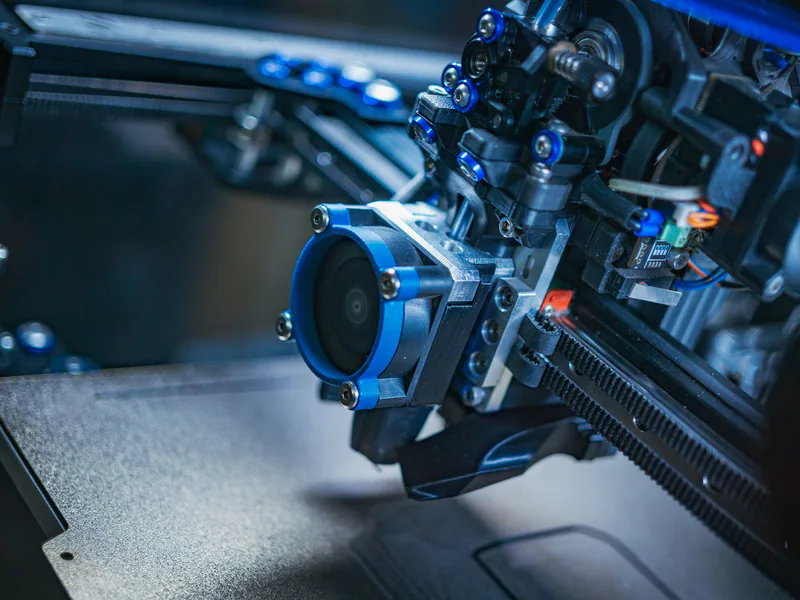
A laminated busbar is constructed by stacking alternating layers of conductor (copper, typically 1-5mm thick) and dielectric insulation, then bonding the stack under heat and pressure. The resulting assembly achieves stray inductance values of 5-15nH, compared to 50-200nH for an equivalent non-laminated busbar assembly. This inductance reduction is critical for protecting SiC MOSFETs—at 50kV/μs switching speeds, the voltage overshoot during turn-off is directly proportional to the stray inductance in the commutation loop (V = L × di/dt).
For a CNC bending machine, the manufacturing implication is straightforward and unforgiving: each conductor layer in a laminated stack must be bent to identical geometry within ±0.2° and ±0.2mm. If one layer of a 5-layer stack is bent 0.5° differently from the others, the layers will not lie flat against each other during lamination. The resulting air gap increases thermal resistance, creates a partial discharge risk at the gap interface, and applies uneven pressure to the insulation layer that can cause premature dielectric breakdown. This tolerance requirement is why EV busbar manufacturers gravitate toward servo-electric bending centers with closed-loop angle control—a hydraulic bender with open-loop limit-switch positioning cannot consistently hold ±0.2° across production batches.
For a deeper analysis of 800V architecture implications, see our guide on how 800V EV architecture changes busbar design requirements. For the broader EV supply chain context, our global EV busbar market procurement strategy covers capacity planning and regional sourcing dynamics. Our custom EV busbar solutions page covers the full range of application-specific configurations for EV busbar manufacturing.
How Should Equipment Buyers Position for the 800V Transition?
The 800V transition is happening now—15-20% of new EV platforms in 2026 ship with 800V architectures, rising to an estimated 60-70% by 2030. Equipment buyers have a window of roughly 18-24 months to qualify their production lines before the 800V supplier base consolidates around manufacturers who invested early in precision CNC capability.
Our recommendation to busbar manufacturers evaluating the high-power EV segment:
First, qualify on the equipment you intend to run in production. Sending PPAP samples produced on a manual bench-top bender and then attempting to replicate those results on a production CNC machine is a recipe for PPAP rejection. The machine that makes the samples must be the machine that makes the production parts—with documented SPC data showing process capability at the required Ppk.
Second, invest in PD testing capability before you need it. The lead time on a PD test system is 8-12 weeks. The lead time on IATF 16949 certification is 12-18 months. The time to order the test equipment and begin the certification process is 12-18 months before your first 800V RFQ—which, for most manufacturers, means now.
Third, standardize on a single CNC platform across your busbar production. If you are installing parallel production cells in Asia, North America, and Europe, identical machine configurations reduce qualification overhead, simplify maintenance training, and enable production load-balancing. Our application engineering team can configure standardized production cells for multi-site deployment with identical tooling, software, and maintenance documentation.
For equipment selection, the DHAC-BB-H CNC busbar bending center provides the ±0.2° angle repeatability and automatic springback compensation required for laminated busbar production. Pair it with a DHCNC-BP-60 punching and shearing workstation for the punching accuracy that multi-layer hole alignment demands. For lower-volume PPAP and pilot production, the DH303-8P multi-function 3-in-1 machine provides bending, punching, and shearing capability in a single footprint with sufficient accuracy for qualification sampling.
For context on how 800V design requirements affect your production line equipment selection, see our analysis of what equipment setup a Tier-1 EV busbar manufacturer needs in 2026.
Frequently Asked Questions (FAQs)
How big is the high-power EV busbar market in Asia-Pacific?
The Asia-Pacific high-power EV busbar market reached approximately $489 million in 2026 and is projected to grow at a 14.6% CAGR to $1.66 billion by 2035, according to Global Market Insights. China dominates with roughly 55-60% of global EV busbar fabrication capacity and the fastest growth rate at 27.1% CAGR for EV busbar demand. South Korea and Japan account for another 15-20% combined. The Asia-Pacific region benefits from vertical integration—cathode copper production, busbar fabrication, and EV assembly concentrated within a 3,000km radius—enabling faster iteration cycles and lower logistics costs than Western supply chains. For equipment manufacturers, this concentration means a single region contains the majority of addressable customers for high-power busbar processing machinery.
What are the four non-negotiable supplier qualification requirements for high-power EV busbars?
Based on our experience supporting customers through PPAP submissions: (1) IATF 16949 certification with busbar-specific process FMEAs that classify creepage distance, edge radius, and inter-layer alignment as safety-critical characteristics requiring Ppk >=1.67 SPC monitoring; (2) in-house partial discharge testing per IEC 60270 with a pass criterion of <10pC at 1.2kV AC for production samples—subcontracting PD testing means you do not control your process; (3) documented edge conditioning capability—electropolishing or vibratory finishing achieving R>=1.0mm edge radius and <=0.05mm burr height, not manual deburring; (4) material traceability to copper mill heat number and plating batch, linked to production lot and vehicle VIN range—an IATF 16949 requirement with the same force as dimensional specifications on the drawing.
What CNC busbar equipment is required to manufacture high-power EV busbars?
High-power EV busbar manufacturing requires: (1) a CNC bending center with ±0.2° angle repeatability for laminated busbar stacking alignment—our DHAC-BB-H achieves this via servo-electric bend axis control with automatic springback compensation per material batch; (2) a CNC punching system with positional accuracy of ±0.15mm for hole patterns that align across multiple insulation layers in a laminated stack; (3) post-processing capability including electropolishing or vibratory finishing for edge conditioning—manual deburring cannot consistently achieve the R>=1.0mm edge radius required for 800V corona discharge prevention; (4) in-house partial discharge testing equipment per IEC 60270 for production validation. The capital investment for a full EV busbar production cell ranges from $180,000 to $500,000 depending on automation level and throughput requirements.
DHAC-BB-H Servo-Hydraulic Busbar Bender
Discover details, parameters, standard dies packages, and factory quotes.