
Section 232 Copper Tariffs in 2026: Busbar Costing and Equipment Decisions
As of August 28, 2026, a U.S. buyer cannot cost a busbar-related import by applying one remembered “copper tariff” percentage. The original 2025 action was followed by broader changes in April 2026 and further adjustments in June. The current outcome depends on the exact product, Harmonized Tariff Schedule classification, entry date, country and origin rules, metal content, customs value, and interaction with other duty regimes.
This article is a procurement framework, not a customs ruling or legal advice. Before committing a price, send the actual drawing, product description, bill of materials, values, origin documents, and proposed HTS classification to a licensed customs broker or qualified trade counsel.
The 2025 Copper Rule Is No Longer the Whole 2026 Answer
The July 2025 copper proclamation imposed an additional 50 percent duty on listed semi-finished copper and intensive copper derivative products from August 1, 2025. Its annex and U.S. note identified covered HTS provisions, and the action applied the additional duty to copper content under its stated rules.
That remains important history, but buyers must also account for later actions. An April 2026 proclamation revised the metals tariff structure, and CBP issued implementation guidance with an updated HTS list. The June 1, 2026 proclamation summarizes the April framework as including 50 percent treatment for specified metal products, 25 percent for specified derivative products, and a temporarily reduced 15 percent category for specified fixed industrial machinery and power equipment.
The June action made additional changes effective June 8 for identified product lists and temporarily adjusted treatment for certain equipment. It also changed the threshold used to treat a product’s metal content as entirely U.S. smelted and cast or melted and poured from 95 percent to 85 percent by weight under the stated provisions.
None of those summaries substitutes for the annexes and current HTS notes. A headline rate does not tell you whether a particular copper bar, fabricated connector, switchgear component, or machine falls on the corresponding list.
Classify the Shipment Before Applying a Percentage
Create a customs fact sheet for each distinct item. Include:
| Required fact | Why it changes the analysis |
|---|---|
| Complete product description and function | distinguishes material, component, assembly, and machine |
| Proposed HTS classification and rationale | connects the item to current chapter 99 notes and annexes |
| Country of origin and supporting process facts | affects origin and any country-specific treatment |
| Entry or withdrawal date | determines which proclamation and list applies |
| Customs value and valuation method | establishes the value basis for duties |
| Copper, steel, aluminum, and non-metal content/value | supports any content-based calculation or declaration |
| Other potentially applicable duties | prevents omission or incorrect stacking assumptions |
| U.S.-origin metal evidence, if claimed | supports any special content treatment |
Use a written classification rationale. Supplier invoices often describe a part as “copper busbar,” but customs classification can depend on form, processing, function, and whether it is identifiable as a component of another article. A marketing description is not an HTS analysis.
Ask the broker to identify the base HTS duty and each additional chapter 99 provision separately. Confirm how any Section 232 treatment interacts with other tariffs for that specific entry. Do not assume duties stack—or do not stack—based on a different product’s example.
The Congressional Research Service’s overview of the initial copper action explains the 2025 policy timeline, copper-content concept, and competing economic considerations. It predates the 2026 revisions, so use it for background rather than the final current calculation.
Do Not Treat Copper Stock, Finished Busbars, and Machines as One Category
Four procurement lines can look related operationally and still require separate customs analyses:
Copper inputs and flat stock. Cathode, rod, bar, sheet, strip, and other material forms can fall under different HTS provisions and product lists. The processing state matters. Confirm whether the exact width, thickness, alloy, and form are covered rather than treating every copper input alike.
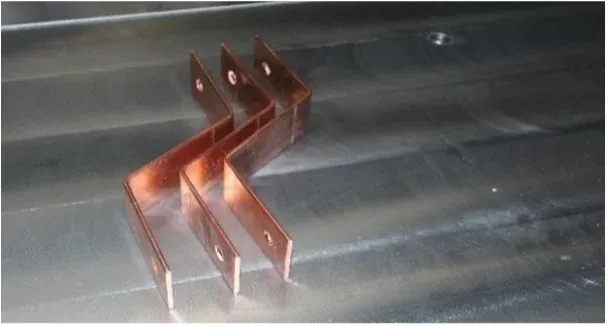
Fabricated busbars. Punching, bending, plating, insulation, and identification can change the product description and potentially its classification. A finished busbar designed for a specific assembly should be analyzed from its actual condition at entry.
Electrical assemblies containing busbars. Switchgear, power equipment, connectors, and other derivatives may have their own provisions and content rules. The busbar’s internal cost does not by itself establish the duty on the complete assembly.
CNC busbar processing equipment. A machine is not a copper article because its output is copper. It has its own function, construction, origin, and HTS classification. However, the 2026 metals framework includes specified industrial machinery and power-equipment categories, so an importer must check the exact machine and current annexes rather than assume machinery is outside the policy.
When comparing models in the busbar equipment catalogue, request model-specific dimensions, function, electrical configuration, weight, and material-value information needed by the broker. Do not accept a supplier’s informal duty estimate as a binding customs determination.
Build a Landed-Cost Model That Keeps Duties Auditable
Separate variables so finance can update one rule without rebuilding the quotation. A useful structure is:
Landed cost = product customs value + base duty + each additional duty + freight + insurance + brokerage + port and inland charges + compliance costs.
Within the duty section, maintain the HTS provision, rate source, value basis, applicable content amount, currency rate, and date checked. If the current rule applies a rate to metal content, document how that content value was established. If it applies to full customs value for the classified product, model that separately.
Run low, expected, and high scenarios when classification or content documentation is unresolved. Label the uncertainty; do not bury it in a freight contingency. A broker review before the purchase order is cheaper than discovering at entry that the supplier’s commercial invoice cannot support the declared metal value.
Keep copper market price separate from duty. The copper-price and nesting article explains how raw-material volatility and yield affect fabrication cost. Tariff treatment adds another variable but does not replace the material and scrap model.
Recalculate the Make-or-Buy Point for Domestic Busbar Fabrication
The relevant comparison is not simply “imported busbar plus tariff” versus “buy a machine.” Model at least three routes:
- import finished fabricated busbars;
- source copper stock and fabricate locally;
- source finished busbars from a domestic supplier.
For local fabrication, include equipment, tooling, programming, operators, maintenance, inspection, floor space, utilities, material yield, work in process, and ramp-up scrap. For imported parts, include minimum orders, engineering changes, inventory, freight, duties, brokerage, quality containment, and schedule risk. For domestic outsourcing, include supplier margin, tooling ownership, capacity reservation, and lead-time commitments.
Calculate the crossover with the factory’s own volume and labor, not a generic tariff headline. A higher duty on one imported line may improve the local-fabrication case, but low volume, frequent design change, complex coating, or limited inspection capability can still favor outsourcing.
Use sensitivity analysis for tariff rate, copper price, annual volume, yield, labor hours, and capital utilization. A five-year business case should include a policy-change scenario because the 2025 and 2026 sequence already demonstrates that the regime can change within the life of a machine.
Request the Documents Customs and Finance Need
Before shipment, assemble the commercial invoice, packing list, purchase order, product drawing or specification, detailed description, proposed HTS code, country-of-origin support, bill of materials, metal-content and value declaration where relevant, mill certificates, and any broker ruling or written advice.
For equipment, request a component and material declaration at a level the broker can use, but do not force the supplier to invent precise metal values after production. Agree the documentation requirement in the purchase contract. For fabricated busbars, connect material certificates and plating records to the shipped lot.
The FOB, CIF, and DAP machinery shipping guide explains commercial responsibility and logistics. Incoterms allocate specified costs and risks; they do not decide HTS classification or eliminate the importer’s compliance obligations.
Monitor the Rule Instead of Freezing It Into a Five-Year Business Case
Assign an owner to monitor CBP Cargo Systems Messaging Service notices, current HTS chapter 99 notes, Department of Commerce inclusion actions, presidential proclamations, and broker updates. Save the source and date behind every duty assumption in the quotation model.
Recheck before issuing a long-term price, before ordering, before shipment, and before entry. Add contract language for material tariff changes, required supporting documents, and responsibility for inaccurate supplier declarations without promising a duty outcome neither party controls.
The broader 2026 tariffs and trade-policy sourcing guide covers machinery procurement beyond copper. Use this page as the copper-specific decision layer and the broker’s written analysis as the shipment-specific conclusion.
Section 232 can alter the make-or-buy calculation, but it does not remove the need for engineering evidence. Classify first, document the value and content, model uncertainty explicitly, and then decide whether local fabrication improves total cost, lead time, and control.
Frequently Asked Questions (FAQs)
Is every imported copper busbar automatically subject to a 50 percent Section 232 duty?
No. The result depends on the current HTS classification, product scope, entry date, origin, copper and non-copper content rules, and any overlapping or special treatment. Obtain a written classification and duty analysis from a qualified customs professional for the actual shipment.
Is a CNC busbar machine taxed as a copper product?
Not merely because it processes copper. A machine is classified from its own design, materials, function, origin, and applicable HTS provisions. The 2026 metals framework also includes some industrial machinery categories, so the exact model and bill of materials must be reviewed separately.
Why does copper-content documentation matter for Section 232 entries?
The tariff framework can distinguish metal content from other value or use content-based treatment. Importers need supportable values, product descriptions, bills of materials, origin records, and supplier declarations rather than an unsupported percentage on the invoice.
How often should a U.S. busbar buyer recheck the tariff treatment?
Recheck before quoting a long-term supply contract, before ordering, and again before entry. Monitor current HTS notes, CBP CSMS messages, Commerce inclusion actions, presidential proclamations, and broker guidance because product lists and treatment can change.