
CNC Busbar Machine Spare Parts: Build a Critical Stock List

A useful CNC machine spare-parts list is a downtime-control model, not a catalog of components that might eventually fail. Stock too little and a small sensor can stop a production line for weeks. Stock indiscriminately and capital sits in duplicate electronics, aged seals and parts that do not match the installed revision.
The initial package should follow the actual machine serial configuration, maintenance strategy, local supply base and maximum tolerable outage.
Classify Parts Before Setting Quantity
Separate items by how they are consumed and recovered:
| Class | Description | Typical planning method |
|---|---|---|
| consumable | used predictably in normal operation | usage rate and reorder point |
| wear part | condition deteriorates with cycles or time | inspection limit and replacement history |
| repairable | assembly can be exchanged and repaired | pool size and repair turnaround |
| insurance spare | low-use item held because failure consequence and delay are high | criticality and replenishment exposure |
| standard local item | commercially available to a controlled specification | approved local equivalent and supplier |
A fuse may be a consumable in one design and a symptom of a fault in another. A hydraulic valve may be readily available locally or require a configured proprietary assembly. Classify the installed item rather than relying on a generic CNC list.
For imported equipment, connect the spare strategy to the CNC busbar machine import procurement guide. Freight, customs, supplier holidays and export documentation can make end-to-end replenishment longer than a catalog lead time.
Map Failure Modes by System
Review the bill of materials, drawings, maintenance plan and supplier service history. Organize the discussion around recovery functions.
Hydraulic system
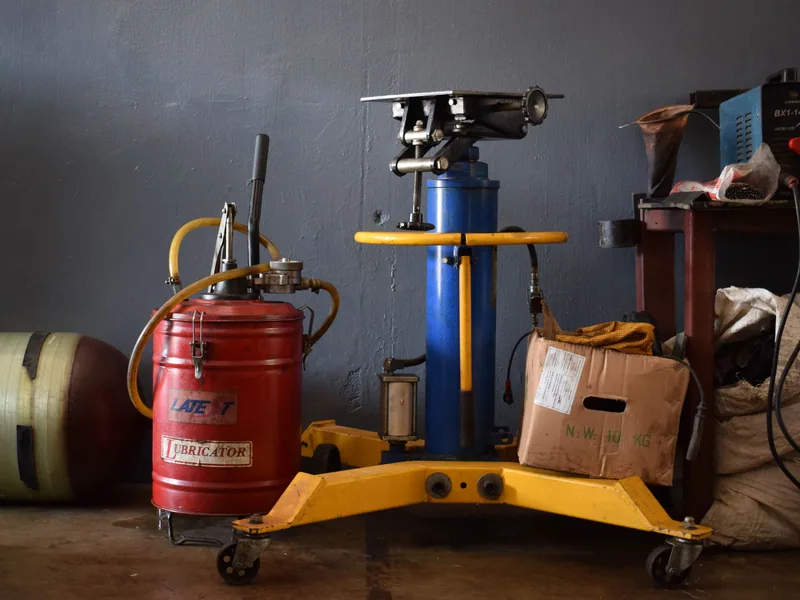
Consider filter elements, specified seals, hoses or hose specifications, pressure sensors, coils and selected valves. Record cleanliness, shelf-life and installation requirements. Do not treat opening a hydraulic circuit as routine stores work; contamination control and qualified maintenance are essential.
Electrical and control system
Map power supplies, relays, safety components, contactors, sensors, I/O, HMI, PLC, drives, encoders and control batteries where fitted. Distinguish standard devices from items that require programming, parameterization or a specific firmware revision.
Motion and positioning
Review clamping elements, guides, bearings, couplings, belts or screws where applicable. A complete mechanical assembly may be more economical to recover than its individual elements if alignment requires specialist work.
Tooling and processing
Include high-use punches and dies, shear blades, bending tools, holders, springs, strippers and approved sharpening or repair routes. Keep process tooling in the same risk model while retaining its separate identification and wear control.
The hydraulic busbar bender preventive-maintenance guide supports failure-mode review, but maintenance intervals and spare quantities must follow the purchased equipment documentation and site evidence.
Score Criticality and Replenishment Exposure
Use a simple, documented score rather than price as the primary filter. Assess:
- safety and environmental consequence;
- production consequence and affected part families;
- failure probability or observed degradation;
- availability of a safe workaround;
- ability to diagnose and replace the item;
- repair and configuration requirements;
- supplier production time plus transport and import time;
- commonality across installed machines.
A $30 sensor can justify local stock if its failure stops the only cell and exact replacement takes four weeks. A costly motor may not require site stock if a verified regional exchange unit is available next day and the plant can tolerate the outage.
Do not reduce the method to one multiplied number without judgment. High-consequence safety components require design and validation control; substituting them merely because a local part fits can invalidate the intended protective function.
Build Stock in Three Time Horizons
Commissioning and ramp-up

Cover items that can be damaged or consumed during installation, parameter tuning, training and early process stabilization. Include the required oils or fluids only when transport and storage rules permit, along with filters, selected seals, common tooling wear items and approved electrical consumables.
First operating year
Use supplier recommendations as a starting point, then apply planned hours, shifts, material mix, tool usage and local replenishment. Require quantity assumptions and lead times so the package can be challenged rather than accepted as a bundle.
Longer-term insurance stock
Prioritize long-lead or obsolescence-prone components that can stop the asset. Review these decisions annually because support status and installed configuration change. Sharing a pooled spare across identical machines or sites may reduce inventory if transport time is acceptable.
For a multi-function configuration such as the DH303-8P busbar processing machine, confirm which spare belongs to each hydraulic pump, station and control revision. Similar model names do not guarantee interchangeability.
Treat Digital Recovery Assets as Spares
Hardware alone may not restart a CNC machine. At acceptance, collect controlled copies of:

- PLC, HMI and CNC programs where contractually deliverable;
- drive, axis and process parameters;
- tool tables, compensation and machine constants;
- part-program and recipe backups;
- software installers, licenses and version records;
- network, user-role and recovery documentation;
- electrical and hydraulic drawings matching the delivered revision.
Store at least one protected copy away from the machine. Test the documented backup and restore method with the supplier without risking the production configuration. Record who is authorized and competent to recover each device.
A configured spare drive with no recoverable parameters is incomplete inventory. Likewise, a backup that depends on an expired license or unsupported cable is not a recovery plan.
Specify Storage, Shelf Life and Rotation
Manufacturer storage requirements govern temperature, humidity, sealing, electrostatic protection, corrosion prevention and periodic energization where applicable. Mark receipt date, compatible revision and shelf-life limit. Keep seals and polymers away from heat, light and unsuitable chemicals.
Use first-in, first-out where appropriate and rotate stock through planned maintenance when doing so is technically approved. Inspect packaging and preservation rather than assuming an unopened box remains serviceable indefinitely.
Remove superseded parts from usable stock or clearly control the compatibility. When a field modification changes a sensor, valve or control assembly, update the spare register and drawings at the same time.
Put Replenishment Data Into the Purchase Order
The purchase order should identify:
| Field | Required decision |
|---|---|
| part identity | supplier and original manufacturer number, revision and description |
| compatibility | model, serial range and software dependency |
| commercial terms | quantity, price, warranty and delivery basis |
| replenishment | quoted production time, dispatch route and expedite option |
| substitution | no change without documented technical approval |
| documentation | drawings, settings, certificates or instructions required |
| support | diagnostic contact and repair/exchange process |
Publicly filed capital-equipment purchase terms illustrate why consumables, spare parts and service scope should be defined rather than left implicit. Adapt the contract to the project and obtain legal review where required.
Recalculate After Real Operating Evidence
Track issues by asset, failure mode, part used, downtime, root cause and replenishment time. A replaced part is not automatically proof that the part caused the failure. Use maintenance findings to remove chronic causes and update stocking levels.
NIST’s report on maintenance costs and manufacturing performance provides a broader economic basis for treating maintenance and downtime as production issues. The practical result for the buyer is straightforward: stock the parts and recovery assets that reduce justified outage exposure, not every item in the manual.
At each annual review, retire obsolete items, confirm supplier support, test digital recovery and compare promised versus actual lead time. The spare-parts package then remains a living risk control rather than a one-time accessory sale.
Frequently Asked Questions (FAQs)
Which spare parts should be ordered with a CNC busbar machine?
Order commissioning items, expected consumables and wear parts, plus selected critical spares whose failure would stop production and whose verified replenishment time exceeds the plant's tolerated outage. The exact list must match the purchased serial configuration.
How are critical machine spares identified?
Assess failure consequence, likelihood, detection, available workaround, repairability and end-to-end replenishment time. A low-cost component can be critical when it stops the only machine and is difficult to source.
Should a spare PLC, HMI, or drive be kept in stock?
Only after checking obsolescence risk, configuration requirements, shelf life, storage conditions, replacement availability and recovery competence. A hardware spare without verified software and parameter backups may not restore production.
How should spare parts be specified in a purchase order?
Use manufacturer and supplier part numbers, description, compatible serial range, revision, quantity, unit price, promised lead time, storage requirements, warranty, substitution approval and required configuration files or drawings.
DH303-8P 3-in-1 CNC Busbar Processing Machine
Discover details, parameters, standard dies packages, and factory quotes.