
EV Busbar Manufacturing Equipment: Match the Machine to the Conductor
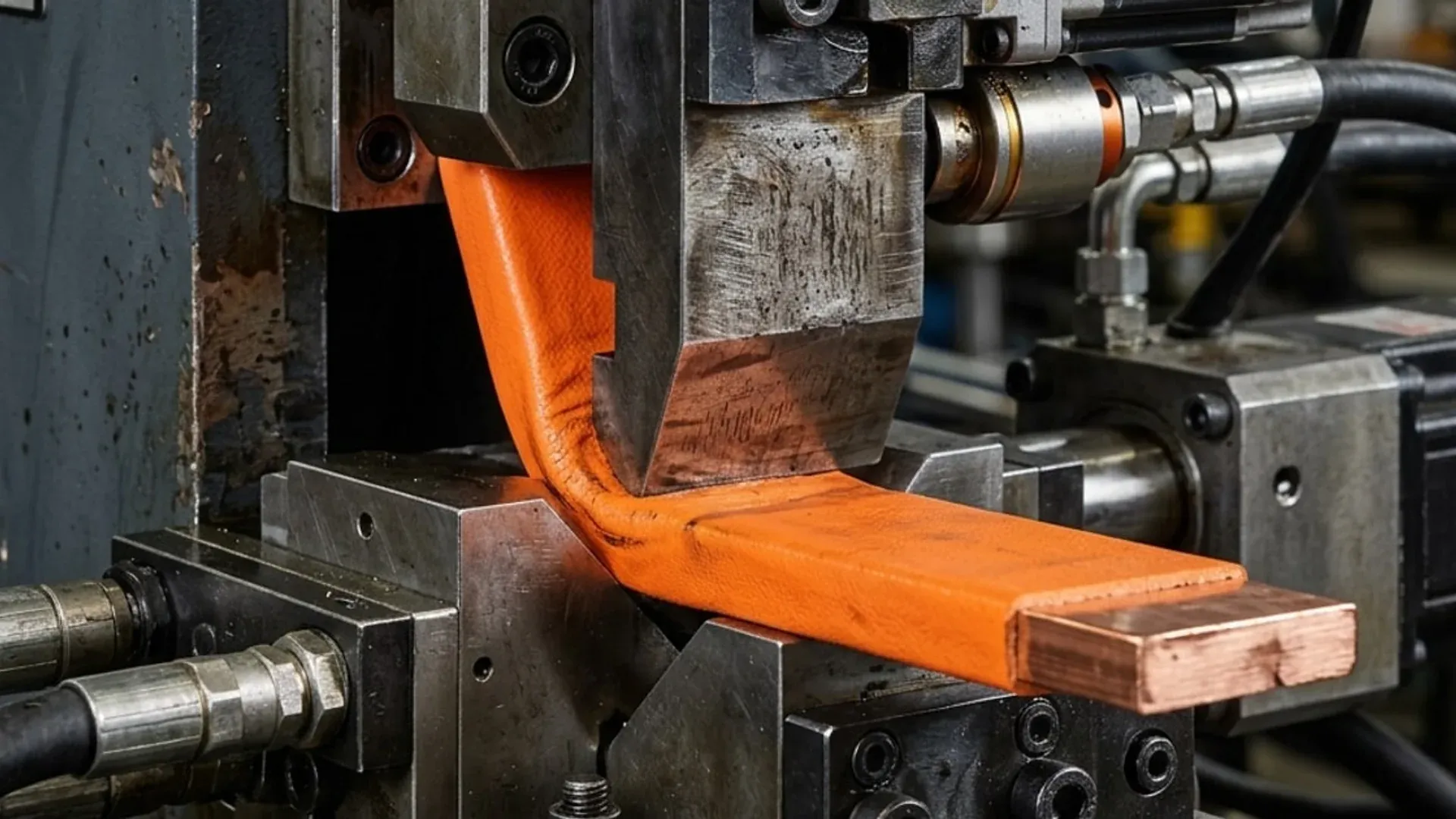
EV busbar manufacturing equipment must be selected after the conductor type is known. CNC punching, shearing and bending equipment fits many rigid copper and aluminum bars. It does not replace progressive stamping for thin high-volume parts, lamination and insulation systems for laminated busbars, foil joining equipment for flexible links, or welding and electrical test stations.
That process boundary is increasingly important as the application grows. The IEA Global EV Outlook 2026 reports that electric-car sales exceeded 20 million in 2025 and projects about 23 million in 2026. Those figures describe vehicle demand, not a single busbar design. A buyer still needs to classify its own conductors before specifying machinery.
Divide the product family by conductor construction
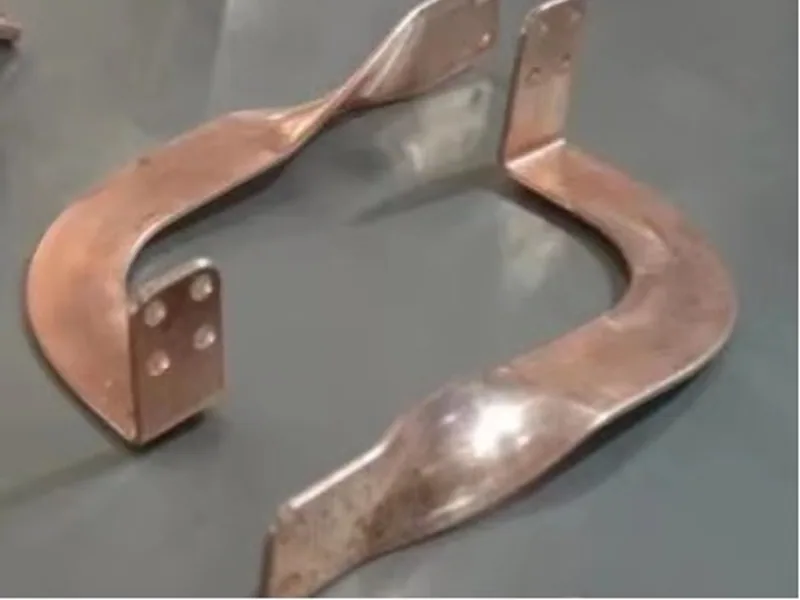
The word EV busbar covers parts made by substantially different routes. A useful equipment brief begins with construction, thickness, batch volume and joining method.
| Conductor family | Typical primary processes | Where CNC punch, shear and bend equipment fits |
|---|---|---|
| Rigid copper or aluminum bar | Cut, punch, bend, finish, insulate and inspect | Strong fit when the part remains within bar and tooling limits |
| Thin stamped interconnect | Coil feed, progressive stamping, cleaning and plating | Usually outside a bar-processing machine’s economic and dimensional range |
| Flexible foil or braided link | Stack or braid preparation, joining, terminal forming and insulation | May need separate foil, welding or pressing equipment; rigid terminals may still need secondary work |
| Laminated busbar | Conductor preparation, dielectric layup, lamination, edge sealing and test | CNC bar equipment may prepare rigid conductor layers, but does not perform the complete lamination route |
This classification prevents a supplier from treating “cut, punch and bend” as a complete battery interconnect line. The laminated busbar guide covers the electrical and manufacturing considerations of the laminated family in more detail.
Define the rigid-busbar process window
For a rigid conductor, collect the material grade and temper, starting width and thickness, hole and slot geometry, bend radii, flange lengths, surface condition and finished envelope. The process window should identify which features are produced before and after plating or insulation.
A servo-hydraulic busbar bender can be a candidate for controlled rigid-part forming. The DHAC-BB-H product page publishes 400 kN nominal force, ±0.2° bending accuracy and a 40 mm minimum internal U-bend width with the relevant tooling. These values are not universal EV specifications. The actual alloy, temper, bend orientation and tool access determine whether a customer part is feasible.
A 3-in-1 busbar workstation can support prototypes and mixed lower-volume rigid parts when punching, shearing and bending must remain available in one cell. Its published maximum flat bending capacity is 15 × 160 mm, but the practical limit for a compact connector may instead be tool clearance around a short flange.
Choose the operation sequence around surface risk
Surface condition changes the route. Bare copper is easier to clamp and form, but it may later require cleaning, masking, plating or insulation. A plated or pre-insulated conductor avoids some later handling but introduces damage risk at every support, clamp and tool contact.
Build trial pieces for the intended sequence rather than assuming a soft insert solves every problem. Inspect for:
- scoring or indentation on contact areas;
- cracks, wrinkles or whitening in an insulation jacket;
- plating displacement or flaking near a bend;
- burrs or sharp edges that can cut a later dielectric layer;
- dimensional movement after the part is released from the tool.
The choice between copper and aluminum also changes bend response, joint preparation and surface strategy. The EV copper-versus-aluminum selection guide should be resolved before tooling is approved.
Keep lamination, joining and test outside the wrong machine scope
A rigid-busbar CNC cell may prepare conductor blanks for a laminated assembly. It does not automatically provide dielectric layup, vacuum or thermal lamination, edge sealing, partial-discharge control, welding, resistance measurement or hipot testing.
Write an equipment boundary for each product family:
- Conductor preparation: cutting, holes, slots, edge condition and forming.
- Surface and dielectric: cleaning, plating, coating, film or molded insulation.
- Joining: laser, ultrasonic, resistance or other approved joining process.
- Identification: durable part and lot marking linked to production records.
- Verification: dimensional, visual, electrical and application-specific testing.
The copper busbar traceability guide covers marking and data-matrix decisions. It should remain a separate quality operation rather than being implied by the machining controller.
Specify measurement from the assembly interface
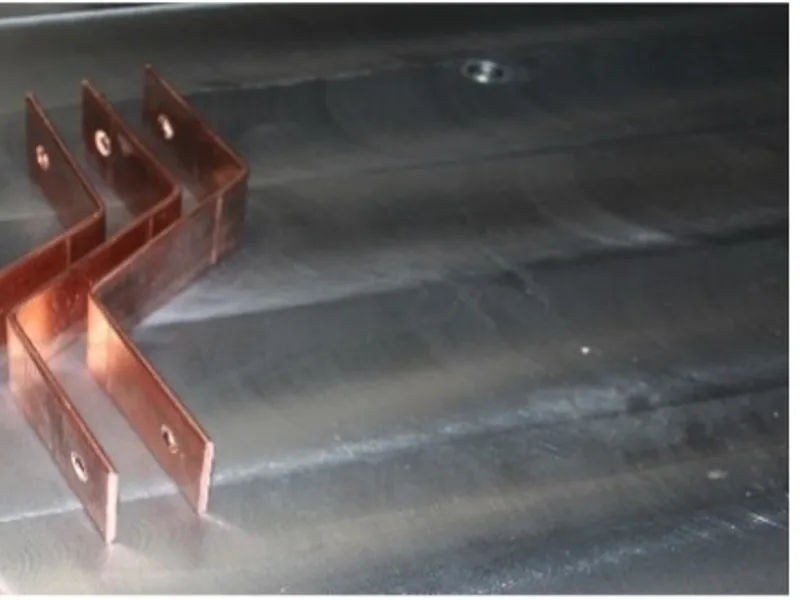
An EV busbar is accepted because it fits and performs in its downstream assembly, not because an isolated angle reads correctly. Identify the datums and functional features that control cell, module, inverter or power-distribution assembly.
For a formed rigid busbar, the inspection plan may need hole position, terminal-pad orientation, bend angle, free-state envelope and clearance to neighboring components. For laminated parts, add edge seal, conductor registration, dielectric coverage and electrical tests defined by the product design.
Do not set a flatness or bend tolerance without stating how the part is supported. A flexible or thin conductor can be forced into a passing shape during inspection and spring back during assembly.
Run worst-case samples, not a showroom part
Select test pieces from the boundaries of the product family:
- the narrowest flange that challenges tool access;
- the smallest permitted inside radius;
- the densest hole or slot pattern;
- the most surface-sensitive coating or insulation condition;
- the longest geometry that challenges support and finished-part handling.
Record the material lot, temper, program revision, tool identifiers and inspection method. If a supplier substitutes easier material or removes the insulation for the demonstration, record that as an unverified condition rather than accepting the sample as equivalent.
Ask for a process responsibility matrix
The quotation should state which equipment performs each operation, who supplies the tool or fixture, what input file is required and how the result will be accepted. Include a clear exclusion list for stamping, lamination, insulation, welding and electrical test when those operations are outside scope.
The EV busbar and new-energy solution can be used to discuss rigid punching and bending requirements. The useful outcome is not a promise of an all-purpose EV line. It is a documented route showing where the proposed machine fits, where it stops and how the buyer will verify the handoff to the next process.
Frequently Asked Questions (FAQs)
Can one CNC busbar machine manufacture every EV busbar?
No. A CNC punch, shear and bend machine can suit many rigid copper or aluminum conductors, but thin stamped interconnects, flexible foil stacks, laminated busbars, insulation processes and welded assemblies require different equipment and controls.
When is a servo-hydraulic bender useful for EV busbars?
It is useful for rigid conductors that need repeatable flat, offset, Z or U bends within the machine and tool envelope. The buyer should test the actual alloy, temper, coating or insulation condition because springback and surface damage depend on the complete part.
Should an EV busbar be bent before or after insulation?
The sequence is product-specific. Pre-insulated material needs tooling and clamping that avoid jacket damage, while post-forming insulation introduces its own masking, coverage and dimensional controls. Validate the selected sequence with production material and dielectric requirements.
What samples should be used to approve EV busbar equipment?
Use the narrowest flange, tightest allowed bend, densest hole pattern and most sensitive surface condition from the intended product family. Inspect geometry, burrs, coating or insulation damage, cleanliness and downstream assembly fit.
DHAC-BB-H Servo-Hydraulic Busbar Bender
Discover details, parameters, standard dies packages, and factory quotes.