
Copper Busbar Cost: Compare Quote Validity, Metal Basis, and Scrap Credit
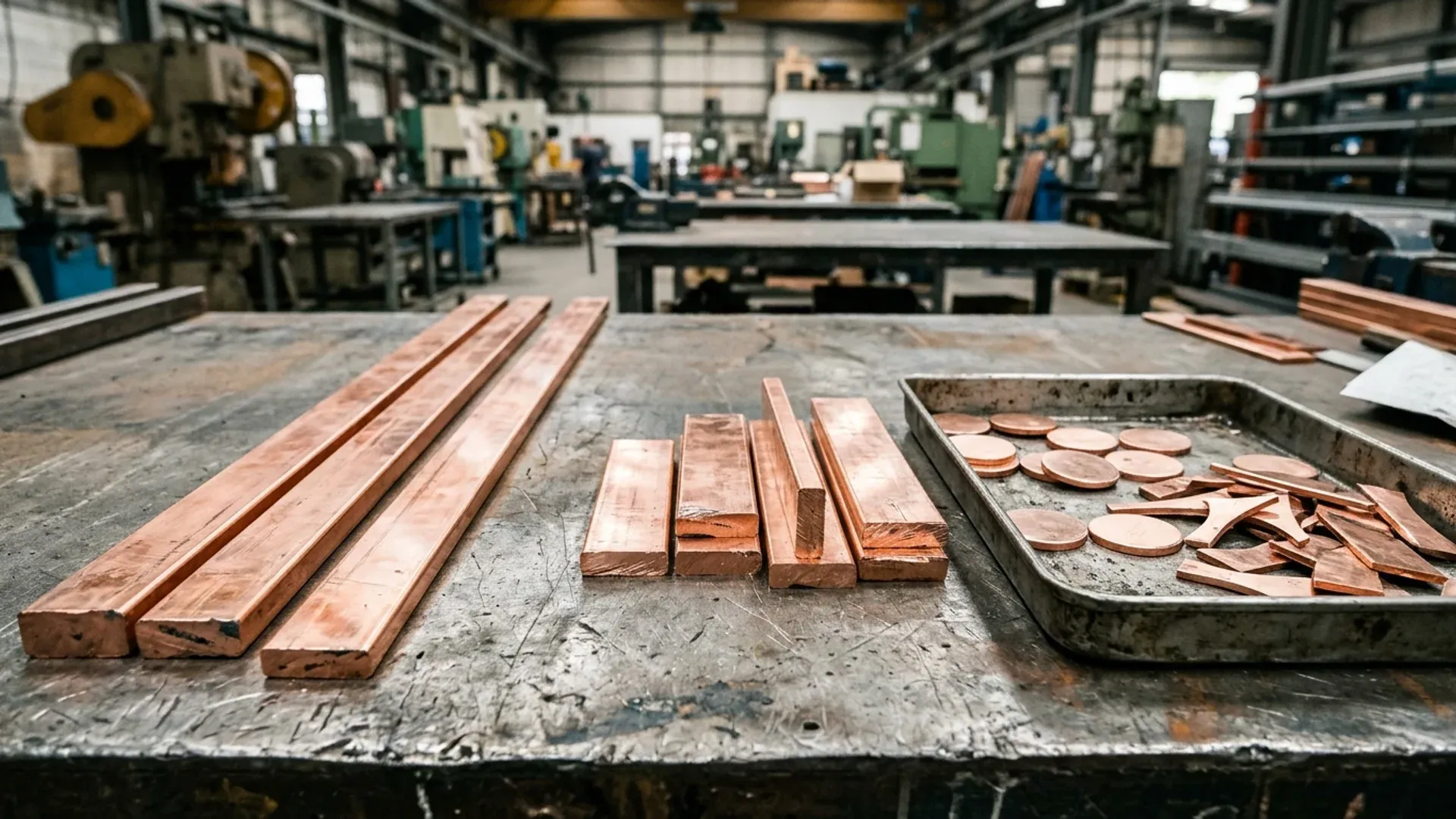
Two copper busbar quotes can show the same alloy, the same section and a 4% price difference. One fixes the metal basis on the order date; the other resets it before dispatch. One includes a scrap credit at the recycler’s clean-offcut rate; the other assumes mixed swarf. The lower headline price is not necessarily the lower net cost.
Put those terms on the same basis before assigning a saving to a machine or cutting layout. The useful figure is the net copper material cost for the same accepted output, with the same pricing period and delivery scope.
Make quote validity a pricing rule
Begin with the material grade, condition, section, supplied length and quantity. Then separate the metal basis from conversion charges, freight and other quoted costs. The London Metal Exchange operates the copper reference market, but a benchmark quotation does not include every cost of delivering a specified busbar section to the factory.
“Valid for seven days” is incomplete if the metal component can still reset later. Have each supplier state:
- the exact price reference or fixed metal basis, currency and reference period;
- the event that fixes the metal price, such as order acceptance or material allocation;
- which premiums and delivery charges remain fixed;
- what changes after the validity deadline or if the delivery date moves.
Record the date of each input. If one offer uses a daily price and another a monthly average, first compare their pricing mechanisms; the headline totals may reflect different market periods. Refresh both stock and scrap quotations before approving a purchase rather than replacing only the more visible copper benchmark.
Deduct the scrap credit from both routes
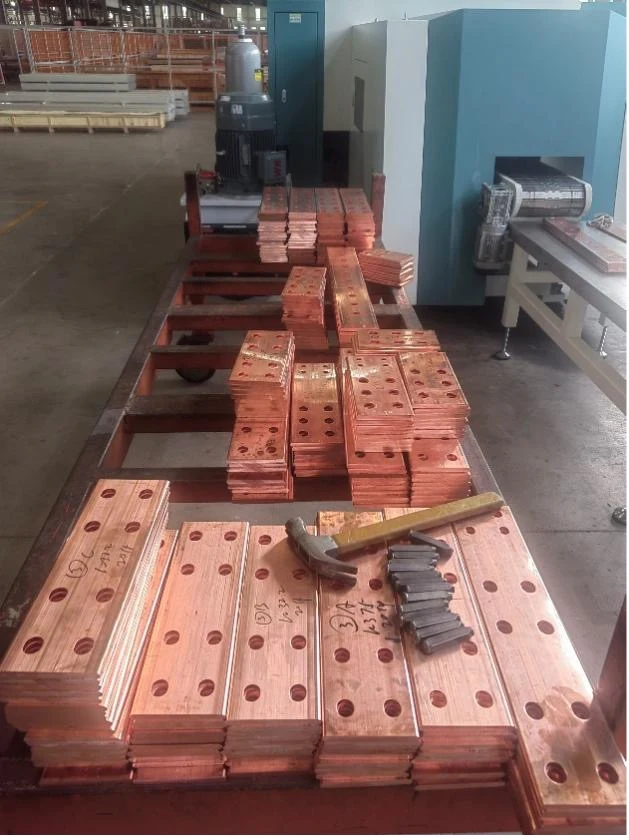
For material purchased and processed within the same comparison boundary:
Net material cost = purchased input mass × delivered stock price − sold scrap mass × net recovery price
Use your recycler’s quotation for the actual scrap stream. Classification, contamination, weighing, collection charges and payment timing affect recovery. If collection or processing fees are charged separately, deduct them from the recovery price or add them as separate costs—once.
Consider a hypothetical job producing 1,000 kg of accepted parts. Route A achieves 90% accepted-output yield; Route B achieves 95%. In this simplified example, all material outside accepted parts is sold as scrap, with no retained remnants or unaccounted losses. Delivered stock is assumed to cost USD 12/kg and net scrap recovery USD 8/kg. Recovery rates vary widely: clean, segregated busbar offcuts may recover a large share of the purchase price, while contaminated swarf, mixed alloys or material with attached insulation may recover much less. The 8 USD/kg figure is an illustrative clean-offcut value, not a site-wide assumption. These prices are calculation inputs, not current market quotations.
| Calculation | Route A | Route B |
|---|---|---|
| Accepted-output yield | 90% | 95% |
| Required input, kg | 1,111.11 | 1,052.63 |
| Scrap sold, kg | 111.11 | 52.63 |
| Stock purchase cost, USD | 13,333.33 | 12,631.58 |
| Copper scrap credit, USD | 888.89 | 421.05 |
| Net material cost, USD | 12,444.44 | 12,210.53 |
Required input is accepted output / yield. Route B reduces the stock purchase by USD 701.75, but it also reduces scrap proceeds. The net material benefit is USD 233.92, calculated before rounding the intermediate values.
Another way to check the result is to multiply the input reduction by the difference between stock cost and scrap recovery:
(1,000 / 0.90 − 1,000 / 0.95) kg × (12 − 8) USD/kg = USD 233.92
Under this mass balance, every USD 1/kg change in that price spread changes the yield benefit by about USD 58.48. A smaller spread reduces the net material saving even though the quantity of stock avoided is unchanged. Labor, financing, finishing and machine costs sit outside this calculation and need their own lines.
A remnant is not automatically scrap revenue
A usable remnant stays in inventory until it is consumed, sold or written off. Label its material, section and remaining length so that a later job can actually use it. Counting a remnant as both reusable stock and sold scrap gives the same material two credits.
Rejected finished parts need a separate record too. Selling their metal may recover some value, but the shop has already spent time on cutting, punching, bending or finishing. A layout with a good material yield can still be expensive if it increases those losses.
For a trial, reconcile opening material and new input against accepted parts, retained remnants, sold scrap and documented losses. Use the same period and measurement boundary for both routes. If the supplier’s layout depends on combining several orders, check whether those orders normally arrive together and share the required material specification.
Use the comparison in an equipment quotation
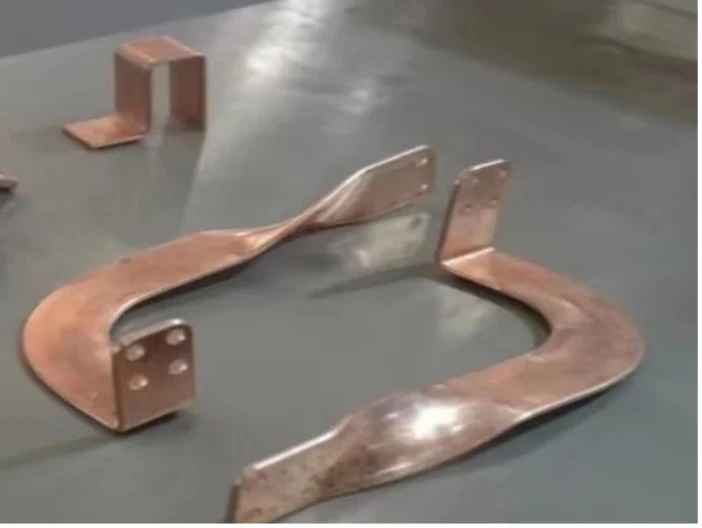
For a punching and shearing workstation, request a layout for a representative order file, its input mass and the remnants it leaves. Ask how those remnants are identified and retrieved, and include the handling or programming needed to reuse them.
Carry only the verified net material benefit into the equipment comparison. Keep purchase price, tooling, installation and other costs in the busbar machine cost model. If a proposed annual saving depends on a particular order mix or scrap price, show how it changes when those inputs move.
A 3D nesting ROI example may use a different scrap-recovery assumption; put both models on the same recycler quotation before comparing the savings. For the customs side of an imported-material decision, keep the duty calculation separate; the Section 232 copper costing guide covers that boundary.
The final comparison sheet should let purchasing replace the stock price, recovery price or busbar quote validity date without rebuilding the model. Before the next quote review, re-run the same mass balance with the supplier’s current figures. If the net benefit disappears when the recovery price moves, what is the equipment case actually based on?
Frequently Asked Questions (FAQs)
Is the copper benchmark the delivered cost of busbar stock?
No. A stock quotation may also include conversion premiums, freight and other specified charges. Compare suppliers using the same grade, section, pricing date, delivery scope and currency.
Should scrap recovery be deducted when estimating nesting savings?
Yes, when comparing net material costs. Improved yield reduces purchased input but can also reduce scrap-sale proceeds. Calculate both effects using consistent mass and price assumptions.
Can reusable remnants be counted as both savings and scrap revenue?
No. Keep reusable inventory separate from scrap sold. Recognize its value using a consistent inventory policy and avoid counting the same material in two recovery categories.
Should I use the LME cash price or a delivered stock price?
Use the delivered stock price for the grade, section and delivery scope you actually buy. LME is a reference market, not a delivered price; conversion premiums, freight and currency belong in the comparison.
DHCNC-BP-60 CNC Punching & Shearing Workstation
Discover details, parameters, standard dies packages, and factory quotes.