
How Much Can 3D Nesting Software Save Switchgear Manufacturers as Copper Swings Past $13,000/Ton in 2026?
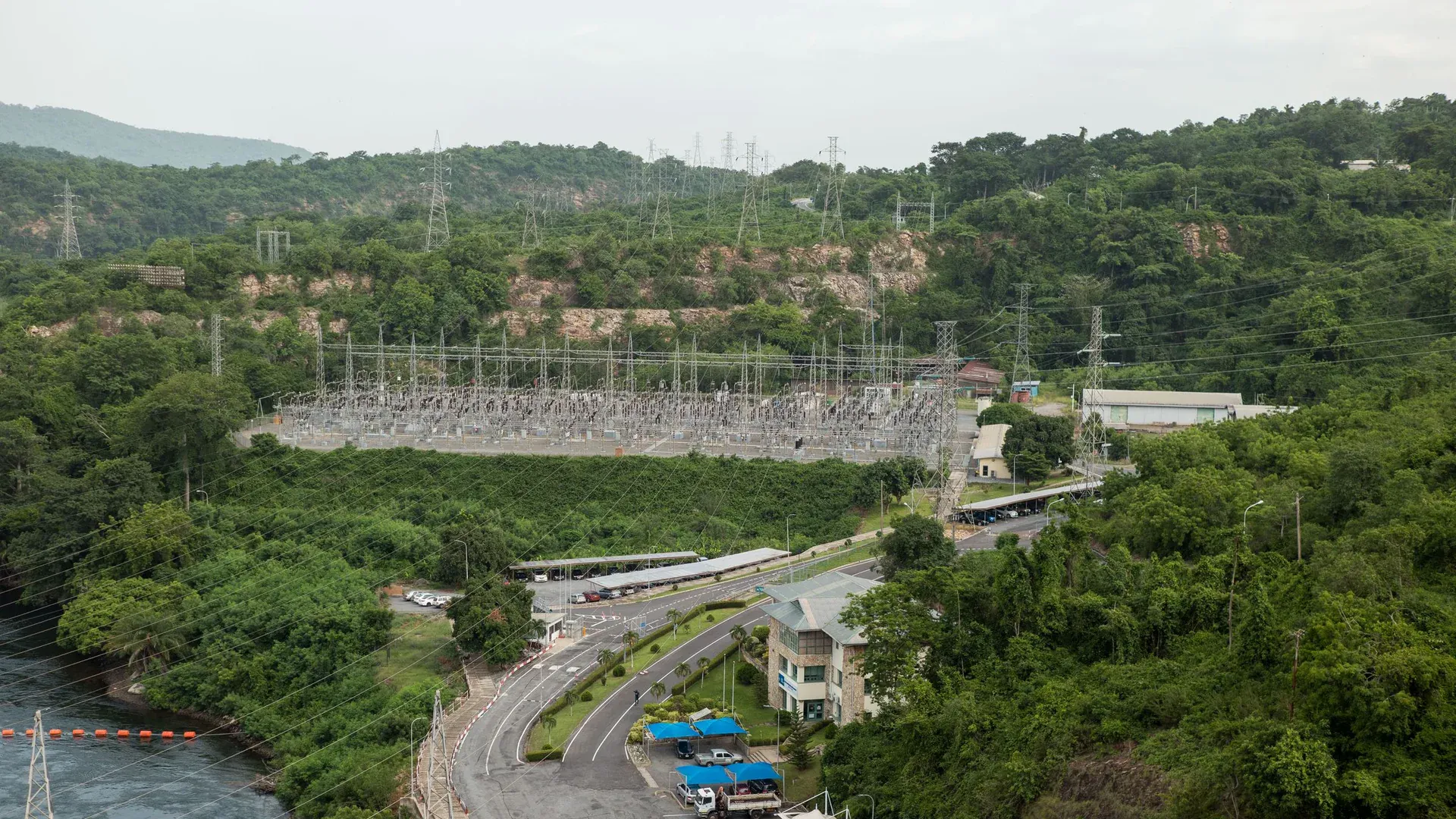
The global copper market entered 2026 in territory that no switchgear procurement manager wanted to see. LME copper surged 22% from under $11,000 per ton in late November 2025 to an all-time record of $13,387 per ton on January 6, 2026, driven by aggressive US stockpiling ahead of anticipated refined copper tariffs and surging AI data center demand, according to Goldman Sachs Research. Compounding this volatility, the 2026 Iran conflict that began on February 28 has disrupted maritime chokepoints including the Strait of Hormuz, driving up energy costs, marine insurance premiums, and freight rates across global metals supply chains. For a mid-size switchgear manufacturer processing 4 to 5 metric tons of T2 copper monthly, these overlapping pressures have turned copper procurement into a financial risk management exercise. At DH CNC, we have spent the past three years quantifying exactly how much 3D nesting-optimized CNC busbar processing can insulate manufacturers from this volatility–and the savings are larger than most plant managers anticipate.
Why Is July 2026 a Critical Inflection Point for Copper Prices?
The copper market in mid-2026 is caught between two opposing forces that make procurement planning exceptionally difficult. On one side, Goldman Sachs Research published a January 2026 analysis projecting that copper’s fair fundamental value sits around $11,500 per ton, with prices expected to decline to $11,000-11,200 per ton by Q4 2026 once the US administration announces its refined copper tariff decision. Their base case assumes a 15% tariff will be announced mid-year and implemented in 2027, which should end the aggressive US stockpiling that has drained LME warehouse inventories outside North America.
On the other side of the fence, several commodity research desks–including analysts at J.P. Morgan and specialized mining consultancies–argue that structural underinvestment in new copper mine capacity, combined with accelerating electrification demand from EV battery manufacturing and grid infrastructure buildout, will keep copper structurally undersupplied through at least 2028. The divergence between these forecasts creates a pricing corridor roughly $2,500 wide ($11,000 to $13,500 per ton), and procurement teams that budget at the wrong end of that corridor face a brutal margin compression.
What makes July 2026 specifically important is the convergence of three catalysts:
-
Mid-year US tariff decision window. Goldman Sachs Research explicitly identifies mid-2026 as the likely timing for the refined copper tariff announcement. If it materializes, expect a swift price correction. If it is delayed into 2027, the speculative bid under copper could persist for another six to nine months.
-
Post-conflict supply normalization uncertainty. The Iran conflict has now been active for five months. Mining Technology reports that while direct copper mine production has not been severely disrupted, the secondary effects–elevated marine insurance, rerouted shipping through longer Cape of Good Hope passages, and higher diesel costs for mining operations–are steadily inflating the cost floor for delivered copper. These logistics premiums do not evaporate overnight when hostilities end.
-
China demand trajectory. Goldman Sachs notes that China’s refined copper consumption has “weakened materially” in early 2026, with the pullback “more acute than in 2024.” Since China accounts for over 50% of global copper consumption, any sustained demand softness there acts as a bearish counterweight to Western electrification demand.
The practical takeaway for a procurement manager is straightforward: you cannot predict copper prices with confidence in 2026, but you can control how much copper you waste. That is where machine-level nesting optimization becomes a financial hedge, not just an operational improvement.
How Is the Iran Conflict Reshaping Copper Supply Dynamics?
The US/Israel conflict with Iran that began on February 28, 2026, transmits risk into copper markets through three distinct channels–and only one of them is obvious from reading LME price charts.

Channel 1: Strait of Hormuz logistics friction. The Strait handled approximately 20 million barrels per day of crude oil and petroleum products in 2025, representing roughly 25% of global seaborne oil trade. Any escalation in this corridor immediately inflates bunker fuel costs for bulk commodity shipping, and copper–whether in concentrate, cathode, or semi-finished form–moves by sea. According to Mining Technology’s March 2026 supply chain analysis, “shipping delays and rising insurance costs linked to disruption in the Strait of Hormuz are increasing the cost of moving bulk commodities” and extending transit times as vessels reroute around the Cape of Good Hope.
Channel 2: Energy cost passthrough to smelting. Copper smelting and refining are energy-intensive processes. Sustained oil price elevation directly increases the operating cost of every copper smelter globally, and those costs pass through to refined copper premiums–the surcharge above LME that physical buyers actually pay. Our procurement team at DH CNC tracks the Shanghai Futures Exchange (SHFE) copper premium weekly, and the spread between LME cash and delivered copper in Asian ports widened by approximately $85-120 per ton in the first quarter of 2026 compared to Q4 2025 averages.
Channel 3: Supply growth deceleration. The International Energy Agency’s Global Critical Minerals Outlook 2025 flagged that while new mining projects are catching up with demand growth, “supply gaps exist for copper and lithium”. Global copper mine supply growth slowed to approximately 1.1% year-over-year in 2026, down from 2.7% in 2025, as aging mines in Chile and Peru face grade decline and new projects experience permitting delays. When supply growth decelerates against structurally rising demand from grid infrastructure and EV manufacturing, even modest geopolitical shocks can trigger disproportionate price spikes.
| Supply-Side Pressure | Mechanism | Estimated Cost Impact (per ton copper) |
|---|---|---|
| Strait of Hormuz disruption | Elevated marine insurance + Cape rerouting | $60 - $120 added freight cost |
| Energy cost passthrough | Higher diesel and natural gas for smelting | $40 - $85 added processing cost |
| Supply growth deceleration | 1.1% YoY mine supply growth vs. 2.7% in 2025 | Structural price floor increase of $800 - $1,200 |
| US stockpiling (pre-tariff) | 600 kt drawn into US inventories in 2025-2026 | $500 - $1,500 LME spot premium outside US |
These pressures are not theoretical. At our factory in Jinan, we purchase copper busbar feedstock in 6-meter standard lengths weekly, and our own raw material costs have tracked LME movements with painful precision throughout 2026. This is precisely why we engineered our CNC busbar machines to squeeze every usable millimeter out of every bar.
How Much Copper Waste Can 3D Nesting Software Recover at Current LME Prices?
The concept is simple but the financial impact is substantial. Traditional manual busbar processing–where an operator measures, marks, and cuts copper bars using standalone hydraulic punches and shears–typically generates 12% to 15% material scrap. This scrap is not a design flaw; it is a geometric inevitability when you process parts sequentially without software optimization.

Here is what actually happens on a manual shop floor. An operator receives a work order for 50 busbar segments, each 850mm long, to be cut from standard 6,000mm copper bars. Doing the mental math: 6,000 divided by 850 equals seven segments per bar (7 x 850 = 5,950mm), leaving a 50mm remnant. But that remnant is too short for the mechanical clamp to grip safely, so the operator discards the last 200mm as unusable scrap. Multiplied across hundreds of bars per month, that “inevitable” waste compounds into tons of copper sold back to the recycler at a 70-80% discount to purchase price.
Our DHCNC-BP-60 CNC punching and shearing workstation attacks this problem at the algorithmic level through three mechanisms:
Project-level aggregation. Instead of processing work orders sequentially, the operator uploads the entire bill of materials (BOM) for a production batch. The software groups parts by thickness and material grade–all 10mm T2 copper parts, for example–and treats them as a collective nesting problem. Parts of different lengths are algorithmically arranged to minimize total remnant length across the entire batch, not just bar by bar.
Common-edge shearing. When two busbar segments share an identical cross-section, the software aligns them back-to-back so a single shear stroke separates both parts. This eliminates one tool strike, reduces cycle time, and prevents the accumulation of micro-scrap slivers that manual operators cannot avoid.
Dynamic clamp repositioning. The integrated servo-driven clamps on our CNC workstation automatically reposition based on coordinate calculations from the nesting software, allowing usable parts to be punched and sheared down to a 55mm minimum remnant. Compare that to the 200-300mm clearance margin required by traditional split-body hydraulic shears, and the cumulative savings become substantial.
| Processing Method | Average Scrap Rate | Minimum Remnant Length | 5 Tons/Month Copper Wasted |
|---|---|---|---|
| Manual layout + standalone hydraulic shear | 12% - 15% | 200mm - 300mm | 600 - 750 kg/month |
| Basic CNC with single-part programming | 5% - 8% | 100mm - 150mm | 250 - 400 kg/month |
| DHCNC-BP-60 with project-level 3D nesting | Under 3% | 55mm | Under 150 kg/month |
At a July 2026 effective copper cost of $11,000 per ton (LME spot plus fabrication premium and logistics), the difference between a 12% scrap rate and a 2.5% scrap rate on 5 tons of monthly throughput is 0.475 tons of copper saved per month–material that goes into finished switchgear busbars instead of a scrap bin. That is $5,225 per month, or approximately $62,700 per year, in pure material cost recovery. And this does not account for the labor hours saved by eliminating manual measurement and rework, nor the throughput gains from automated multi-station processing.
What Does a Real Mid-Size Switchgear Plant Save Annually?
To make this concrete, let me walk through a real cost model based on a customer we worked with in Southeast Asia–a mid-size low-voltage switchgear manufacturer processing approximately 4.5 metric tons of T2 electrolytic copper per month, primarily 6mm to 12mm thick bars for main distribution boards and feeder panels.

Baseline scenario (manual processing, before upgrade):
| Cost Element | Monthly Figure | Annual Figure |
|---|---|---|
| Copper procurement (4.5 tons at $11,000/ton) | $49,500 | $594,000 |
| Copper lost to scrap (12.5% average) | 0.5625 tons / $6,188 | 6.75 tons / $74,250 |
| Scrap resale recovery (at 25% of purchase price) | $1,547 | $18,563 |
| Net copper cost (procurement minus scrap recovery) | $47,953 | $575,438 |
| Labor: 1.5 skilled operators at $2,800/month each | $4,200 | $50,400 |
| Rework/rejects due to manual measurement errors | ~$600 | ~$7,200 |
| Total monthly copper-related operating cost | $52,753 | $633,038 |
Post-upgrade scenario (DHCNC-BP-60 with 3D nesting):
| Cost Element | Monthly Figure | Annual Figure |
|---|---|---|
| Copper procurement (4.5 tons at $11,000/ton) | $49,500 | $594,000 |
| Copper lost to scrap (2.5% with 3D nesting) | 0.1125 tons / $1,238 | 1.35 tons / $14,850 |
| Scrap resale recovery (at 25% of purchase price) | $309 | $3,713 |
| Net copper cost | $49,191 | $590,288 |
| Labor: 1 operator at $2,800/month | $2,800 | $33,600 |
| Rework/rejects (dimensional accuracy at ±0.2mm) | ~$50 | ~$600 |
| Total monthly copper-related operating cost | $52,041 | $624,488 |
The direct copper material savings land at approximately $4,950 per month, or $59,400 per year–right in the range of the $59,800 figure we cite based on current LME pricing. Add the labor reduction ($16,800/year) and rework elimination ($6,600/year), and the total annual operating cost reduction exceeds $82,000.
At that savings rate, a DHCNC-BP-60 integrated punching and shearing workstation pays for itself in material savings alone within 14 to 18 months, depending on configuration and tooling options. For higher-volume plants processing 8 to 10 tons monthly, the payback period compresses to under 12 months.
We have also seen plants realize additional savings by switching to our multi-function DH303-8P 3-in-1 machine when their production mix includes both copper and aluminum busbars. The independent hydraulic stations allow operators to run bending, punching, and shearing operations concurrently without tooling changeovers, which further compresses labor hours for mixed-material production schedules. For plants specializing in switchgear panel manufacturing where copper busbars represent 60-70% of total component cost, these savings flow directly to the bottom line.
How Do Section 301 Tariffs Compound the Total Cost Equation?
We cannot have an honest conversation about procuring CNC busbar equipment from China in 2026 without addressing the tariff environment head-on. The Section 301 tariffs on Chinese-origin industrial machinery, finalized by the USTR in September 2024, impose a minimum 25% additional duty on the declared customs value of imported CNC machine tools and metal processing equipment. In certain subcategories covering electrical manufacturing machinery, the effective rate can reach higher levels depending on the specific HTS classification.
Here is how the math works in practice–and why the tariff is not the dealbreaker many procurement managers assume it to be.
A DHCNC-BP-60 CNC busbar punching and shearing workstation configured for a standard switchgear production line has an ex-works (EXW) price that sits well below comparable European or Japanese CNC workstations. The 25% Section 301 duty is calculated against this EXW value, not against the total landed cost. When you add ocean freight, marine insurance, US customs brokerage, and inland trucking, the tariff represents roughly 15-18% of the total landed equipment cost–not 25%.
More importantly, when you amortize that tariff premium against the annual copper savings the machine generates, the math flips decisively in favor of the investment:
| Cost/Benefit Element | Amount |
|---|---|
| DHCNC-BP-60 equipment cost (EXW) | Competitive (contact our sales team for current quotation) |
| Section 301 duty (25% of EXW) | Included in total landed cost |
| Ocean freight + insurance + brokerage | ~$3,500 - $5,500 (varies by port) |
| Total landed equipment cost | Request a formal quotation |
| Annual copper material savings (4.5 tons/month at $11,000/ton) | $59,400 |
| Annual labor savings (0.5 FTE reduction) | $16,800 |
| Annual rework/scrap elimination | $6,600 |
| Total annual operating savings | $82,800 |
| Tariff premium recovery period | Under 6 months |
The tariff premium is real, and it adds to your upfront CapEx. But against annual savings exceeding $80,000, the incremental tariff cost is recovered within the first two quarters of operation. After that, every dollar of copper saved flows directly to operating profit.
We encourage any procurement team evaluating this investment to request a formal landed-cost quotation that includes current EXW pricing, real-time ocean freight rates to your nearest port, and the applicable HTS code for duty calculation. Our logistics team works with US customs brokers weekly and can provide a binding total-cost estimate in 48 hours.
What Procurement Strategies Should Switchgear Manufacturers Deploy Now?
After fifteen years of supplying CNC busbar processing equipment to switchgear manufacturers across 40 countries, our engineering and commercial teams have observed which procurement strategies separate the manufacturers that thrive during commodity volatility from those that merely survive. Here are the four approaches we see working in mid-2026:
1. Lock in Machine-Level Waste Reduction First
This is the low-hanging fruit that does not require you to become a commodities trader. A CNC busbar machine with integrated 3D nesting software–whether a dedicated punching and shearing workstation or a multi-function 3-in-1 platform–directly reduces your copper consumption per unit of output by 9 to 12 percentage points. That reduction is permanent, predictable, and unaffected by LME price movements. If copper prices fall to $9,000 per ton, you still save 9-12% on material. If they spike to $15,000, you save proportionally more. This is the closest thing to a free option on copper price volatility that a manufacturing engineer can deploy.
2. Diversify Copper Procurement Across Time Horizons
We are not commodity traders, but we see our most sophisticated customers layering their copper procurement: roughly 50-60% on quarterly contracts indexed to LME with fixed premiums, 20-30% on spot purchases when prices dip below their budget threshold, and 10-15% hedged through LME futures or options. The specific ratios depend on your working capital position and risk tolerance, but the principle is the same–do not bet your entire annual copper budget on a single pricing mechanism in a market where Goldman Sachs and J.P. Morgan cannot agree on the direction.
3. Evaluate Machine Flexibility for Material Substitution
A growing number of our customers in the substations and power distribution segment are maintaining the capability to process both copper and aluminum busbars on the same production line. When copper prices spike beyond a certain threshold, certain low-voltage applications can accept aluminum busbars with appropriate cross-section upsizing and surface treatment. This requires a CNC machine with independent tooling stations and material-specific software parameter libraries. Our DH303-8P platform supports this dual-material workflow with dedicated punch die clearances and bending compensation curves for both T2 copper and 6101-T6 aluminum, switchable in under two minutes.
4. Treat Nesting Software as a Financial Instrument
This is the mindset shift that separates cost leaders from the pack. When copper is at $11,000-13,000 per ton, every percentage point of scrap reduction is worth $110-130 per ton of throughput. A mid-size plant processing 60 tons annually saves $6,600-7,800 per year for every single percentage point of waste eliminated. Viewed through this lens, the 3D nesting software embedded in a modern CNC busbar machine is not an operational convenience–it is a financial instrument that pays a guaranteed, tax-free return measured in physically recovered copper.
Our customers in the EV busbar and new energy sector have been early adopters of this mindset because their OEM contracts carry strict material cost pass-through clauses. When you cannot pass copper price increases to your customer, waste reduction becomes a survival imperative. The same logic now applies to every switchgear manufacturer whose customers are pushing back on price increases in a competitive tender environment.
What Is the Bottom Line for Procurement Decisions in the Second Half of 2026?
Let me be direct about what I tell plant managers who visit our factory floor in Jinan. The copper market in the second half of 2026 will be shaped by political decisions in Washington and geopolitical dynamics in the Persian Gulf–two variables that no procurement spreadsheet can model with confidence. What you can model with confidence is the material yield of your busbar processing equipment.
If your shop floor is still relying on manual measurement, standalone hydraulic shears, and operator judgment to decide where to cut a $400 copper bar, you are leaving between 9% and 12% of your copper budget on the cutting table as scrap. At July 2026 prices, that waste is costing a 5-ton-per-month plant roughly $60,000 per year in unrecovered material value–before accounting for labor, rework, or throughput losses.
The alternative is a CNC busbar processing workstation where the software does the nesting math at the project level, the servo-driven clamps reposition dynamically to minimize remnants, and the operator’s job shifts from “measuring and guessing” to “loading and supervising.” The equipment premium pays for itself through copper savings alone, typically within 12 to 18 months. Every month after that, the machine effectively prints money by converting what used to be scrap into finished, saleable busbars.
If you are evaluating equipment for a new switchgear production line or upgrading an existing one, our application engineering team can run a custom nesting yield analysis using your actual production BOM to quantify exactly what the savings would look like. Send us your typical monthly work orders and copper bar specifications, and we will return a detailed material yield comparison between your current process and a DHCNC-optimized workflow. No obligation, just real numbers.
For a deeper dive into how our machines handle the specific metallurgical challenges of copper versus aluminum processing, see our engineering analysis on copper vs. aluminum busbar machining differences. And if you are evaluating multiple suppliers, our guide on verifying and auditing CNC busbar machine factories in China covers the technical due diligence checklist we recommend to every procurement team.
Frequently Asked Questions (FAQs)
How much copper waste can 3D nesting software realistically eliminate?
In our factory tests and customer deployments, project-level 3D nesting algorithms consistently reduce copper scrap rates from an industry average of 12-15% down to under 3%. For a plant processing 5 tons of copper monthly, that translates to roughly half a ton of copper saved every month--material that would otherwise be sold back as scrap at a 70-80% discount to purchase price.
Is 3D nesting software worth the investment at current copper prices?
At July 2026 LME copper prices hovering between $11,000 and $13,000 per ton, the ROI on nesting-optimized CNC busbar machinery is measured in months, not years. A mid-size switchgear manufacturer processing 4-5 tons monthly can recover the full cost of a DHCNC-BP-60 punching and shearing workstation through material savings alone within 12 to 18 months, without factoring in labor savings or throughput gains.
How do Section 301 tariffs affect the total cost of CNC busbar equipment from China?
Section 301 tariffs add a minimum of 25% to the declared customs value of Chinese-origin industrial machinery imported into the United States. However, this tariff is calculated on the ex-works machine price, not the total landed cost. Given that our DHCNC-BP-60 workstation can save $50,000-60,000 annually in copper waste alone, the tariff premium is typically recovered within the first year of operation through material savings. We also work with clients on optimized logistics and customs brokerage strategies to minimize the total landed cost impact.
DHCNC-BP-60 CNC Punching & Shearing Workstation
Discover details, parameters, standard dies packages, and factory quotes.