
How Is Europe's €584B Grid Expansion Driving Busbar Processing Equipment Procurement in 2026?
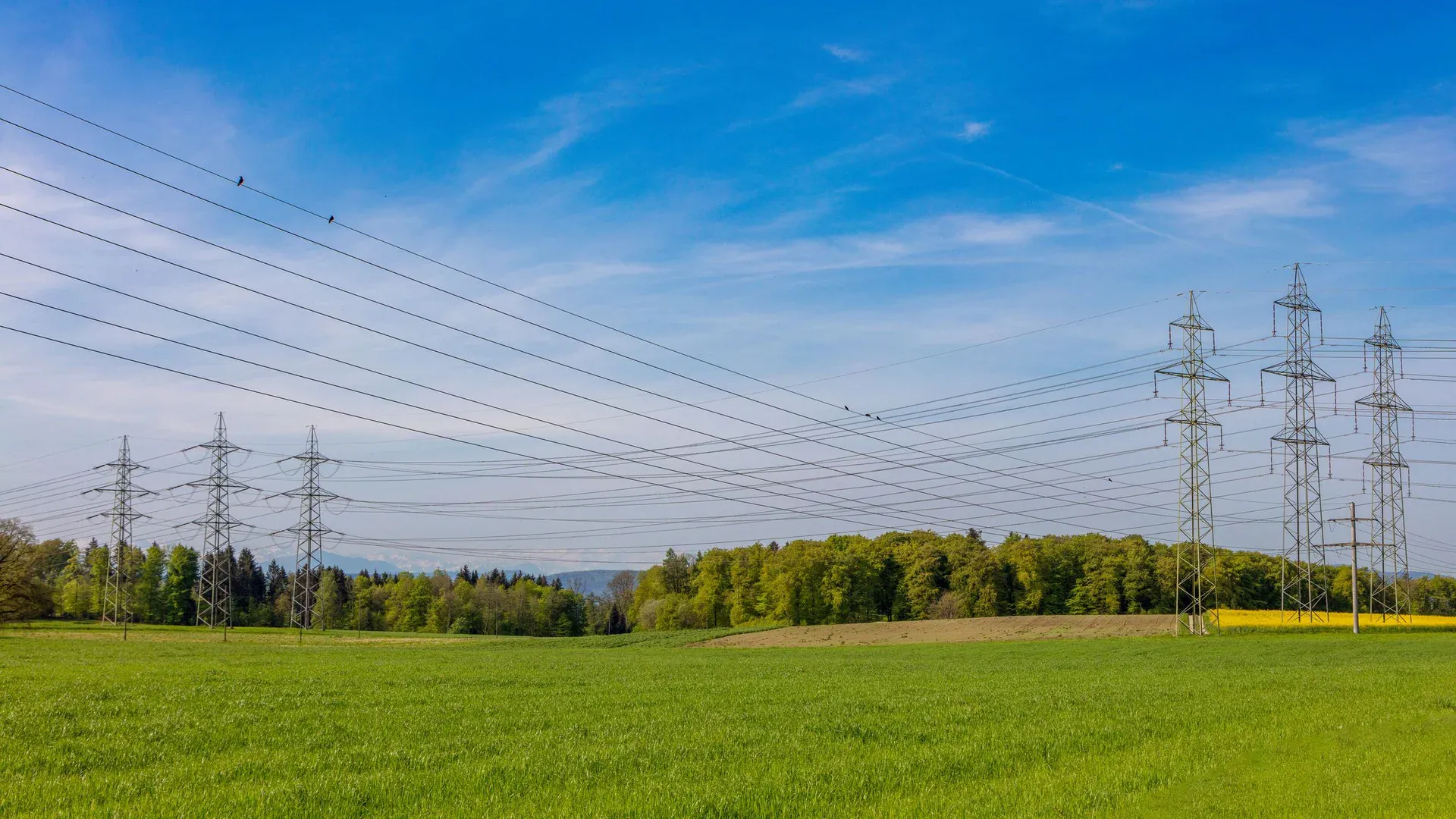
Europe’s electricity grid is undergoing what the French transmission system operator RTE calls a “make-or-break” decade. The European Commission estimates that approximately €584 billion in electricity grid investment is required by 2030 to accommodate a projected 60% rise in electricity consumption from 2023 levels and to integrate the approximately 600 GW of new renewable generation capacity that member states have committed to deploy. 40% of EU distribution grids are more than 40 years old. Lead times for large power transformers have stretched to 18-24 months, and high-voltage switchgear procurement is facing similar supply constraints. TenneT’s 2026 investment plan, published in April 2026, explicitly references a shift toward standardized, prefabricated substation solutions to accelerate deployment. Every one of those substations requires busbar systems—copper and aluminum conductors that must be cut, punched, and bent to precise dimensional specifications in volumes that Europe’s existing fabrication capacity cannot meet without significant equipment investment. At DH CNC, our European inquiry volume from panel builders, switchgear manufacturers, and EPC contractors has increased by approximately 150% since mid-2025. The signal is unambiguous: Europe is entering a sustained busbar fabrication capacity expansion cycle.
Why Is Europe’s Grid Investment Cycle Structurally Different from Previous Infrastructure Waves?
The €584 billion figure is frequently cited in policy documents, but procurement teams need to understand the composition of that spending to identify where busbar fabrication demand will concentrate. The investment breaks down into four categories, each with distinct busbar demand profiles:
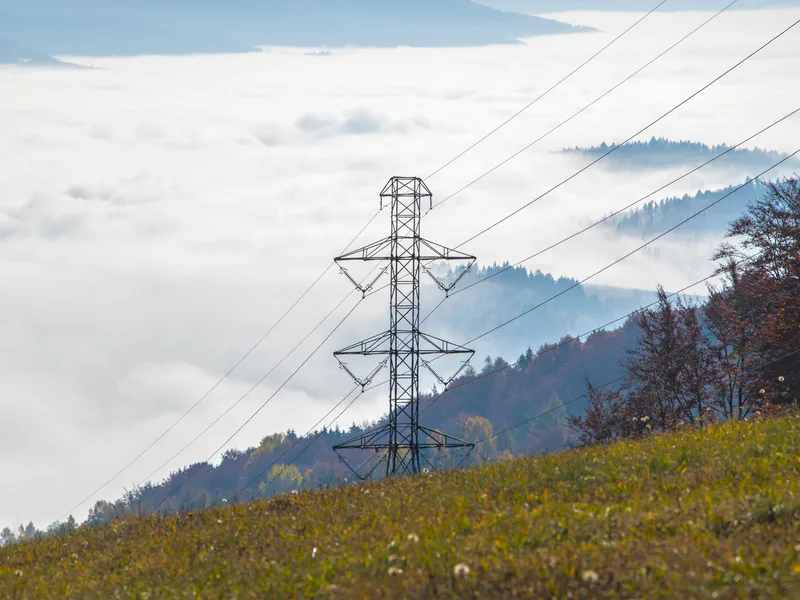
Transmission network expansion (€477 billion through 2040). This covers high-voltage (220-400 kV) and extra-high-voltage (HVDC) lines, associated substations, and cross-border interconnectors. The TEN-E (Trans-European Networks for Energy) priority corridors—including the North Sea offshore grid, the Iberian Peninsula-France interconnections, and the Baltic Energy Market Interconnection Plan—represent the largest individual projects. Each 400 kV substation in the TEN-E program contains roughly 800-1,500 fabricated busbar segments for the switchgear, busduct, and auxiliary power systems.
Distribution network modernization (€67 billion annually through 2050). This is the less visible but higher-volume segment. Europe’s medium-voltage (10-36 kV) and low-voltage (400V) distribution networks require replacement of aging switchgear, transformers, and distribution panels across hundreds of thousands of secondary substations. Each secondary substation replacement involves 50-150 busbar segments—lower complexity than transmission substation busbars, but far higher aggregate volume.
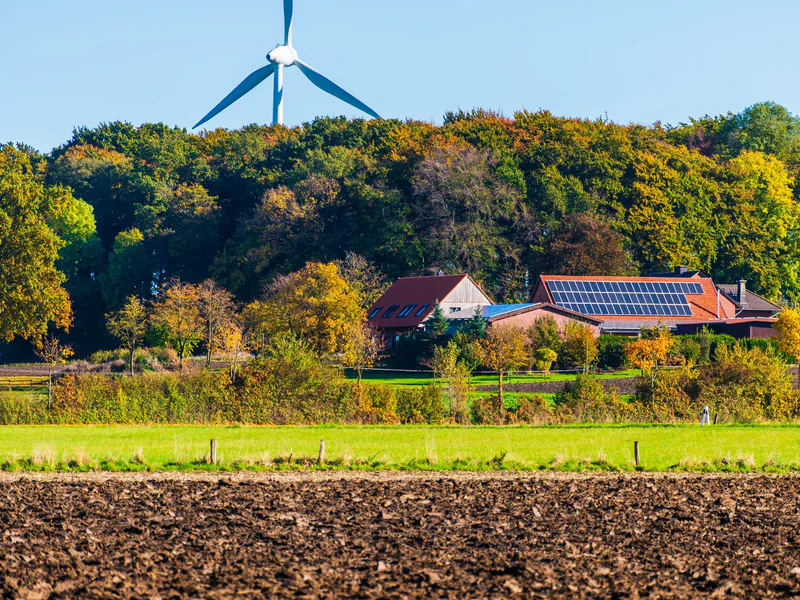
Renewable energy grid connection. The EU’s target of 600 GW of new renewable capacity by 2030 requires grid connection infrastructure at every solar park, wind farm, and battery storage facility. Each utility-scale solar installation requires a medium-voltage switchgear lineup with busbar systems to aggregate the output of multiple inverters. Our PV solar inverter busbar processing guide covers this application in detail.
Data center and industrial electrification. Europe’s data center capacity is expanding rapidly, with Amazon, Microsoft, and Google all operating or building European cloud regions. Data center busbar trunking systems rated for 2,500-4,000A are a distinct product category with specific precision requirements, as analyzed in our companion article on hyperscale data center busbar manufacturing.
| Investment Category | Estimated Spend (to 2030) | Busbar Demand Profile | Fabrication Complexity |
|---|---|---|---|
| Transmission (HV/EHV) | ~€250B | 800-1,500 segments/substation; copper dominant | High—IEC 62271 clearances, large cross-sections |
| Distribution (MV/LV) | ~€200B | 50-150 segments/substation; aluminum growing | Medium—standardized designs, high volume |
| Renewable grid connection | ~€80B | 100-400 segments/installation; mixed Cu/Al | Medium—DC busbars for solar, AC for wind |
| Data center / industrial | ~€54B | 200-500 segments/facility; 2,500-4,000A rated | High—flatness-critical, modular tap-off systems |
What Does TenneT’s Shift to Prefabricated Substations Mean for Busbar Fabrication?
TenneT’s 2026 investment plan marks a strategic shift from bespoke, project-by-project substation design toward standardized, prefabricated solutions. This is not merely an engineering preference—it is a response to the supply chain reality that the European transmission sector cannot recruit and deploy enough skilled field labor to build hundreds of custom-designed substations simultaneously using traditional construction methods.
For busbar fabricators, the standardization trend has two consequences:
Standardized busbar designs enable production automation. When a busbar design is repeated across 50 or 100 substations rather than being a one-off for each project, the economics of CNC automation flip decisively. A multi-function DH303-8P busbar processing center can store and recall parameter libraries for standardized busbar part numbers, reducing setup time from 30-45 minutes to under 5 minutes per batch changeover. The machine’s Siemens PLC stores bending compensation curves, punching force profiles, and shear blade clearance settings for each standardized part number—enabling an operator with basic training to produce consistent output across thousands of identical busbar segments.
Framework agreements reward process capability documentation. The EU Public Procurement Act, expected in July 2026, is anticipated to encourage long-term framework agreements between transmission operators and equipment suppliers. These agreements typically require suppliers to demonstrate process capability (Cpk values), material traceability, and quality system certification—areas where CNC fabrication with integrated quality data logging provides a competitive advantage over manual processing with paper-based inspection records.
Our customers serving the European utility sector increasingly request that our machines include automated quality data logging: every punched hole position verified against the CAD model, every bend angle recorded with timestamp and operator ID, and every production lot traceable to the raw material certificate. This data package becomes part of the customer’s submission to the transmission operator’s quality audit—and it is functionality that manual fabrication simply cannot provide.
How Does the EU’s 50Hz Grid and CE Marking Framework Affect Equipment Sourcing from China?
European busbar fabricators sourcing CNC processing equipment from China must navigate two technical compliance dimensions: the 50Hz grid specification and the EU’s CE marking requirements under the Machinery Directive 2006/42/EC.
50Hz Grid Configuration. Continental Europe operates on a 50Hz system at 400V phase-to-phase for industrial three-phase power. This is the same frequency as China, India, and most of Asia, which means the motor windings, VFD programming, and control transformer configuration on our standard production machines are inherently compatible with European grid parameters. The key specification details:
| Specification | EU 50Hz/400V Standard | DH CNC European Export Configuration |
|---|---|---|
| Main drive motors | 50Hz, 400V ±10% | Factory-standard (same as domestic Chinese spec) |
| VFD programming | 400V/50Hz input, motor-specific V/Hz curve | Siemens VFD, pre-configured |
| Control transformer | 400V primary / 230V & 24V secondary | Standard export taps |
| HMI language options | German, English, French, Spanish, Italian | Multi-language Siemens HMI |
| Documentation | EU Machinery Directive technical file | CE marking support documentation package |
| Spare parts logistics | DHL Express to EU: 5-7 business days | Standard export shipping |
CE Marking and Machinery Directive Compliance. The EU Machinery Directive 2006/42/EC requires that industrial machinery placed on the EU market carry CE marking, supported by a technical file including risk assessment, design calculations, and conformity declaration. Our machines ship with a CE support documentation package that includes the machine’s risk assessment per EN ISO 12100, electrical safety compliance per EN 60204-1, and EMC compliance test reports. The actual CE marking and Declaration of Conformity are issued by the EU-based importer or authorized representative—we provide the technical evidence; the importer completes the conformity assessment.
For EU customers who prefer to avoid the compliance burden of self-declaration, we can ship through an EU-based authorized representative who handles the CE marking process. This adds approximately 2-3 weeks to the delivery timeline and a modest incremental cost that is typically recovered through reduced customs inspection delays at the port of entry.
How Are Rising Equipment Lead Times and Material Costs Reshaping European Procurement Strategies?
The supply constraints in the European electrical equipment market are forcing procurement teams to adopt strategies that were unusual in the pre-2022 era of stable lead times and predictable pricing. The Institut Français des Relations Internationales (Ifri) documented in May 2026 that “especially high levels of constraints [exist] for high-voltage direct current (HVDC) lines, offshore transmission lines, underground cables, switchgears and high-voltage transformers,” with estimated prices for these assets increasing consistently since 2023.
The practical implications for busbar fabricators and their equipment suppliers:
Lead time transparency has become a competitive differentiator. When a transformer manufacturer quotes 18-24 months for a large power transformer, the switchgear and busbar system that connects to that transformer must align with the same project schedule. A busbar fabricator who can commit to a 6-8 week delivery timeline—supported by CNC automation that reduces fabrication labor hours by 60-70% compared to manual processing—wins orders that would previously have gone to larger competitors with longer backlogs.
Copper procurement is shifting from spot to contract. European copper premiums—the surcharge above LME that physical buyers pay for delivered copper—have widened as demand from grid infrastructure, data centers, and EV manufacturing competes for refined copper supply. Fabricators who negotiate annual copper supply agreements with metal service centers indexed to LME plus a fixed premium gain both cost predictability and allocation priority. Our most successful European customers have adopted this procurement discipline and combined it with CNC nesting optimization that reduces copper scrap from 12-15% to under 3%—extending the purchasing power of their copper contracts.
The business case for in-house busbar fabrication has strengthened. A European panel builder who previously purchased fabricated busbars from a specialist supplier can now justify in-house CNC busbar processing on two grounds: (1) elimination of supplier lead time variability, and (2) material cost savings of 9-12% through nesting optimization. At a European industrial electricity cost of €0.15-0.25/kWh, the energy efficiency advantage of servo-hydraulic CNC machines over conventional hydraulic equipment—analyzed in our servo-hydraulic vs. conventional busbar bending TCO comparison—adds an additional €3,000-6,000/year in energy savings for a two-shift operation.
What Should European Busbar Fabricators and Panel Builders Prioritize Now?
For projects changing medium-voltage switchgear platforms, review the 2026 SF₆-free transition and busbar-interface checks. Gas compliance, equipment handover, and the revised copper connection drawing are related but separate parts of the procurement package.
European sourcing plans also need a product-by-product carbon-border check. The EU CBAM guide for copper and aluminum busbar suppliers separates the current 2026 scope and importer threshold from the proposed downstream expansion, and explains why raw bar, fabricated conductors, assemblies and machines require separate CN-code reviews.
Having supplied CNC busbar equipment to European customers across Germany, Poland, the Netherlands, Italy, Spain, and the Czech Republic—all of which appear in our GSC country data for 2026—our practical recommendations for European fabricators are:
Audit your current fabrication capacity against the project pipeline. The TEN-E priority corridor projects, national transmission plans (TenneT, RTE, National Grid’s Great Grid Partnership at £14.5 billion), and distribution network modernization programs are public information. Map your current monthly busbar fabrication throughput against the demand implied by the projects in your region over the next 3-5 years. If the gap exceeds 30%, equipment investment now—before lead times on CNC machinery also extend—is the prudent course.
Pursue framework agreement qualification. Transmission operators and large EPC contractors are moving toward framework agreements with pre-qualified suppliers. The qualification process typically requires ISO 9001 certification, documented process capability (Cpk ≥1.33), and a factory audit. Initiate this process now; the qualification timeline should not be the bottleneck when the framework agreement is tendered.
Standardize your busbar designs for automation. If your production currently consists of custom busbars fabricated to individual project drawings, identify the subset of designs that repeat across projects—standard hole patterns, common bend geometries, recurring cross-sections—and build CNC parameter libraries for those designs. Standardization does not mean eliminating custom work; it means automating the repeatable portion so that skilled labor is deployed on the genuinely custom portion.
For manufacturers evaluating equipment for switchgear panel busbar fabrication, our engineering team can run a throughput analysis based on your typical busbar design mix and project volume projections. For customers serving the transformer and busduct market, we provide configuration proposals matched to the larger cross-sections and tighter bend radii typical of that application.
For a country-specific deep dive into Europe’s largest electrical equipment market, see our Germany busbar and switchgear market guide, which covers VDE 0660 standards, DIN 43670 dimensional requirements, and the SuedLink/SuedOstLink HVDC corridors. For the North American parallel, our US IRA-driven busbar manufacturing reshoring analysis covers Section 48C tax credits and 232 tariff implications for American manufacturers.
Capacity planning should also account for constraints outside the busbar cell. Our 2026 transformer shortage and busbar fabrication capacity guide shows how to convert uncertain transformer delivery dates into controlled drawings, material releases and production windows.
Frequently Asked Questions (FAQs)
How much is Europe investing in electricity grid infrastructure through 2030?
The European Commission estimates that approximately €584 billion in electricity grid investment is required by 2030—roughly €67 billion annually from 2025 to 2050, according to Eurelectric's Grids for Speed analysis. This breaks down into approximately €477 billion for transmission networks and the remainder for distribution by 2040. The investment is driven by three concurrent pressures: the need to connect approximately 600 GW of new renewable generation capacity, the replacement of aging distribution assets (40% of EU distribution grids are more than 40 years old), and the projected ~60% rise in electricity consumption from 2023 to 2030 driven by electrification of transport, heating, and industrial processes. This represents the largest coordinated grid investment cycle in European history.
What do EU grid investments mean for busbar processing equipment demand specifically?
Every new substation requires switchgear assemblies, and every switchgear assembly requires busbars. The EU's transmission expansion plans encompass hundreds of new and upgraded substations across the TEN-E priority corridors. TenneT's 2026 investment plan specifically references standardization around prefabricated substation solutions, which drives demand for consistently fabricated busbar assemblies produced to standardized dimensions. The EU Public Procurement Act (expected July 2026) is anticipated to encourage long-term framework agreements that provide demand visibility to equipment suppliers. For busbar fabricators, this means sustained multi-year demand with a premium on production consistency and documented quality systems—precisely the capabilities that CNC busbar processing equipment delivers over manual fabrication.
How do European grid frequency (50Hz) and voltage standards affect busbar machine specification?
Continental Europe operates on a 50Hz grid at 400V phase-to-phase for low-voltage industrial applications. CNC busbar processing machines destined for European customers must be configured with 50Hz motor windings, VFDs programmed for 400V/50Hz input, and control transformers tapped for 400V primary. At DH CNC, our European export configuration mirrors the standard 50Hz specification we use for our domestic and Asian markets, with CE marking documentation, German/English/Spanish HMI language options, and compliance with the EU Machinery Directive 2006/42/EC. For manufacturers serving multiple regions, our machines support parameter libraries that store material-specific bending compensation curves, making it straightforward to switch between European metric standards and other regional specifications.
DH303-8P 3-in-1 CNC Busbar Processing Machine
Discover details, parameters, standard dies packages, and factory quotes.