
SF6-Free Switchgear in 2026: Busbar Interfaces and Procurement Checks
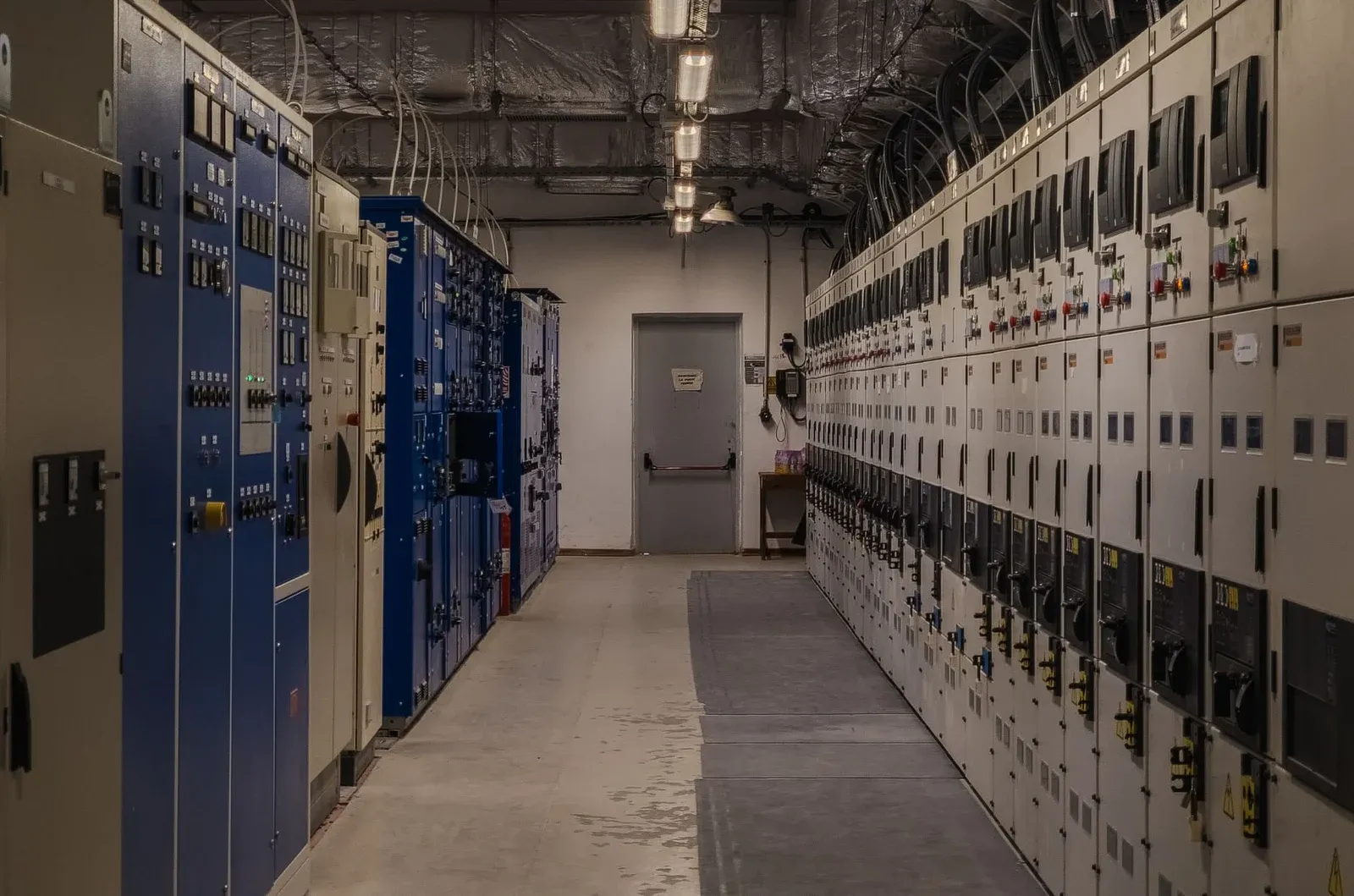
A replacement switchgear order can satisfy the gas-selection requirement and still arrive with incompatible copper connections. Terminal heights, phase positions, support arrangements, and service access may change when a project moves to a different equipment platform.
For busbar suppliers, the 2026 SF₆ transition is therefore an interface-control problem as well as a policy issue. The workshop needs an approved connection drawing for the selected switchgear, not a request to reproduce the previous copper parts with a new project name.
This article addresses procurement and fabrication planning. It is not a legal determination for a particular installation, and the cabinet photograph does not identify the insulating medium or certify F-gas compliance.
What the 2026 Restriction Actually Covers
Under the phased provisions of Regulation (EU) 2024/573, the relevant 1 January 2026 restriction concerns putting into operation medium-voltage electrical switchgear for primary and secondary distribution up to and including 24 kV that uses, or relies on, fluorinated greenhouse gases in the insulating or breaking medium. The next medium-voltage band, above 24 kV through 52 kV, has a 1 January 2030 date. Scope and derogations still need review.
ESB Networks’ F-gas implementation guidance explains these dates and the importance of evidence at handover. It also distinguishes putting equipment into operation from first grid energization and from factory testing. Its guidance is an operator’s implementation reference, not a substitute for the legislation or case-specific advice.
For a live project, assign responsibility for checking the exact equipment category, contractual history, applicable exceptions, and required declarations. Do not infer eligibility from an order date or a sales label alone.
SF6-Free Is Not a Complete Technical Specification
The absence of SF₆ does not, by itself, describe all gases used in the equipment. Ask for the actual insulating and breaking media and the manufacturer’s statement covering the proposed configuration. Distinguish “SF₆-free” from a claim that the relevant equipment does not use or rely on fluorinated greenhouse gases.
Manufacturers offer different technical architectures. ABB’s SF₆-free medium-voltage portfolio illustrates that there are product-specific routes through the transition. A portfolio overview should lead to the exact model documentation, not replace it.
Once a product is selected, obtain its interface drawings, installation constraints, environmental conditions, and required verification evidence. A shared nominal voltage and current do not make two cabinets mechanically interchangeable.
This is a more useful purchasing response than treating the transition as a general forecast of copper consumption. The policy creates a reason to review equipment selection; the resulting busbar workload depends on the actual projects and interfaces being changed.
Freeze the New Interface Before Ordering Copper
Create an interface register that gives each connection a drawing reference, revision, owner, and release status. The register should separate dimensions supplied by the switchgear manufacturer from dimensions controlled by the panel builder or installation contractor.
| Interface item | What to confirm before fabrication |
|---|---|
| Terminal geometry | Hole pattern, contact land, orientation, and allowed connection method |
| Phase arrangement | Centerlines, relative positions, and approved routing envelope |
| Mechanical support | Permitted loads, fixing points, unsupported lengths, and movement needs |
| Insulation system | Barriers, termination details, and applicable spacing requirements |
| Thermal conditions | Conductor arrangement, enclosure conditions, and connection assumptions |
| Installation access | Tool clearance, fastening sequence, inspection access, and replaceability |
Do not use a copper link to pull misaligned equipment into place. An installation gap is not automatically a fabrication tolerance that the bar should absorb. Resolve the cabinet position, foundation condition, and terminal location before committing the conductor geometry.
Where a transition affects both medium- and low-voltage equipment, keep their interfaces separate. A medium-voltage manufacturer’s terminal requirement should not be replaced with a spacing rule taken from a low-voltage assembly guide.
Requalify the Changes Instead of Copying the Old Busbar
A change can be electrically small and mechanically significant, or the reverse. Moving a terminal may require a new offset that alters stiffness, clearance, and access. Changing the support arrangement may affect fault loading even if the conductor cross-section remains unchanged.
The responsible designer should identify which parts of the previous verification remain applicable and which need additional assessment. Keep that decision explicit. A new manufacturer’s equipment, a different insulation arrangement, or an altered assembly geometry should not inherit the previous design’s evidence by assumption.
The workshop can support this review by supplying accurate models, sample parts, process records, and dimensional inspection. It cannot establish medium-voltage system compliance solely by producing smooth edges and correct hole spacing.
For fabrication discussions, the substation and power-distribution solution overview helps define the manufacturing scope. System design, insulation coordination, and equipment verification remain separate responsibilities.
Split the Supply Package Into Two Evidence Sets
Keep regulatory evidence and fabrication evidence connected but distinct. The first establishes the equipment’s applicable compliance basis. The second shows that the supplied parts match the approved design.
The regulatory set should be owned by the operator and appropriate compliance parties, with manufacturer declarations and any project-specific supporting records. The fabrication set should contain the approved drawings, material identity, processing instructions, inspection results, and controlled concessions.
Give interface changes a clear route through both sets. If the switchgear manufacturer revises a terminal drawing, identify the affected busbar part numbers, work in progress, installed parts, and verification decisions. Do not let a revised PDF remain in an email while the shop continues using an older CNC program.
Use the finished copper-busbar inspection checklist to document supplied geometry and condition. It complements the equipment handover file; it does not replace it.
What the Transition Means for a Busbar Workshop
The immediate opportunity is reliable handling of design changes: new terminal patterns, revised offsets, controlled material substitutions, and better part-to-drawing traceability. It is not evidence that every workshop needs a new production line.
A DHCNC-BP-60 punching-and-shearing cell can be evaluated for applicable flat-bar features within its agreed processing scope. It is not a complete SF₆-free switchgear manufacturing system, nor does machining a connection establish the gas or insulation compliance of the cabinet.
The broader European grid procurement context explains why buyers are reviewing capacity. For an individual order, the safer production decision is more specific: freeze the selected equipment interface, verify the changed design, and release only the copper parts that belong to it.
Frequently Asked Questions (FAQs)
Does the 2026 EU restriction require every existing SF6 switchgear installation to be removed?
No. A restriction on putting specified equipment into operation should not be read as an immediate order to remove all installed equipment. Repair, replacement, extension, and derogation questions require assessment against the applicable rules and project circumstances.
Is an SF6-free label sufficient to prove F-gas compliance?
No. Confirm the actual insulating and breaking media and whether the equipment uses or relies on fluorinated greenhouse gases. Obtain the manufacturer's declaration for the exact configuration and applicable regulatory scope.
Does a factory acceptance test establish that switchgear has been put into operation?
Do not assume it does. ESB Networks distinguishes factory testing from handover for use at the final installation. Resolve the applicable milestone and required evidence with the operator and responsible compliance team.
Can the old busbar drawing be reused with replacement switchgear?
Only after the responsible designer approves the interface and verification review. Terminal position, phase spacing, support requirements, insulation, and thermal conditions may differ even when the nominal current is unchanged.
DHCNC-BP-60 CNC Punching & Shearing Workstation
Discover details, parameters, standard dies packages, and factory quotes.