
How Is Germany's Energiewende Grid Expansion Driving Busbar Equipment Demand—and What Do VDE Standards Require?
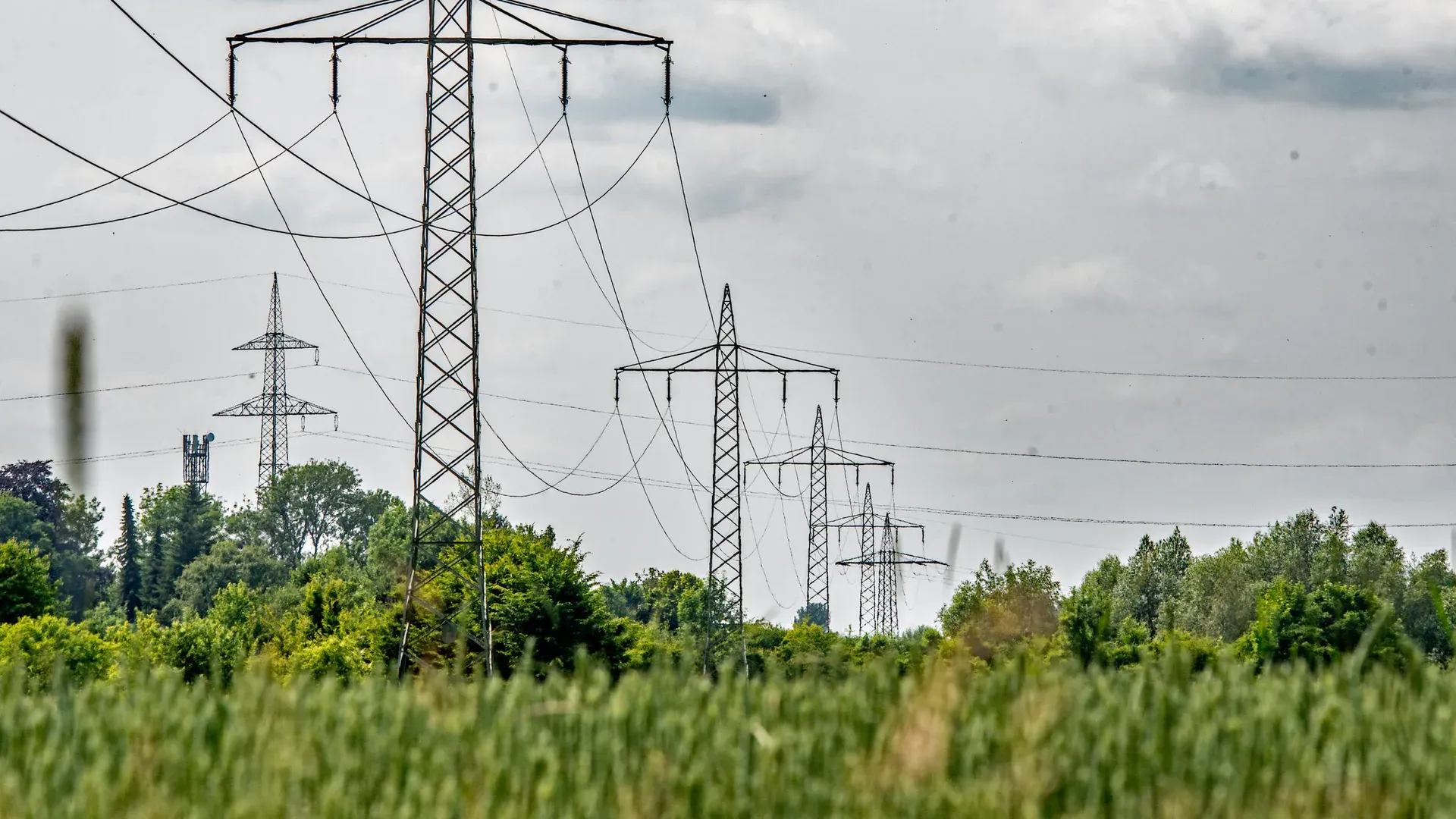
Germany’s switchgear and busbar market is the largest in Europe—roughly 30% of a $20 billion-plus annual European electrical equipment market, or $6-7 billion per year in busbar and switchgear procurement. Three structural drivers make this demand durable rather than cyclical: the SuedLink and SuedOstLink HVDC corridors (ten billion euros in transmission investment by TenneT and TransnetBW to move North Sea wind power to Bavarian and Baden-Wurttemberg industrial load centers), the 2025-approved 500-billion-euro infrastructure fund with dedicated allocations for grid digitalization and distribution network reinforcement, and Germany’s 3,500-strong Mittelstand electrical equipment manufacturing base—the densest switchgear and panel-building cluster anywhere. For busbar processing equipment, the compliance path is VDE 0660 (harmonized with IEC 61439 but adding German national requirements for temperature rise and dielectric testing), DIN 43670 copper busbar dimensional standards, and mandatory CE marking under EU Machinery Directive 2006/42/EC. Machines bound for Germany ship in standard EU electrical configuration: 400V/230V 50Hz three-phase with EN 60204-1 compliant control panels.
For the broader standards framework that underpins both VDE 0660 and IEC 61439-6 trunking requirements, see our IEC 61439 compliance guide for busbar systems—which covers the design verification and routine testing requirements that German panel builders must satisfy regardless of whether they reference the VDE or the IEC numbering.
What Is Driving Germany’s Busbar Equipment Demand Beyond the Energiewende Headlines?
Most analysis of the German electrical equipment market starts and stops with Energiewende. That is the obvious driver—Germany is rebuilding its entire transmission backbone to move 65% renewable generation by 2030 across 800 kilometers of new HVDC corridors. But the busbar processing equipment demand running through German panel shops right now has three less obvious tailwinds.
The first is the charging infrastructure bottleneck. Germany committed to 500,000 public EV charging points by 2030, up from roughly 100,000 at the start of 2024. Every DC fast charger above 150kW requires a switchgear assembly with internal busbar distribution rated at 400A to 630A minimum. A single 350kW HPC station serving four bays contains about 15 to 25 meters of fabricated copper busbar, punched with precision bolt patterns and bent to constrained geometries inside weather-sealed enclosures. Multiply that across 400,000 new installations and you get roughly 6,000 to 10,000 kilometers of processed busbar. German panel shops are the primary fabricators for this work because the charger OEMs—companies like ABB, Siemens, and Mennekes—source switchgear assemblies locally to avoid cross-border logistics on heavy electrical enclosures.
The second tailwind is the post-Ukraine industrial energy restructuring. German industrial electricity prices doubled between 2021 and 2023, which drove a wave of factory-level power distribution modernization. Companies replaced 40-year-old open-frame distribution boards with enclosed IEC 61439-compliant assemblies that run cooler, trip more intelligently, and reduce standing losses by 20-30%. Each retrofit requires new busbar distribution systems—and that work flows through the same 3,500 Mittelstand panel builders.
The third tailwind is simply capacity. The average German panel shop runs at 85-92% capacity utilization. Their equipment, in many cases, is 15 to 20 years old. When a shop running three shifts on a hydraulic busbar punch from 2005 lands a contract to supply distribution assemblies for a SuedOstLink converter station, they do not have the throughput. That is where procurement decisions happen—and where our equipment inquiries from the German-speaking market have concentrated over the past 18 months.
| Driver | Estimated Busbar Equipment Impact | Time Horizon |
|---|---|---|
| SuedLink/SuedOstLink HVDC corridors | €10B transmission investment, high-voltage busbar assemblies | 2026-2030 |
| EV charging infrastructure (500K points) | 6,000-10,000 km processed busbar | 2026-2030 |
| Industrial power distribution retrofits | Panel shop modernization wave | 2025-2028 |
| Infrastructure fund grid allocation | Distribution network reinforcement, digital substations | 2026-2032 |
| Solar + storage interconnection | 15 GW/year new PV, each requiring AC distribution | Ongoing |
How Do VDE 0660 and DIN 43670 Differ from IEC 61439 for Busbar Manufacturers?
This question comes up in nearly every technical consultation with German-speaking buyers. The short answer: VDE 0660 is Germany’s national adoption of IEC 61439, but it adds country-specific requirements that affect how you process busbars.
VDE 0660 governs low-voltage switchgear and controlgear assemblies. It is harmonized with IEC 61439-1 and IEC 61439-2, so a busbar assembly that passes IEC 61439 verification will generally satisfy VDE 0660. However, VDE 0660 includes additional national annexes covering:
-
Temperature rise verification at 100% rated current. While IEC 61439 allows temperature rise verification by calculation or comparison with a tested reference design under specific conditions, VDE 0660’s national foreword pushes harder toward physical testing for assemblies above 1,600A—the exact current range where busbar cross-sections, bending accuracy, and surface preparation matter most.
-
Dielectric testing at 1.5x the IEC requirement for certain medical and data center applications. German data center construction is booming (Frankfurt alone added 150MW of IT capacity in 2025), and those switchgear assemblies follow VDE 0660 medical-facility annex requirements.
-
Documentation requirements. German panel builders must produce a “Baumusterprüfbescheinigung” (type test certificate) that references specific busbar geometry, meaning the busbar processing machine must produce repeatable, documented bend angles and hole positions so the certificate data matches the physical assembly.
DIN 43670 is more straightforward but equally important. It standardizes copper busbar dimensions for German switchgear: widths of 20, 25, 30, 40, 50, 60, 80, 100, and 120mm, with thicknesses of 5 and 10mm as the primary standards. Any busbar processing machine sold into Germany must handle these exact dimensional families—and more importantly, its tooling must be set up for metric V-die openings that correspond to German-standard bend radii.
VDE 0100 (power installation) specifies busbar current-carrying capacity tables that differ slightly from IEC 60364-5-52, particularly for bars installed in horizontal vs. vertical orientation. The difference is typically 3-5% on ampacity ratings, but it means German panel builders calculate their busbar cross-sections using different reference tables than their counterparts in France or the UK.
In practice, the difference between VDE and IEC is not a compliance barrier—it is an operational one. A busbar machine that can produce DIN 43670 standard dimensions, hold bending tolerances tight enough for temperature rise consistency, and produce documented, traceable output is a machine that a German panel builder can drop into their production line without process re-engineering. That is the threshold.
What CE Marking and EN 60204-1 Requirements Apply to Busbar Machines Sold in Germany?
This is where confusion costs machine buyers time and money. CE marking is mandatory for any busbar processing machine entering the European Economic Area. The applicable directive is the EU Machinery Directive 2006/42/EC, and the key harmonized standard for the electrical control system is EN 60204-1:2018 (Safety of machinery—Electrical equipment of machines).
For a CNC busbar machine, CE compliance means:
-
Declaration of Conformity issued by the manufacturer, not a third party. The manufacturer self-declares that the machine meets all applicable directives. A notified body is only required for Annex IV machines (which busbar processing equipment does not fall under). We issue a Declaration of Conformity with every EU-spec machine shipment.
-
EN 60204-1 compliant electrical panel. This covers everything from wire colors (blue for neutral, green/yellow for protective earth in EU configuration) to emergency stop circuit architecture (Category 1 stop minimum per EN ISO 13850), enclosure IP rating (IP54 minimum for industrial environments), and overcurrent protection device coordination. The control panel on our DH303-8P, DHCNC-BP-60, and DHAC-BB-H EU-spec machines uses Siemens S7-1200 PLC hardware with EN 60204-1 compliant wiring, color-coded to European convention.
-
German-language documentation. Under the Machinery Directive, the technical documentation must be available in an official EU language of the destination country. For Germany, this means Betriebsanleitung (operating manual), Schaltplan (wiring diagram), and Wartungsplan (maintenance schedule) in German. We ship EU-configuration machines with full German-language documentation including Siemens PLC interface in German.
-
EMC compliance under Directive 2014/30/EU. CNC machines with VFDs generate conducted and radiated emissions that must stay within EN 55011 Class A limits for industrial equipment.
The voltage configuration is standardized across Germany and most of the EU: 400V/230V 50Hz three-phase. Motors must be wound for 50Hz (nameplate rated at 50Hz, not derated from 60Hz), VFDs must be pre-programmed for 400V input with 50Hz V/Hz curves, and control transformers must be tapped for 400V primary / 230V secondary.
One practical note from shipping several hundred machines: German customs will flag any machine arriving without a CE mark physically affixed to the nameplate and a Declaration of Conformity in the documentation package. The mark must be at least 5mm in height and permanently attached. A sticker does not count.
How Should International Busbar Machine Buyers Navigate the German Procurement Process?
German industrial procurement follows a different rhythm than most markets. Based on machines we have shipped to German-speaking customers, here is what the buying process actually looks like.
Supplier pre-qualification. German panel builders typically maintain an approved vendor list (AVL, or Lieferantenliste) that requires submission of: company registration documents, CE Declaration of Conformity template, reference installations (ideally at least three in the DACH region), ISO 9001 certificate, and technical datasheets in German. This is not a formality—larger German buyers will not issue a purchase order to a supplier not on their AVL.
Technical specification matching. The RFQ will reference VDE and DIN standards by number. If you cannot respond with specific compliance statements (“Machine produces busbars compliant with DIN 43670 dimensional standards for widths 20-120mm in thicknesses 5mm and 10mm”), the buyer’s technical evaluator will disqualify the bid.
Factory acceptance testing (FAT). For machines above approximately $40,000, German buyers typically require FAT at the manufacturer’s facility before shipment. This involves running the buyer’s sample workpieces on the machine, measuring bend angles and hole positions against the specification, and documenting the results. We perform FAT at our Jinan facility with remote video participation for German customers who cannot travel.
Payment terms. German industrial buyers expect 30% with order, 60% after FAT sign-off, 10% after installation and commissioning. Letters of credit are standard for first transactions. Some larger buyers will push for 60-day net payment terms after delivery, which is worth negotiating against the machine price.
After-sales support expectations. German buyers expect: 24-hour response to technical inquiries, same-business-day spare parts dispatch confirmation, remote diagnostic capability (VPN connection to the PLC for troubleshooting), and a local service partner or at minimum a German-speaking service engineer reachable by phone during Central European business hours.
| Procurement Stage | Timeline | Buyer Expectation |
|---|---|---|
| Supplier pre-qualification | 2-4 weeks | ISO 9001, CE documentation, DACH references |
| Technical evaluation | 2-6 weeks | VDE/DIN compliance statements, sample workpiece data |
| Commercial negotiation | 1-3 weeks | 30/60/10 payment structure, letter of credit |
| Factory acceptance testing | 1-2 days on-site | Documented bend accuracy, hole position measurement |
| Shipment and customs | 4-6 weeks sea freight | CE mark, Declaration of Conformity, German docs |
| Installation and commissioning | 3-5 days | Remote support capability, German-language interface |
What Machine Configuration Serves the German Market Best?
After analyzing the workpieces running through our German customer installations, the optimal configuration for a German panel shop breaks down as follows.
Multi-function machines (DH303-8P class) cover approximately 70% of German panel shop busbar work. The DIN 43670 dimensional range (20-120mm width, 5-10mm thickness) maps directly to this machine class. German shops processing copper busbar for standard low-voltage distribution assemblies—the bulk of the market—run these machines in two-shift operation with quick-change tooling for the standard DIN size progression.
The DH303-8P configured for the German market ships with a Siemens S7-1200 PLC, German-language HMI, 400V/50Hz electrical system, and tooling sets for the full DIN 43670 dimensional range. The Siemens PLC choice matters practically: German maintenance technicians are trained on Siemens hardware, and the local Siemens distributor stocks spares and provides on-call support that a proprietary or Asian-brand PLC cannot match.
Dedicated bending centers (DHAC-BB-H class) serve the roughly 20% of German shops doing high-mix, high-precision work—laminated busbar stacks for converter stations, complex Z-bend and offset geometries for compact switchgear, and copper bending for medium-voltage applications where bend radius consistency directly affects partial discharge performance.
Dedicated punching and shearing machines (DHCNC-BP-60 class) serve high-volume shops processing 80mm x 10mm and 100mm x 10mm busbar in production quantities above 500 pieces per shift. These shops typically already have a bending capability and are adding punching throughput.
The 50Hz motor configuration is identical for Austria, Switzerland, the Netherlands, Belgium, and most CEE countries. A machine configured for the German market ships identically for the entire DACH region and Benelux.
For a detailed breakdown of machine specifications, see our DH303-8P multi-function busbar processing center, DHCNC-BP-60 CNC punching and shearing system, and DHAC-BB-H CNC bending center. The broader European grid expansion context is covered in our Europe grid expansion procurement analysis, while the IEC 61439 compliance update provides the standards framework that German VDE requirements build upon.
For manufacturers supplying busbar trunking systems into the European market—a category closely related to the switchgear assemblies discussed above—our busbar trunking system market guide covers the manufacturing implications of the 6.6% CAGR growth in trunking demand, including conductor fabrication specifications and CNC equipment configurations optimized for trunking production.
Frequently Asked Questions (FAQs)
How large is the German busbar and switchgear equipment market?
Germany is Europe's largest electrical equipment market, representing approximately 30% of the continent's annual switchgear and busbar procurement, or roughly $6-7 billion per year. The market is driven by three structural factors: (1) Germany's Energiewende transmission expansion—the SuedLink and SuedOstLink HVDC corridors alone represent €10 billion in transmission investment to move wind power from the north to industrial load centers in Bavaria and Baden-Wurttemberg; (2) the €500 billion infrastructure fund approved in 2025 allocating specific budget lines for grid digitalization and distribution network reinforcement; (3) Germany's Mittelstand industrial base—approximately 3,500 small and medium electrical equipment manufacturers who collectively represent the world's most concentrated switchgear and panel-building industry cluster.
What VDE and DIN standards apply to busbar manufacturing for the German market?
German busbar manufacturing is governed by VDE 0660 (Low-voltage switchgear and controlgear assemblies), which harmonizes with IEC 61439 but includes additional national requirements for temperature rise verification and dielectric testing. DIN 43670 specifies dimensional standards for copper busbars in switchgear applications—including standard widths of 20, 25, 30, 40, 50, 60, 80, 100, and 120mm and thicknesses of 5 and 10mm—that German panel builders expect as default inventory. VDE 0100 governs power installation and specifies busbar current-carrying capacity tables that differ slightly from IEC 60364-5-52. For a busbar processing machine entering the German market, CE marking per the EU Machinery Directive 2006/42/EC is mandatory with a Declaration of Conformity issued by the manufacturer.
What voltage and frequency configuration do CNC busbar machines need for Germany?
Germany operates on a 400V/230V 50Hz three-phase system—the standard EU industrial voltage. CNC busbar machines shipped to Germany require 50Hz-rated motors with appropriate V/Hz curves, VFDs pre-programmed for 400V three-phase input, and CE-marked electrical panels compliant with EN 60204-1. The 50Hz/400V configuration is identical to the specification for Austria, Switzerland, the Netherlands, and most other EU member states. Our DH303-8P, DHCNC-BP-60, and DHAC-BB-H systems ship in standard EU configuration with Siemens PLC interfaces available in German language and full German-language technical documentation.
DH303-8P 3-in-1 CNC Busbar Processing Machine
Discover details, parameters, standard dies packages, and factory quotes.