
What Equipment Setup Does a Tier-1 EV Busbar Manufacturer Need in 2026?

Why Is the Automotive Supply Chain Demanding CNC Upgrades?
A Tier-1 EV busbar manufacturer in 2026 must completely transition from standard hydraulic presses to high-precision, servo-driven CNC machinery capable of processing both solid copper phase busbars and advanced laminated flexible busbars. According to recent data from the European Automobile Manufacturers’ Association (ACEA), the increasingly strict supplier qualification standards for the new wave of 800V passenger and heavy-duty electric commercial vehicles demand absolute zero-defect manufacturing and 100% digital data traceability. Our engineering team designs custom automated production cells utilizing the DHCNC series workstations, ensuring that high-voltage EV busbars consistently meet the rigid ±0.2mm tolerances required by global automotive OEMs. A compliant equipment setup must mandate closed-loop servo bending for precise angle control, Cr12MoV vacuum-hardened punching dies for burr-free edges to prevent corona discharge, and seamless integration with factory ERP systems to fulfill the component traceability requirements enforced by the latest IATF 16949 automotive quality management standards.
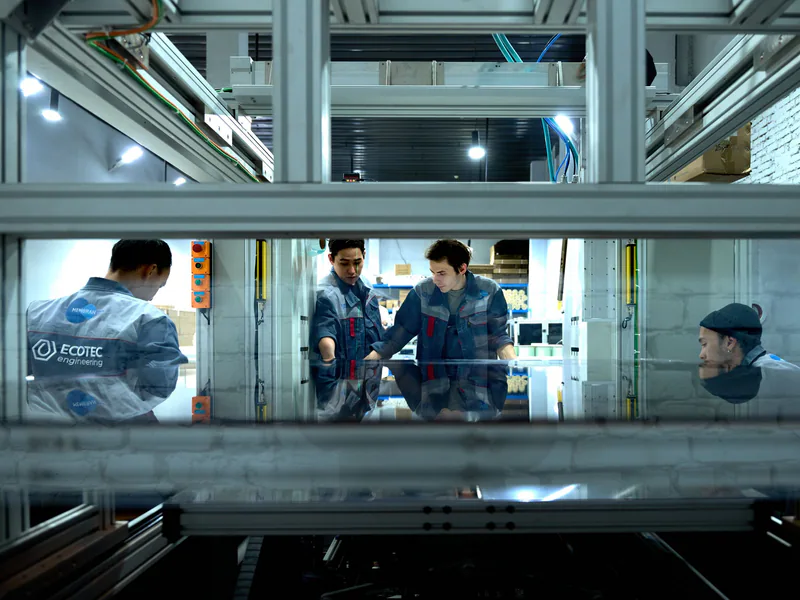
How We Guided a Legacy Manufacturer into the EV Market
Many of our clients are traditional industrial switchgear suppliers looking to pivot into the highly lucrative Electric Vehicle (EV) supply chain. Recently, an established panel builder in North America attempted to secure a contract to supply solid copper busbars for a commercial EV fleet charging station project.
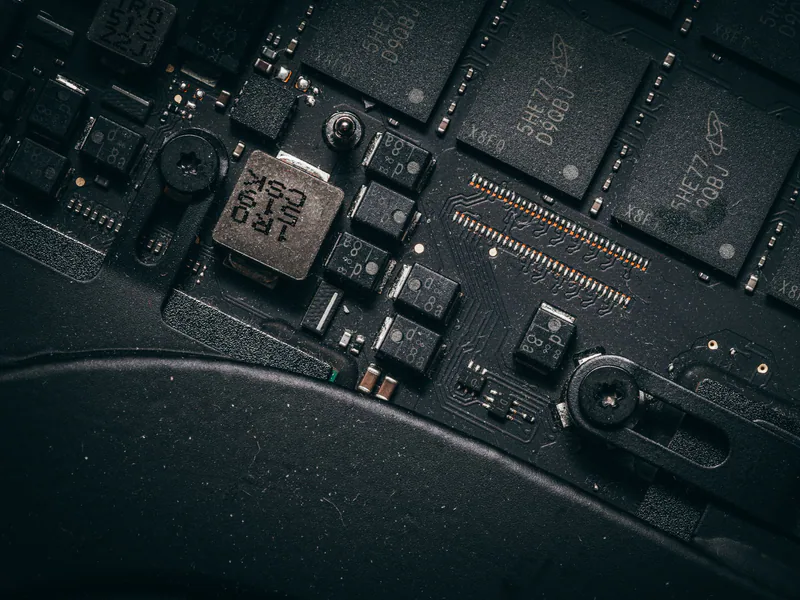
They submitted their prototype busbars, which were produced on their standard 10-year-old manual hydraulic machines. The OEM rejected the prototypes immediately. The reason? The bend radii were inconsistent, causing fitment issues within the high-density power distribution unit (PDU), and the punched holes exhibited micro-burrs that posed a serious corona discharge risk in a high-voltage DC environment.
We stepped in to overhaul their production floor. By replacing their legacy equipment with our high-end CNC servo-bending and automated punching centers, we stabilized their production tolerances. We also equipped the machines with digital readouts and PLC data-logging capabilities, allowing the client to provide the exact batch traceability the OEM demanded. They passed the second audit with flying colors and secured a multi-year Tier-1 contract.
What Are the Core Equipment Requirements for an EV Busbar Line?
Transitioning to automotive-grade manufacturing means upgrading every touchpoint where copper is processed. The equipment setup must prioritize precision, repeatability, and data integration.
How Do Industrial and Automotive Production Lines Compare?
The following table highlights the critical equipment upgrades necessary to meet OEM standards.
| Production Capability | Traditional Industrial Setup | Tier-1 Automotive EV Setup |
|---|---|---|
| Bending Technology | Open-loop hydraulic (Prone to springback) | Closed-loop servo-hydraulic (Active angle correction) |
| Punching Die Quality | Standard carbon steel | Cr12MoV vacuum-hardened steel (Zero-burr finish) |
| Quality Control Data | Manual logbooks | Automated PLC data logging & ERP integration |
| Material Handling | Manual feeding | Automated CNC X-Y axis positioning |
| Overall Tolerance | ±1.0mm | ±0.2mm |
Why Is Data Traceability Just as Important as Bending Precision?
In the automotive sector, if a part fails in the field and causes a vehicle fire or shutdown, the OEM must be able to trace that specific component back to the exact batch, the exact operator, and the exact machine settings used on the day it was manufactured.
This is why modern CNC busbar machines are no longer just mechanical tools; they are IT assets. Our machines utilize Siemens PLC control systems that can communicate directly with your factory’s Manufacturing Execution System (MES). Every bend angle, punch coordinate, and hydraulic pressure spike is recorded, ensuring you maintain the continuous data stream required to pass ongoing IATF 16949 compliance audits.
How to Begin Your Transition to Tier-1 Status
The EV market represents the largest growth vector for copper busbar manufacturers in the coming decade. However, the barrier to entry is defined by the quality of your machinery.
We strongly advise manufacturers aiming for Tier-1 status to explore our complete range of high-precision busbar processing equipment and consult with our application engineers on how to build a fully compliant, automotive-grade production cell.
Frequently Asked Questions (FAQs)
Can standard industrial switchgear machines be used for EV busbar manufacturing?
Generally, no. Standard machines lack the sub-millimeter precision required for automotive high-voltage architectures. EV busbars require zero-burr punching and highly repeatable servo-bending to prevent thermal and electrical failures in compact EV inverters.
What is IATF 16949 and why does it affect busbar machining?
IATF 16949 is the global quality management standard for the automotive industry. It requires strict defect prevention and supply chain traceability. CNC busbar machines must be able to log production data and integrate with factory ERPs to meet these traceability audits.