
France Busbar Market: RTE, Enedis, and NF Requirements
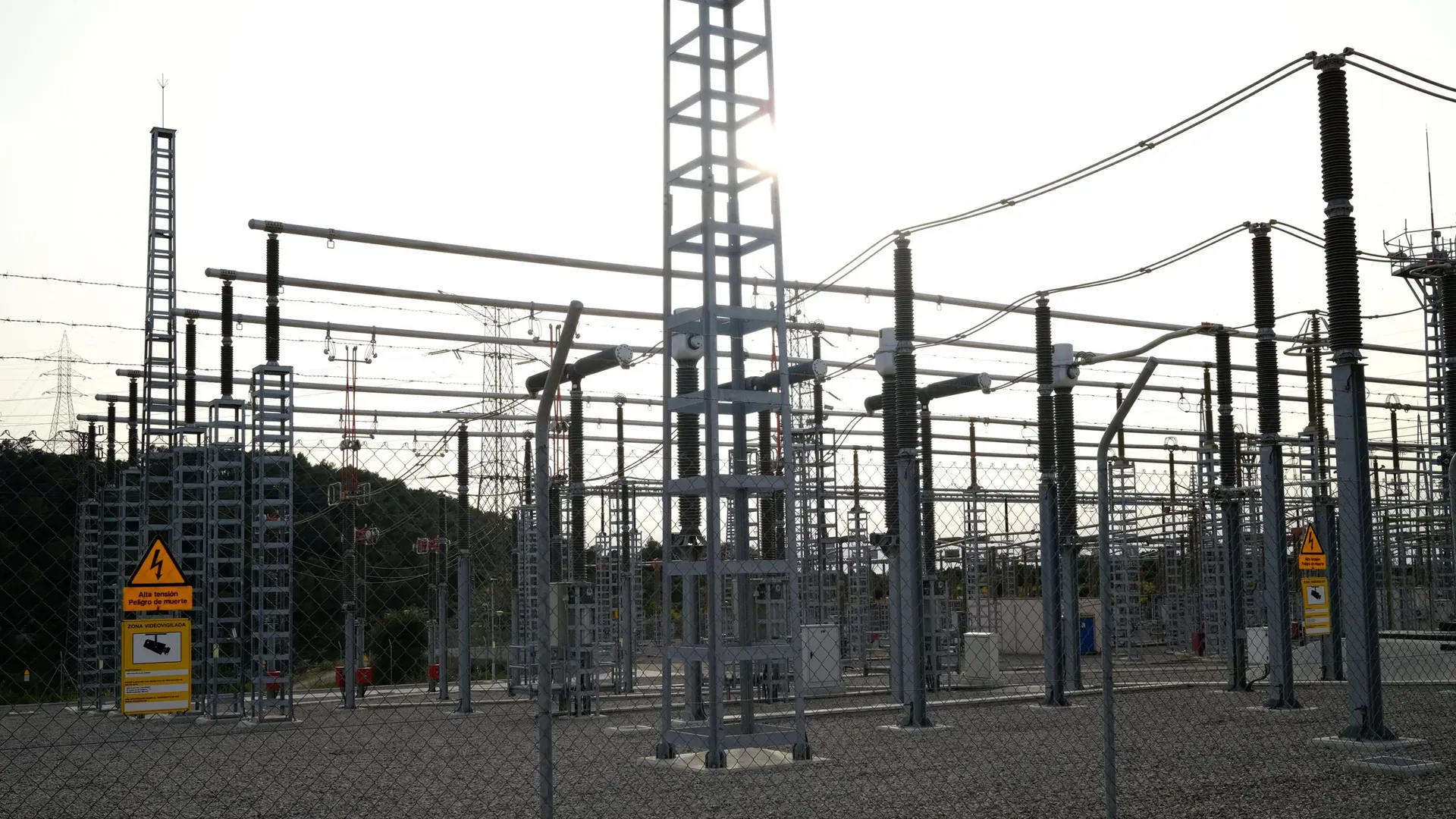
France’s busbar demand is better assessed through grid programmes and procurement requirements than through a single market-size headline. Public market summaries used in the original article paired USD 792 million in 2025 with USD 1,479.3 million in 2030 and a 6.4% CAGR. Those endpoints imply roughly 13.3% over five years, so the figures cannot be treated as one consistent series.
The defensible opportunity is still substantial. RTE is rebuilding the transmission backbone while Enedis is increasing distribution investment, connecting new loads and generation, and renewing local networks. For busbar fabricators, that demand appears through substations, switchgear, busway, industrial electrification, data centers and the equipment supply chain supporting them.
Two grid programmes shape demand
RTE, the French transmission system operator, initially presented a programme on the order of €100 billion for 2025–2040. Its July 2026 communication describes €94 billion of investment by 2040, alongside a plan to triple its annual investment rate by 2030. The exact programme value can change as projects, public priorities and approvals evolve, so procurement content should always carry a date.
Enedis operates the distribution network. In its 2030 industrial plan, Enedis says investment will rise from €5.7 billion in 2025 to €6.8 billion in 2030, with €2 billion of the 2030 amount allocated to adaptation and modernization.
| Organisation | Network role | Procurement signal |
|---|---|---|
| RTE | High-voltage transmission | Substations, grid reinforcement, interconnection and industrial connections |
| Enedis | Public distribution | MV/LV substations, renewal, new connections, resilience and local capacity |
| Industrial and data-center owners | Behind-the-meter systems | Switchgear, busway, transformers and plant distribution |
The French standards stack must be scoped by installation
“Compliant with IEC 61439” is not a complete French specification. The procurement team must identify the installation boundary, voltage level, point of connection and responsible assembly standard.
Common references include:
- NF C 13-100 for the French requirements applied to certain consumer installations connected at medium voltage. AFNOR’s standards work includes an active NF C 13-100 revision group.
- NF C 14-100 for connections to the public low-voltage distribution network.
- NF C 15-100 for low-voltage electrical installations downstream of the connection boundary.
- NF EN IEC 61439 parts for relevant low-voltage switchgear and controlgear assemblies and busbar trunking systems.
These documents address different objects. They should not be collapsed into a claim that one standard imposes a universal hole tolerance, bend angle or machine architecture. Confirm the current French edition with the designer, customer, inspection body and network operator before freezing the RFQ.
The IEC 61439-1:2020 scope also makes an important distinction: Part 1 contains general rules, while the relevant assembly part is applied to determine conformity. A busbar is one component within that verified assembly.
Translate project compliance into part characteristics
Once the assembly design is approved, the busbar fabricator needs controlled drawings and acceptance criteria. A useful work package identifies:
- material grade, temper, plating and traceability;
- finished length, hole and slot coordinates, and datum scheme;
- flatness, twist and bend tolerances where applicable;
- minimum bend radius and approved tooling marks;
- burr, edge break and contact-surface requirements;
- inspection frequency, gauge method and report format;
- lot identification and treatment of non-conforming parts.
The assembly designer remains responsible for clearances, creepage distances, temperature rise, short-circuit withstand and other verification. The machine supplier should demonstrate that its equipment can make the approved part; it should not claim that a machine by itself creates an NF C 13-100- or IEC 61439-compliant switchboard.
Procurement routes extend beyond utilities
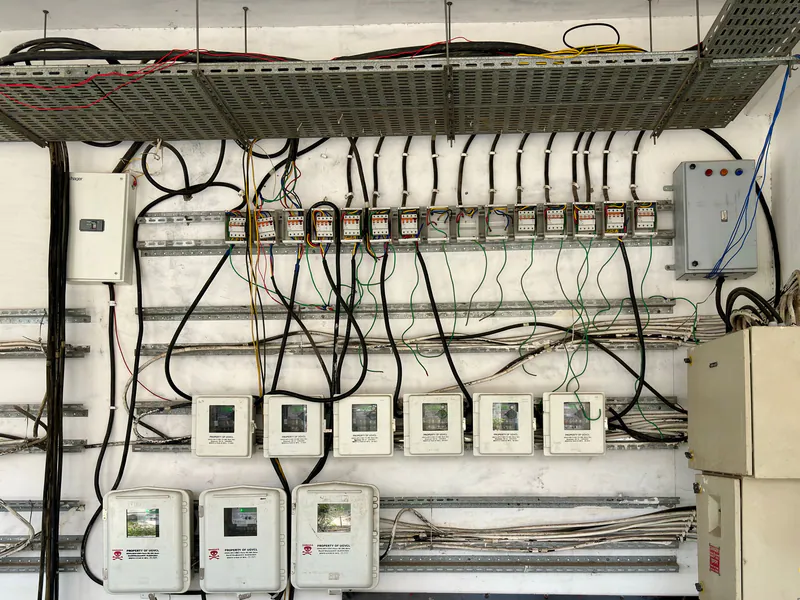
Direct utility contracts are only one route into the French market. Busbar fabrication demand also flows through:
- switchgear and transformer OEMs;
- panel builders and system integrators;
- EPC contractors for renewable and industrial projects;
- rail, nuclear and infrastructure supply chains;
- colocation and hyperscale data-center electrical contractors;
- maintenance and retrofit specialists.
Each route has different qualification evidence. A utility framework may emphasize approved designs, long-term supply assurance and auditability. A panel builder may place more weight on mixed-batch lead time and drawing revision control. A data-center contractor may prioritize tested busway ratings and rapid configuration changes.
The broader European grid procurement analysis provides the regional context, while the Germany busbar and switchgear article covers the neighbouring VDE and DIN environment.
Match machine capability to the approved production mix
The DHCNC-BP-60 punching and shearing workstation is published with 600 kN nominal punching and shearing force, a 6,000 × 200 × 15 mm maximum workpiece envelope, and ±0.20 mm/m hole-pitch accuracy. It does not perform bending.
For lower-volume production that needs punching, shearing and bending in one footprint, the DH303-8P multi-function machine publishes 350 kN at each station and ±0.5° bending accuracy. The dedicated DHAC-BB-H bending machine publishes 400 kN and ±0.2° bending accuracy.
Those specifications should be compared with the buyer’s part families and verified at FAT. A French project does not automatically need ±0.1 mm punching or ±0.2° bending; it needs the tolerances on its controlled drawings, held across the agreed batch and material range.
A France-specific RFQ should be evidence-led
Include the applicable NF/EN/IEC document and edition, but also include the drawings and testable output. Ask suppliers to run representative copper or aluminum parts, measure a batch after warm-up, document the gauges used and show program-revision controls.
For the market section of the business case, use dated RTE and Enedis investment rather than an unreconciled market CAGR. For the production section, use drawing tolerances and FAT results rather than broad claims about “French precision.” That combination is both more useful to procurement teams and more resistant to future data changes.
Frequently Asked Questions (FAQs)
How large is the France busbar systems market?
Public market summaries currently publish incompatible starting values, ending values, and growth rates, so they should not be combined into one precise forecast. RTE and Enedis investment plans provide stronger, auditable demand indicators for transmission, distribution, substations and switchgear.
How much are RTE and Enedis investing in the French grid?
RTE described a network programme of about €94 billion to 2040 in July 2026. Enedis reported €5.7 billion of investment in 2025 and plans €6.8 billion in 2030, including €2 billion for network adaptation and modernization.
Which French standards should a switchgear buyer identify?
The project may involve NF C 13-100 for certain medium-voltage consumer installations, NF C 14-100 for public-distribution connections, NF C 15-100 for low-voltage installations, and the applicable NF EN IEC 61439 part for low-voltage assemblies. The designer must confirm the current edition and exact scope.
DHCNC-BP-60 CNC Punching & Shearing Workstation
Discover details, parameters, standard dies packages, and factory quotes.