
Italy Busbar Market: Terna Investment and CEI Rules
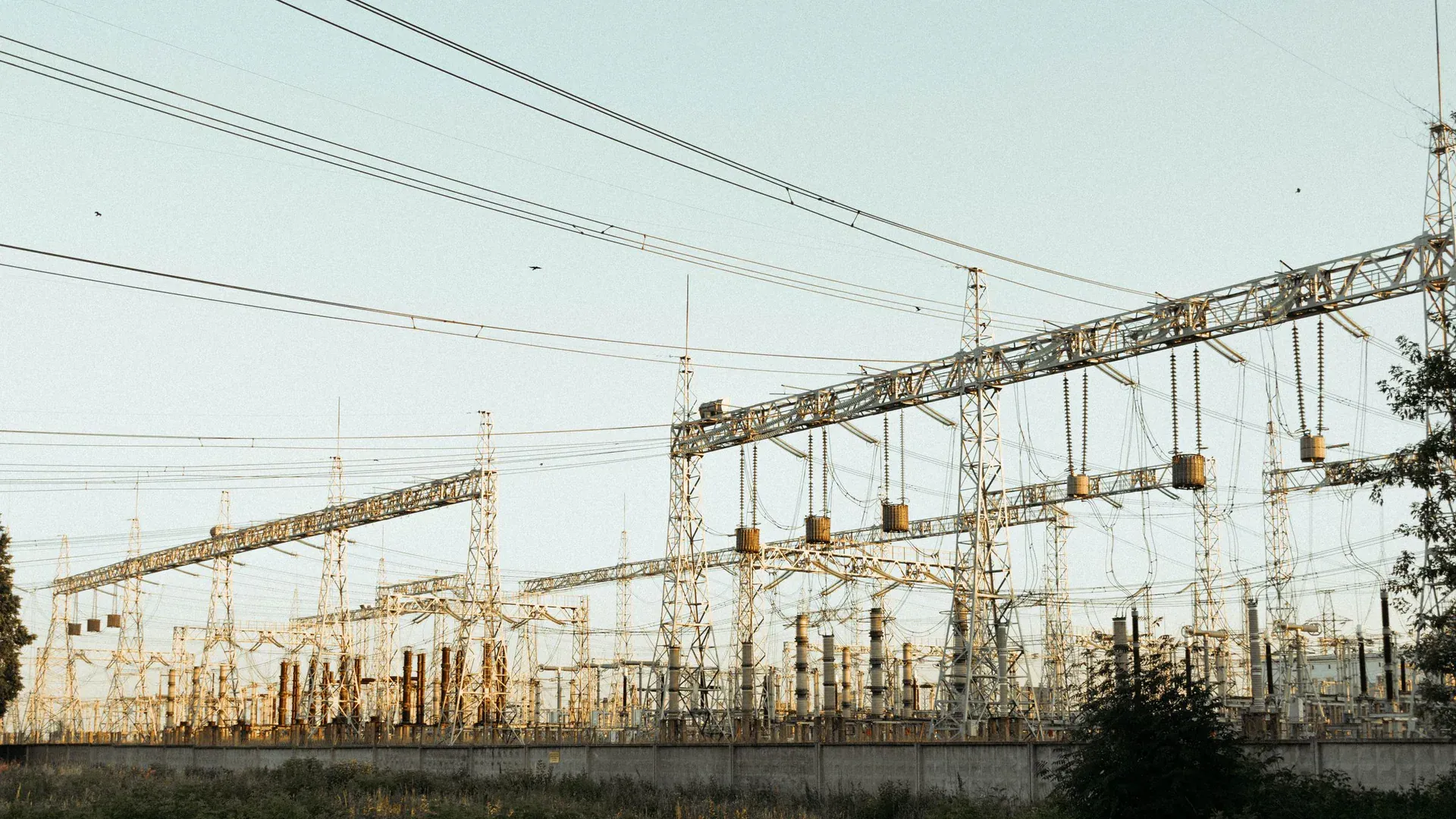
Italy’s busbar opportunity is tied to a visible transmission buildout, renewable integration, storage, industrial electrification and replacement of grid assets. The original article tried to express that opportunity through a USD 407.3 million starting value, a USD 745.7 million 2030 forecast and a 6.2% CAGR. Those endpoints imply about 12.9% over five years, so the three figures should not be published as one data series.
Terna’s current plans provide a more useful procurement baseline. They show when and where grid capacity is being added, while CEI connection rules define the project environment in which switchgear and busbar assemblies are specified.
Terna provides two different investment views
Do not combine the five-year industrial plan and ten-year grid development plan as though they were additive.
- Terna’s updated 2024–2028 Industrial Plan totals €17.7 billion.
- The 2025–2034 Development Plan sets out more than €23 billion for the national transmission grid.
- Terna reports €3.515 billion of actual capital expenditure in 2025, up from €2.692 billion in 2024.
The plan values and current performance are available on Terna’s investor targets and achievements page, while the 2025 Development Plan announcement describes the ten-year programme and major projects.
| Programme | Time horizon | How a busbar supplier should use it |
|---|---|---|
| Industrial Plan update | 2024–2028 | Nearer-term capital and delivery capacity signal |
| National Development Plan | 2025–2034 | Project pipeline and grid architecture signal |
| Annual Capex | Reported each year | Evidence of execution, not just planned spending |

Grid projects create demand through several tiers
Transmission investment does not translate directly into purchases of one machine type. It creates work across cables, substations, converter stations, protection systems, transformers, switchgear and the fabricated conductors inside those assemblies.
Italian demand routes include:
- Terna and its qualified EPC and equipment suppliers;
- MV and LV switchgear manufacturers;
- renewable and storage project integrators;
- industrial panel builders and automation firms;
- rail, marine and infrastructure contractors;
- OEMs producing busway, transformers and power-conversion equipment.
The Tyrrhenian Link and other interconnections highlight Italy’s role between generation regions and demand centres, but a fabricator should map each project to the actual package it can supply. A grid-development headline is not evidence that a specific busbar design or machine will be purchased.
CEI 0-16 and CEI 0-21 govern connection interfaces
CEI 0-16 and CEI 0-21 are freely available from the Italian Electrotechnical Committee’s current document page, which also lists amendments and interpretation sheets.
- CEI 0-16 applies to connections of active and passive users to high- and medium-voltage distribution networks.
- CEI 0-21 applies to users connected to low-voltage distribution networks.
These rules address the grid connection. Low-voltage switchgear assemblies may also fall under the relevant CEI EN IEC 61439 part, and individual products can have additional standards. The project designer must identify the complete stack and current editions.
CEI 0-16 does not state that every busbar needs ±0.1 mm hole position, that every bender must hold ±0.2°, or that a 120 × 12 mm bar requires a 600 kN press. Hole and bend requirements come from the assembly drawing; punching force comes from cut perimeter, thickness and shear resistance.

Convert the connection design into a controlled fabrication package
The fabricator should receive a released drawing and process requirements rather than a broad request for “CEI-compliant busbars.” The package should cover:
- copper or aluminum grade and temper;
- plating, insulation and protected contact areas;
- drawing datums and finished tolerances;
- approved bend radii and orientation;
- burr and edge requirements;
- lot traceability and material certificates;
- inspection method and sampling frequency;
- packaging needed to preserve finished surfaces.
For assemblies verified under IEC 61439, the assembly manufacturer is responsible for the relevant verification. The busbar process supplies controlled components into that system. IEC 61439-1:2020 is the general-rules document and is used with the relevant assembly part; it is not a standalone busbar machining specification.
Machine selection follows production mix
The DHCNC-BP-60 publishes 600 kN nominal punching and shearing force, a maximum 6,000 × 200 × 15 mm workpiece and ±0.20 mm/m hole-pitch accuracy. It should be evaluated when dedicated punching and shearing throughput is the constraint.
The DH303-8P combines punching, shearing and bending for mixed, lower-volume work and publishes ±0.5° bending accuracy. A project requiring a published ±0.2° dedicated bending specification should evaluate the DHAC-BB-H rather than attribute that figure to the multi-function machine.
The equipment RFQ should include representative Italian project parts, but the FAT method is universal:
- agree material, thickness and drawings;
- run a representative batch after warm-up;
- measure with agreed gauges and datums;
- record capability and non-conformities;
- verify tooling changeover and program control;
- preserve the accepted setup in the contract documentation.
Supplier qualification should separate law, standards and commercial terms
CE marking, the Machinery Directive or applicable successor regime, CEI connection rules and IEC assembly standards each address different obligations. A supplier should identify what documentation it provides and what remains the responsibility of the importer, integrator and assembly manufacturer.
Commercial qualification should separately cover Incoterms, installation, operator training, Italian or English documentation, spare parts, remote-access control and on-site service terms. Avoid unsupported claims that a remote connection resolves a fixed percentage of faults or that country of origin predicts accuracy.
The European grid expansion article provides regional context. This Italy-specific page should remain focused on Terna execution, CEI connection rules and the evidence a local project needs from the fabrication process.
Frequently Asked Questions (FAQs)
What is Terna's current investment programme?
Terna's updated 2024–2028 plan totals €17.7 billion, and its 2025–2034 national development plan exceeds €23 billion. The company reports €3.515 billion of actual capital expenditure for 2025.
What is the difference between CEI 0-16 and CEI 0-21?
CEI 0-16 sets technical connection rules for users connected to Italian high- and medium-voltage networks, while CEI 0-21 addresses users connected to low-voltage distribution networks. The current editions and amendments must be checked for each project.
Does CEI 0-16 specify the accuracy of a busbar machine?
No. CEI 0-16 governs grid-connection requirements, not a universal CNC machining tolerance. Busbar dimensions and acceptance criteria come from the approved switchgear or assembly design and its quality plan.
DHCNC-BP-60 CNC Punching & Shearing Workstation
Discover details, parameters, standard dies packages, and factory quotes.