
Why Is India's $94B Grid Modernization Creating a Once-in-a-Decade Busbar Equipment Opportunity?
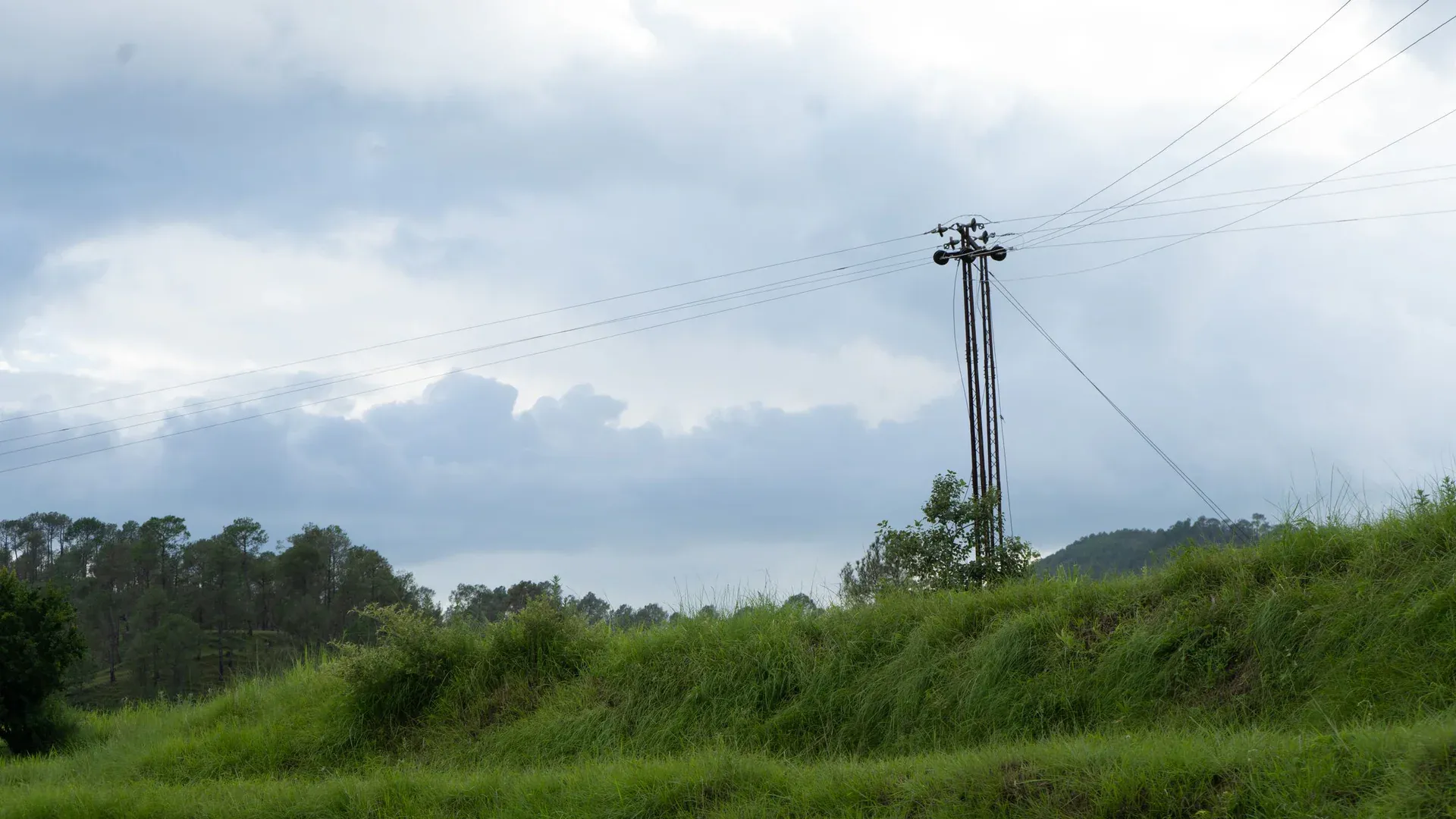
In January 2026, India’s installed power generation capacity reached 520.51 GW, and the country’s power shortage—once a chronic constraint on industrial growth—had declined from 4.2% in FY2014 to just 0.03% through December 2025, according to the Government of India’s Power Sector progress report. But the generation story masks the real infrastructure bottleneck: transmission and distribution. India’s national transmission network stood at approximately 500,000 circuit kilometers in January 2026 and is now targeted to expand to 648,000 ckm by 2032, while transformation capacity must grow from 1,407 GVA to 2,345 GVA over the same period. Inter-regional transfer capacity will rise from 120 GW to 168 GW. These are not aspirational planning figures—they are committed infrastructure investments backed by ₹3.03 trillion ($36 billion) in RDSS distribution modernization funding and an overall power sector commitment of ₹42 lakh crore ($488 billion) over the next decade. For busbar processing equipment manufacturers and the switchgear industry that depends on them, India represents the most concentrated electrical infrastructure investment cycle anywhere in the world outside of China. At DH CNC, our inquiry volume from Indian panel builders and electrical contractors has more than doubled since Q3 2025.
What Is Driving India’s Grid Investment at a Scale That Matters for Busbar Procurement?
The standard narrative about India’s power sector focuses on renewable energy targets—500 GW of non-fossil fuel capacity by 2030, solar parks in Rajasthan and Gujarat, and the world’s largest renewable energy auction program. But for busbar and switchgear manufacturers, the procurement signal is in the transmission and distribution layer. Every gigawatt of generation capacity, whether coal, solar, wind, or nuclear, requires downstream switchgear, busbar systems, and power distribution panels to connect that generation to end users. The IEA estimates that grid investment must run at roughly 1.2-1.5x generation investment for the system to remain stable during a rapid capacity expansion.
Three specific policy catalysts separate India’s 2026 grid investment cycle from previous infrastructure waves:
The Revamped Distribution Sector Scheme (RDSS). With ₹3.03 trillion committed, RDSS targets loss reduction, smart metering deployment, and distribution network reinforcement across India’s financially stressed DISCOMs (distribution companies). Critically, DISCOMs recorded a ₹2,701 crore collective profit in FY2025—their first aggregate profit in years—and outstanding dues to generators dropped from ₹1.4 lakh crore in June 2022 to just ₹4,109 crore by February 2026. Financially healthy DISCOMs can procure equipment. Financially distressed ones cannot. The turnaround matters.
The Electricity (Amendment) Bill, 2026. This legislation, introduced in 2026, strengthens the framework for private sector participation in distribution, opens retail competition in electricity supply, and mandates performance-linked tariff setting. For equipment suppliers, the practical implication is that private distribution licensees—who face competitive pressure to minimize technical losses—are more aggressive adopters of efficient switchgear and busbar systems than legacy state-owned DISCOMs.
Transmission expansion through competitive bidding. India’s Power Grid Corporation (PGCIL) and state transmission utilities are tendering transmission projects through tariff-based competitive bidding (TBCB), which has proven effective at accelerating project execution. As of July 2026, 58 transmission projects are in various stages of bidding and construction, with private developers like Sterlite Power, Adani Transmission, and Tata Power participating alongside PGCIL. Each transmission project requires substations, and each substation requires busbar systems—creating a multi-year, multi-project demand pipeline for switchgear fabricators.
How Much Busbar and Switchgear Demand Do 249 New Substations Actually Generate?
To translate grid infrastructure plans into equipment demand, our engineering team at DH CNC applies a simple conversion methodology based on substation type and voltage level. Here is the arithmetic for the Indian market, using the government’s own transmission expansion targets:

India plans to add approximately 138 transmission lines and 249 new substations in the 2026-2032 period under the current national transmission plan. The substation mix roughly breaks down as:
| Substation Type | Typical Voltage | Estimated Number (2026-2032) | Busbar Segments per Substation (Est.) | Total Busbar Demand |
|---|---|---|---|---|
| 400kV/220kV EHV Substation | 400kV primary / 220kV secondary | ~40-50 | 800-1,200 | ~50,000 |
| 220kV/132kV HV Substation | 220kV primary / 132kV secondary | ~60-80 | 500-800 | ~45,000 |
| 132kV/33kV Sub-Transmission | 132kV primary / 33kV secondary | ~80-100 | 300-500 | ~35,000 |
| 33kV/11kV Distribution | 33kV primary / 11kV secondary | ~30-40 | 150-250 | ~6,000 |
| Total | ~210-270 | ~136,000 busbar segments |
Each busbar segment requires cutting, punching (for bolt holes and connection slots), and bending (for offset connections and expansion joints). A single DH303-8P multi-function CNC busbar machine processing two shifts can fabricate approximately 200-300 busbar segments per day, depending on complexity. At 250 working days per year, one machine produces roughly 62,500 segments annually. The Indian substation buildout alone could absorb the full output of 2-3 dedicated busbar processing lines running at capacity for the next 6 years—and that is before accounting for the industrial switchgear demand from factories, commercial buildings, data centers, and renewable energy balance-of-plant that typically runs 3-5x the substation busbar volume.
The Indian government’s own analysis, published in March 2026, projects that the transmission network must expand from 5 lakh ckm to 6.48 lakh ckm by 2032. At an average of approximately 1.5 tons of copper-equivalent busbar per circuit kilometer of new transmission (accounting for substation bus work at both ends), the transmission expansion alone represents roughly 22,000 tons of copper busbar fabrication demand over the 6-year period. Add distribution network upgrades under RDSS, and the total addressable busbar fabrication market in India likely exceeds $800 million to $1.2 billion cumulatively through 2032.
Why Are Chinese Electrical Equipment Manufacturers Now Eligible for Indian Procurement?
On July 7, 2026, T&D India reported that procurement guideline exemptions have been granted to four Chinese electrical equipment manufacturers for participation in Indian power sector tenders. This is a meaningful policy shift with direct implications for busbar equipment sourcing.
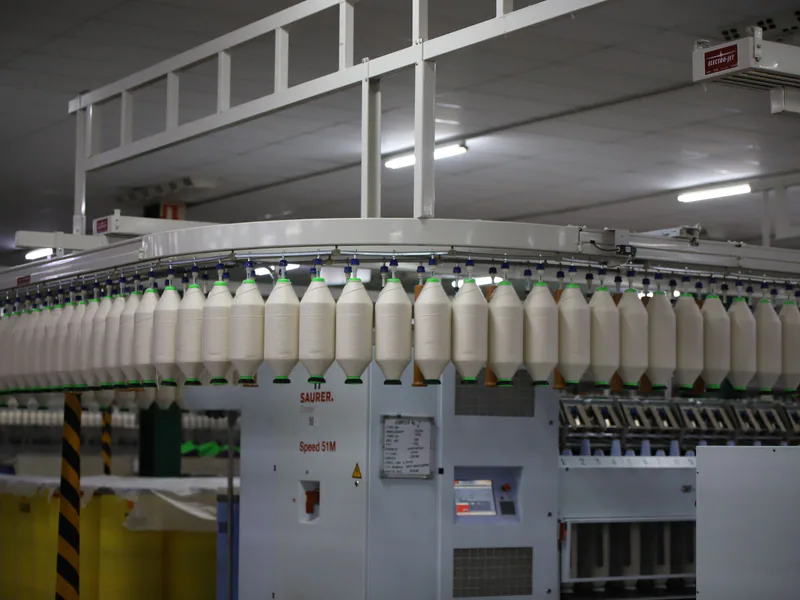
The background is practical rather than political. India’s domestic transformer and switchgear manufacturing capacity—while substantial and growing under the Make in India framework—cannot meet the combined demand from the transmission expansion plan, renewable energy integration, data center buildout, and industrial electrification simultaneously. Lead times for large power transformers from domestic manufacturers have stretched to 18-24 months, and switchgear delivery timelines face similar pressure. The procurement exemption acknowledges that project schedules cannot absorb these delays without risking the broader grid reliability targets.
For an Indian panel builder or switchgear manufacturer evaluating busbar processing equipment, the exemption creates a narrow but real procurement window. Chinese-origin CNC busbar machinery—which offers price-performance ratios that European and Japanese alternatives cannot match at equivalent specifications—can now be imported with fewer procedural barriers for qualifying projects. Our multi-function DH303-8P platform configured for Indian 50Hz/415V three-phase power with English-language Siemens HMI is a direct fit for this procurement pathway.
The exemption does not eliminate import duties—the basic customs duty on CNC machinery under HTS Chapter 84 typically ranges from 7.5% to 10% depending on the specific subheading, plus applicable IGST—but it removes the administrative obstacle of demonstrating that no domestic alternative exists, which previously added 3-6 months to the import approval process.
What Technical Specifications Matter for Busbar Machines Destined for the Indian Market?
India’s grid operates on a 50Hz system at 415V phase-to-phase for low-voltage industrial connections, with medium-voltage distribution at 11kV, 22kV, and 33kV depending on the state utility. For busbar processing equipment, the critical specification is the motor and drive configuration:
| Specification | Indian 50Hz/415V Requirement | DH CNC Standard Configuration |
|---|---|---|
| Main drive motors | 50Hz wound, 415V ±10% tolerance | Factory-configured for 50Hz/415V |
| VFD input | 415V/50Hz three-phase | Siemens VFD pre-programmed for Indian grid parameters |
| Control transformer | 415V primary / 220V & 24V secondary | Standard export configuration |
| HMI language | English (primary business language) | English-language Siemens PLC interface |
| PLC architecture | Siemens S7-1200/1500 series (widely supported in India) | Standard across all DH CNC machines |
| Spare parts logistics | DHL Express to major Indian cities: 5-7 business days | Standard export shipping; common consumables stocked |
The 50Hz motor winding is non-negotiable. A machine configured for North American 60Hz power will run its hydraulic pump motor at 20% higher speed on India’s 50Hz grid, reducing torque and potentially causing overheating. Conversely, a 50Hz European-spec machine will generally operate correctly in India with appropriate voltage tap settings—though we always configure the control transformer specifically for 415V primary to avoid the 400V-to-415V mismatch that can cause undervoltage faults on PLC power supplies.
For our custom switchgear panel solutions and substation busbar systems, we provide full configuration proposals matched to the customer’s specific grid parameters and production throughput targets. Indian customers operating in states with significant voltage fluctuation (a known issue in industrial areas of Uttar Pradesh, Bihar, and parts of Maharashtra) can specify an input voltage stabilizer as a factory-installed option.
What Should Indian Panel Builders and Switchgear Manufacturers Do to Capture This Opportunity?
Based on what we have observed supplying busbar processing equipment across multiple emerging markets undergoing grid investment cycles—Brazil, Mexico, Indonesia, and now India—the manufacturers who capture disproportionate market share during infrastructure booms share three characteristics:
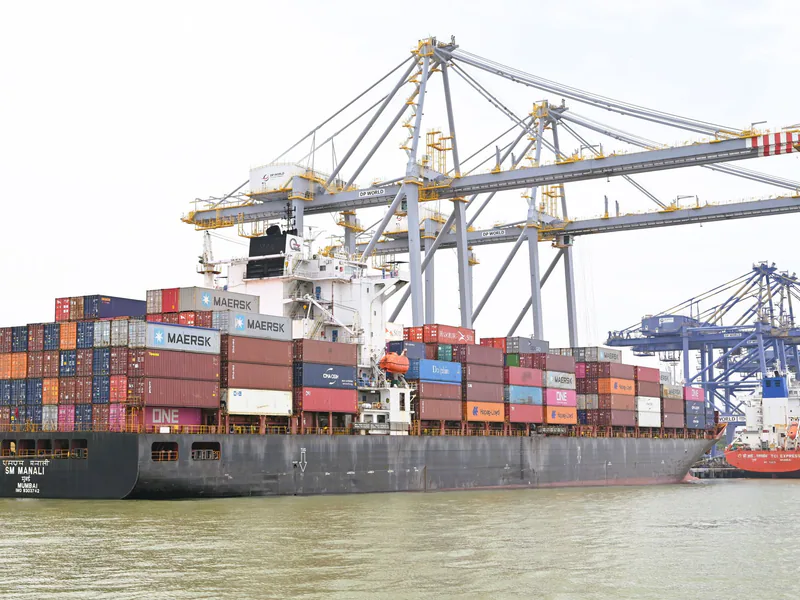
They invest in production capacity before the RFQ wave peaks. A busbar processing machine ordered today can be on your factory floor in 6-8 weeks (including ocean freight from China to Nhava Sheva or Chennai and inland transportation). A machine ordered after your competitors have already won the substation supply contracts will arrive after the delivery deadlines have passed. The Indian transmission project pipeline for 2026-2027 is public information—the 58 transmission projects were announced in March 2026. The procurement window is open now.
They qualify their fabrication processes for utility specifications. Indian utilities—particularly PGCIL and the state transmission corporations—maintain strict technical specifications for switchgear and busbar assemblies. These typically reference IEC 61439 for low-voltage switchgear and IEC 62271 for medium-voltage switchgear, with additional requirements for type testing, material traceability, and factory inspection. A manufacturer who begins the qualification process today will be positioned to bid when the next round of substation equipment tenders is published. Our engineering team can provide technical documentation packages supporting utility qualification submissions.
They build raw material supply agreements before demand drives up copper and aluminum prices. India is a net importer of refined copper, with domestic production from Hindalco and Sterlite Copper covering roughly 60-70% of demand. The remaining 30-40% is imported, primarily from Chile, Zambia, and Japan—exposing Indian busbar fabricators to LME price volatility and shipping disruptions. Establishing supply agreements with metal service centers now, before project-driven demand further tightens the market, is a procurement priority that our most forward-thinking Indian customers are already acting on.
For a practical case study of how similar grid investment cycles have played out in other markets, our analysis of Mexico’s 2025 energy reform impact on switchgear demand provides a parallel reference. For manufacturers evaluating machine specifications across multiple grid standards, our guide on specifying 60Hz-ready CNC busbar machines for Latin America covers the frequency and voltage configuration approach we apply to all regional markets.
For a manufacturing response to transformer lead-time uncertainty, see the 2026 transformer shortage and busbar capacity planning guide. It focuses on release gates and work-in-process controls rather than assuming every forecast becomes a purchase order.
Frequently Asked Questions (FAQs)
How much is India investing in grid modernization and what does it mean for busbar demand?
India's total power sector investment commitment over the next decade is ₹42 lakh crore (approximately $488 billion). The Revamped Distribution Sector Scheme (RDSS) alone commits ₹3.03 trillion ($36 billion) to distribution network upgrades. The national transmission network is expanding from 500,000 circuit kilometers in January 2026 to 648,000 ckm by 2032, with transformation capacity increasing from 1,407 GVA to 2,345 GVA. For busbar and switchgear manufacturers, this translates into sustained demand for copper and aluminum busbar systems across new substations, distribution panels, and industrial switchgear—with each new substation requiring hundreds of precisely fabricated busbar segments.
What are the key differences between India's 50Hz grid specifications and other markets?
India operates on a 50Hz system at 415V phase-to-phase for low-voltage industrial applications, with medium-voltage distribution at 11kV, 22kV, and 33kV. This differs from North American 60Hz/480V systems and requires appropriate motor and VFD configuration on busbar processing equipment. At DH CNC, we configure machines for 50Hz/415V operation with appropriate motor windings, VFD parameters, and control transformer taps for the Indian grid. Our standard export configuration for the Indian market mirrors our European 50Hz specification with regional voltage adjustments, and we provide full English-language HMI interfaces and documentation.
What procurement advantages does the 'Make in India' policy create for busbar equipment sourcing?
Under India's Production-Linked Incentive (PLI) schemes and phased manufacturing program, capital equipment imported for use in qualifying domestic manufacturing operations may benefit from concessional customs duties. More significantly, Indian panel builders and switchgear manufacturers who invest in domestic busbar fabrication capacity using imported CNC equipment can qualify as local suppliers for government infrastructure tenders that carry domestic content requirements. Our shipping team works with Indian customs brokers to structure import documentation for optimal duty treatment under the applicable Harmonized System (HS) classifications for industrial machinery.
DH303-8P 3-in-1 CNC Busbar Processing Machine
Discover details, parameters, standard dies packages, and factory quotes.