
How Is Mexico's 2025 Energy Reform Reshaping Switchgear and Busbar Equipment Demand in 2026?
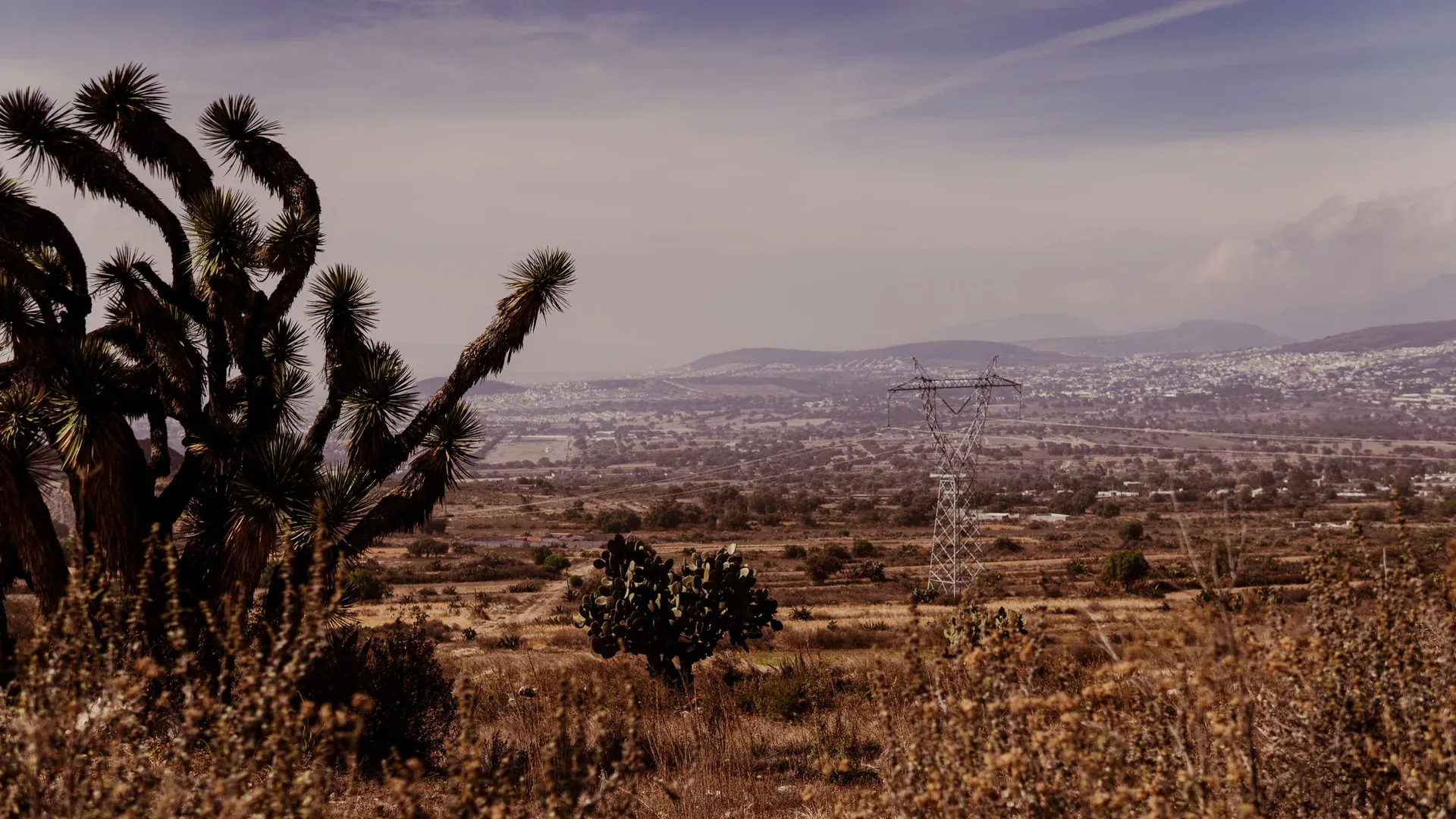
Mexico’s Comision Federal de Electricidad (CFE) is executing the largest grid expansion in the country’s modern history, with a MXN 624.6 billion (approximately $35 billion USD) investment plan spanning 2025 to 2030, according to the Mexican government’s Projects Hub. The March 2025 electricity sector reform, signed into law by President Claudia Sheinbaum, restructured the entire power market: CFE now guarantees a minimum 54% share of grid dispatch while carving out defined participation pathways for private generation. On the ground, this translates into 387 new electrical infrastructure projects – 138 transmission lines and 249 substations – tendered through 49 bidding packages as of March 2026, with the first five already in procurement at over MXN 1.048 billion. Every one of those substations requires switchgear assemblies, and every switchgear assembly requires busbars. At DH CNC, we have watched inquiry volume from Mexican panel builders and electrical contractors triple since mid-2025. The question is no longer whether demand is coming – it is whether local manufacturers have the CNC busbar processing capacity to meet it.
What Exactly Changed in Mexico’s 2025 Electricity Sector Reform?
On March 18, 2025, President Sheinbaum enacted eight new secondary laws and amended three existing ones, implementing the constitutional framework laid out in October 2024. The reform fundamentally reshapes who can generate, transmit, and sell electricity in Mexico.
The headline numbers are these: CFE must maintain at least 54% of energy injected into the national grid annually. The remaining 46% is open to private sector producers – but under new, more structured terms. Independent regulators like the Energy Regulatory Commission (CRE) and National Hydrocarbons Commission (CNH) were dissolved and replaced by a single centralized National Energy Commission (CNE) reporting directly to the executive branch.
For equipment manufacturers, the reform’s most consequential provision is the Plan Mexico infrastructure rollout. The government committed to adding 22 GW of new generation capacity by 2030, delivering a portfolio of 100 transmission and distribution projects, and maintaining grid reliability during a period of surging industrial demand driven by nearshoring.
The reform defines six private participation pathways:
| Participation Model | Capacity Limit | Grid Connection | Key Condition |
|---|---|---|---|
| Distributed Generation | Up to 0.7 MW | Behind-the-meter | No permit required |
| Isolated Self-Consumption | 0.7-20 MW | Not connected | Self-contained system |
| Interconnected Self-Consumption | 0.7-20 MW | Grid-connected | Surplus sold exclusively to CFE |
| Wholesale Market Generation | 0.7 MW+ | Grid-connected | Open competition in wholesale market |
| Long-Term Production (Mixed) | Utility-scale | Grid-connected | 100% output sold to CFE; CFE right of first refusal on asset transfer |
| Mixed Investment (Joint Venture) | Any scale | Grid-connected | CFE holds minimum 54% ownership stake |
What this structure means for switchgear and busbar demand is straightforward: even with CFE dominance, the sheer volume of new generation capacity (22 GW) and transmission infrastructure (387 projects) requires an enormous amount of electrical distribution equipment. Private generators building under self-consumption or wholesale market models still need to construct substations, install switchgear, and fabricate busbar systems – and they need local suppliers who can deliver on time.
How Much Is CFE Actually Spending on Transmission and Distribution Infrastructure?
The CFE’s 2025-2030 Strengthening and Expansion Plan breaks down as follows:
| Investment Category | Budget (MXN Billion) | Approx. USD Equivalent | Key Deliverables |
|---|---|---|---|
| Generation | 424.6 | $23.6B | 22,674 MW added; 76 projects |
| Transmission | 124.5 | $6.9B | 158 projects; 15,729 MVA capacity |
| Distribution | 75.5 | $4.2B | Network reinforcement; smart grid deployment |
| Total | 624.6 | $34.7B | 387 individual projects by 2030 |
On March 22, 2026, CFE unveiled an expanded transmission portfolio specifically for the 2026-2027 period: 58 projects grouped into 49 bidding packages, encompassing 138 transmission lines and 249 electrical substations, adding 2,702.9 kilometers of new transmission lines and over 10,500 MVA of transformation capacity. Of these, 44 projects are structured under the Fibra-E blended finance vehicle, designed to accelerate deployment by bringing private capital into publicly controlled infrastructure.
Fitch Ratings affirmed CFE’s BBB- investment grade rating in January 2026, noting expected government transfers of approximately MXN 85 billion in 2026 and MXN 87 billion in 2027 to support the utility’s capital program. This is real, funded infrastructure spending – not aspirational planning.
At our factory in Jinan, we track these project announcements closely. When CFE tenders 249 new substations, the downstream procurement signal is unambiguous: each substation requires low-voltage and medium-voltage switchgear panels, each panel contains multiple copper or aluminum busbar assemblies, and every one of those busbars needs to be cut, punched, and bent to precise specifications. A single medium-sized substation might contain 200-500 individual busbar segments. Multiply that by 249, and you begin to see the scale of the fabrication demand that is about to hit the Mexican market.
Why Is Nearshoring Driving Electrical Equipment Demand Beyond What CFE Projects Alone Can Explain?
CFE’s grid spending is only half the story. The other half is the private industrial load growth driven by nearshoring – the relocation of manufacturing capacity from Asia to Mexico to serve the North American market.
Mexico’s operational data center capacity has more than doubled from 115 MW in 2023 to 279 MW in 2026, with an additional pipeline of projects that could push total demand toward 1,500 MW in the near term. Amazon Web Services, Microsoft, and Google have all announced Mexican cloud regions. Data centers are voracious electricity consumers, and they require extensive medium-voltage switchgear and busbar systems for power distribution within the facility.
On the automotive side, Mexico is targeting production of 250,000 electric vehicles in 2025, with BMW, Volkswagen, and General Motors all operating or expanding EV production lines in states like San Luis Potosi, Puebla, and Coahuila. An automotive assembly plant typically requires its own dedicated substation and hundreds of switchgear panels for power distribution across welding lines, paint shops, and assembly conveyors.
The Mexico power transmission equipment market was valued at $577.7 million in 2025 and is projected to reach $1,035.1 million by 2034, growing at a CAGR of 6.36%, according to IMARC Group. This figure captures transformers, switchgear, and related equipment – but notably does not include the value of the busbar fabrication work performed by local panel builders who assemble these components into finished switchgear assemblies. The actual addressable market for busbar processing is significantly larger than the OEM equipment numbers suggest.
What Do Mexico’s 60Hz/440V Grid Specifications Mean for Equipment Sourcing?
One technical detail that catches first-time equipment buyers off guard is Mexico’s grid frequency and voltage configuration. Mexico operates on a 60Hz system with 440V phase-to-phase as the standard industrial three-phase voltage, with residential single-phase at 127V. This is essentially the same electrical architecture as the United States and Canada – which is both a blessing and a sourcing consideration.
For busbar processing machines, the implications are practical: motors, variable frequency drives (VFDs), PLC power supplies, and control transformers must all be wound and configured for 60Hz operation. A machine built for the European 50Hz/400V market will run motors at 20% higher speed on Mexico’s 60Hz grid, potentially damaging hydraulic pumps and causing control system faults.
At DH CNC, we have been shipping to 60Hz markets for over a decade. Our standard LATAM configuration for the DH303-8P multi-function busbar processing machine includes:
- 60Hz-rated main drive motors with appropriate V/Hz curves
- VFDs pre-programmed for 440V/60Hz three-phase input
- Control transformers tapped for 440V primary / 220V and 24V secondary
- Spanish-language Siemens PLC HMI interface
- Spanish technical documentation and maintenance manuals
We also configure our standalone CNC busbar bending center (DHAC-BB-H) and CNC punching and shearing machine (DHCNC-BP-60) with the same 60Hz/440V specification. For customers operating in Mexico’s maquiladora zones, where plants may receive power at 480V (the U.S. standard), we can supply machines with the appropriate voltage tolerance range.
This is not a trivial configuration detail. I have personally seen a Mexican panel builder purchase three European-spec machines at auction, only to spend six months and $40,000 replacing motors and rewriting PLC parameters before they could run a single busbar. The voltage mismatch penalty is real, and it is entirely avoidable with proper upfront specification.
How Do Brazil, Chile, and Colombia Compare as Parallel LATAM Opportunities?
Mexico is the largest near-term opportunity, but the broader LATAM electrical equipment market is firing on multiple cylinders. Our export data shows inquiry growth from Brazil, Chile, and Colombia accelerating at 40-60% year-over-year since 2024.
| Market | Key Driver | Grid Frequency | Industrial Voltage | Switchgear/Busbar Demand Signal |
|---|---|---|---|---|
| Mexico | CFE grid expansion + nearshoring | 60Hz | 440V/480V | 387 substation projects; 249 new substations tendered |
| Brazil | Renewable energy boom; auction-based procurement | 60Hz | 440V/380V (regional) | LATAM’s largest wind+solar market; $7.11B wind sector |
| Chile | Solar PV dominance; grid interconnection projects | 50Hz | 380V/400V | Leading regional solar adopter; copper mining electrification |
| Colombia | Hydro-reliant grid modernization; renewable diversification | 60Hz | 440V/208V | Grid reliability investments; new substation construction |
The Latin America AC switchgear market was valued at approximately $2.1 billion in 2023 and is projected to grow at a 6.2% CAGR through the decade. The broader Latin America power distribution component market is expected to nearly double from $58.83 billion in 2025 to $105.55 billion by 2033.
Brazil deserves particular attention because it shares Mexico’s 60Hz frequency. Brazilian panel builders can use the same machine configurations we supply to Mexico, with only minor voltage tap adjustments depending on the regional utility (some Brazilian states use 380V, others 440V). Chile, on a 50Hz system, requires a separate motor and drive specification – which we also handle routinely, as our European and African customers operate on 50Hz.
The IEA estimates that spending on renewables, grids, energy efficiency, and electrification across Latin America will reach approximately $70 billion in 2025, up substantially from prior years. DNV’s 2025 Energy Transition Outlook identifies Brazil, Chile, and Colombia as the region’s most promising markets for renewable-driven grid investment.
For a busbar processing machine supplier, this means a single LATAM strategy can address a continent-wide opportunity. A DH303-8P shipped to Monterrey, Mexico is mechanically identical to one shipped to Sao Paulo, Brazil – same 60Hz motor windings, same VFD programming, same Siemens PLC architecture. The market diversification is built into the engineering.
What Trade Advantages Does the USMCA Offer for Equipment Sourcing into Mexico?
For U.S.-based manufacturers operating in Mexico or considering setting up production there, the United States-Mexico-Canada Agreement (USMCA) creates meaningful advantages for capital equipment imports.
Under the USMCA’s rules of origin framework, industrial machinery classified as capital equipment for manufacturing can enter Mexico at preferential tariff rates. More importantly, for companies operating under Mexico’s IMMEX program (the maquiladora regime), imported production equipment benefits from duty deferral: no import duties are payable when the machinery is used to manufacture goods that are subsequently exported to the U.S. or Canada.
The practical consequence for a switchgear manufacturer is significant. A U.S. company that sets up a panel-building operation in Monterrey or Queretaro can import a DH303-8P busbar processing machine, fabricate busbars and switchgear assemblies, ship the finished panels to the U.S. under USMCA preferential treatment, and pay zero net duty on the imported machine. The machine becomes a capital asset in a duty-free production ecosystem.
We work with freight forwarders experienced in IMMEX documentation. Our shipping documents – commercial invoice, packing list, certificate of origin – are structured to satisfy Mexican customs (SAT) requirements for temporary importation under the IMMEX program. For customers who prefer a turnkey solution, we can arrange CIF delivery to the Port of Veracruz or Manzanillo, with all import documentation pre-cleared.
There is a practical speed advantage here too. A container shipped from our factory in Jinan to the Port of Manzanillo typically transits in 22-28 days. From Manzanillo, rail freight reaches Monterrey (Mexico’s industrial heartland) in 3-4 days. Door-to-door, we can deliver a fully commissioned DH303-8P to a Mexican factory floor in approximately 6-8 weeks from order confirmation – competitive with domestic equipment lead times in North America.
What Support Infrastructure Does DH CNC Provide for LATAM Customers Beyond the Machine Itself?
Shipping the machine is the easy part. What separates a productive installation from a six-month headache is local technical support, spare parts availability, and the machine’s ability to speak the operator’s language.
Our LATAM support framework includes:
Spanish-language HMI and documentation. Every machine we ship to Mexico, Central America, or South America leaves Jinan with a Spanish-language touchscreen interface on the Siemens PLC. Error messages, parameter settings, maintenance reminders, and production reports all display in Spanish. Printed manuals – operator guide, maintenance schedule, electrical schematics, hydraulic diagrams – are provided in Spanish as standard.
Remote commissioning and diagnostics. The DH303-8P and our other CNC machines include an industrial 4G router module that enables our engineers in Jinan to connect remotely for commissioning support, parameter optimization, and fault diagnosis. We have commissioned machines in Monterrey, Guadalajara, and Mexico City without ever putting an engineer on a plane – though we do offer on-site commissioning for customers who prefer it.
Local service partner network. We are actively expanding our authorized service partner network in Mexico, with technicians based in Monterrey and Mexico City capable of on-site mechanical adjustment, hydraulic service, and electrical troubleshooting within 48 hours. For Brazil, we maintain a partnership with a Sao Paulo-based industrial automation firm that stocks common wear parts – punching dies, shear blades, bending mandrels, and hydraulic seals.
Spare parts inventory strategy. For customers running production-critical operations, we recommend maintaining a prescribed spare parts kit on site. The kit covers the most common consumables – Cr12MoV punching dies in standard sizes, shear blades, bending rollers, hydraulic filters, and O-ring seal sets. Replenishment orders ship via DHL Express and typically arrive in Mexico within 5-7 business days.
For manufacturers interested in exploring how our switchgear panel busbar solutions integrate with Latin American grid specifications, our engineering team can provide a detailed configuration proposal based on your specific voltage requirements and production throughput targets. We also recommend reviewing our transformer and busduct fabrication solutions, which are seeing increased demand from LATAM utility contractors working on CFE substation projects.
What Should Mexican and LATAM Manufacturers Do Now to Position for This Demand Wave?
Based on what we have observed across multiple emerging markets, the manufacturers who capture the most value from infrastructure-driven demand cycles are the ones who invest in production capacity before the RFQs start piling up. Here is my practical advice for Mexican and LATAM panel builders and switchgear manufacturers:
Audit your current busbar processing capacity. Can your existing machines handle the volume, precision, and material variety that 249 new substations will require? A manual hydraulic machine that served you fine for small commercial switchboards will not keep pace with utility-scale production volumes. The multi-function DH303-8P processes copper up to 15mm x 160mm and aluminum up to 15mm x 200mm in a single automated work cell – a throughput profile designed for serious industrial production.
Verify your voltage and frequency configuration. If you are sourcing machines from European or Asian suppliers who primarily serve 50Hz markets, confirm in writing that the motors, drives, and control systems are factory-configured for 60Hz/440V. Do not accept “it should work” as an answer. Get the motor nameplate specifications in the purchase contract.
Build inventory of raw material. LME copper prices have fluctuated between approximately $10,000 and $13,500 per ton over the past 18 months. With projected demand from 387 CFE projects plus private industrial load growth, Mexican copper and aluminum busbar stock will tighten. Establish supply agreements with metal service centers now, before project-driven demand drives up spot prices and lead times.
Develop your CFE qualification documentation. CFE and its EPC contractors maintain strict supplier qualification requirements for switchgear and busbar assemblies. This typically includes ISO 9001 certification, type-test certificates for switchgear designs, material traceability documentation, and in some cases, factory audit reports. Manufacturers who begin the qualification process now will be positioned to bid when the 44 Fibra-E transmission packages enter procurement.
If you are evaluating equipment and want to discuss your specific production requirements, our application engineers are available for a technical consultation. You can request a quote or schedule a call directly, and we will prepare a configuration proposal tailored to your grid specifications, material types, and target throughput.
Frequently Asked Questions (FAQs)
What does Mexico's 2025 energy reform mean for switchgear and busbar manufacturers?
The reform mandates CFE maintain at least 54% of grid dispatch while opening up to 46% for private generation. Combined with MXN 624.6 billion in grid investment through 2030 and 387 new substation and transmission projects, this creates sustained demand for medium and low-voltage switchgear, copper and aluminum busbar systems, and the CNC processing equipment needed to fabricate them at scale.
Can DH CNC supply busbar processing machines configured for Mexico's 60Hz/440V grid?
Yes. Our factory in Jinan has been shipping machines to 60Hz markets for over a decade, including Mexico, Brazil, the Philippines, and parts of the Middle East. We configure motors, VFD drives, and control system power supplies for 440V/60Hz three-phase input as a standard option. We also provide full Spanish-language HMI interfaces, manuals, and on-site commissioning support through our LATAM service partner network.
What are the USMCA advantages for sourcing busbar machines from China into Mexico?
Under USMCA rules of origin, busbar processing machines classified as capital equipment can enter Mexico at preferential tariff rates when imported for use in manufacturing qualifying goods. For U.S. manufacturers operating in Mexico under the IMMEX program, imported production machinery benefits from duty deferral and eventual duty-free treatment when the finished electrical equipment is exported to the U.S. or Canada. We help customers structure shipping documentation to maximize these trade benefits.
DH303-8P 3-in-1 CNC Busbar Processing Machine
Discover details, parameters, standard dies packages, and factory quotes.