
In-House vs Outsourced Busbar Fabrication: A Make-or-Buy Model
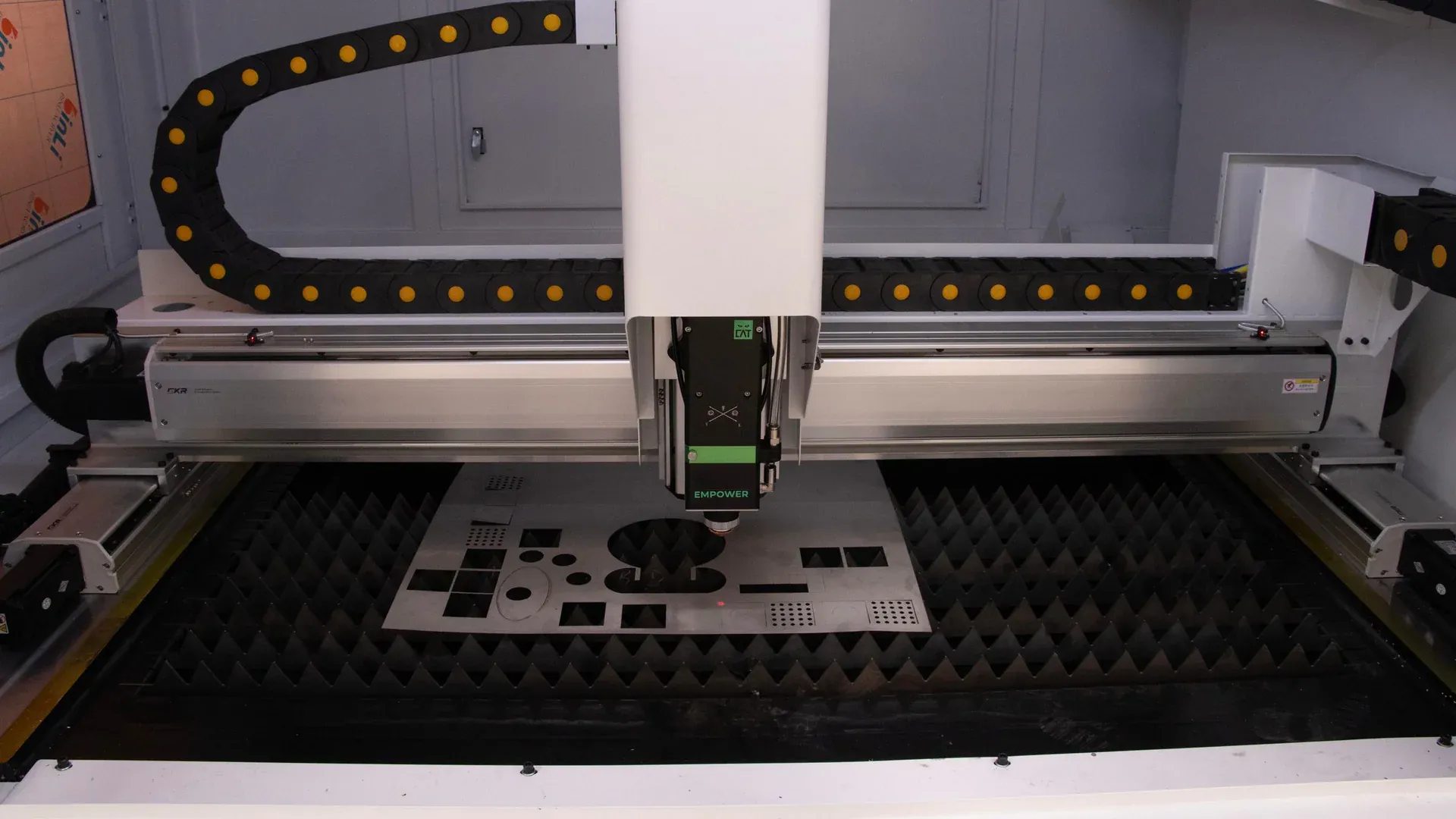
The busbar fabrication make-or-buy decision is not a contest between a supplier’s unit price and a machine’s purchase price. The two options allocate lead time, engineering response, capacity, copper ownership, quality risk and cash differently. A sound model compares only relevant costs and then tests whether the organization can operate the chosen process.
For many switchgear and power-distribution manufacturers, the strongest answer is neither “outsource everything” nor “make everything.” A defined hybrid boundary may preserve control without forcing a new cell to handle every possible part.
Start With the Demand Pattern, Not the Annual Total
Segment at least twelve months of demand into part families. Record accepted quantity, batch size, material, process route, change frequency, expedite frequency and rejection or rework history. Separate known programs from uncertain pipeline.
Four profiles lead to different decisions:
- repeat parts with stable drawings and predictable replenishment;
- engineer-to-order parts with frequent late revisions;
- demand peaks that exceed routine internal capacity;
- unusual parts requiring tools or skills used only occasionally.
Annual volume can conceal volatility. A plant may have enough total work to justify equipment but insufficient staffing during a three-month peak. Conversely, modest volume with constant engineering changes may justify internal capability because schedule recovery is more valuable than the unit-cost saving.
Use the global busbar procurement strategy guide to assess supply and material exposure around the fabrication decision. The model here concentrates on where processing occurs.
Establish the Outsourcing Baseline
Calculate outsourced cost per accepted part, not per part ordered. Include:
- supplier unit price and minimum-order effects;
- tooling or setup charges;
- packaging, freight, brokerage and duties where applicable;
- incoming inspection and supplier-management time;
- rejected-part replacement and sorting cost;
- premium freight or expediting;
- inventory held to cover replenishment time;
- obsolete parts after drawing changes.
Avoid assigning all supplier-management overhead to one category if it will remain after insourcing. The make-or-buy model should include avoidable cost, not accounting allocations that do not change with the decision.
Measure lead time as a distribution. Median delivery alone ignores the late tail that creates schedule risk. Capture the time from released drawing to accepted parts at point of use, including approval, transport and inspection.
Build the In-House Cost per Accepted Part
Separate annual fixed cost from variable cost. Fixed cost may include equipment depreciation or capital charge, committed maintenance, software, floor space, training refresh and dedicated technical support. Variable cost may include copper yield loss, direct labor, energy, consumables, tool wear, inspection and rework.
Do not assume that available operators are free. If work is transferred from another constraint, use the opportunity cost or added labor needed to maintain output. Include programming, setup and first-piece approval, particularly for low-volume families.
If a DH303-8P multi-function busbar processing machine is being evaluated, use the verified quoted configuration, actual tool set and buyer time studies. Product-page capacity defines a technical envelope; it does not establish the buyer’s cost or output.
Copper requires consistent treatment across both cases. Compare purchase basis, yield, scrap recovery, remnant control and cash timing. Do not count the full copper value as an insourcing saving if the buyer effectively pays it in both options.
Calculate Break-Even by Representative Family
A basic annual volume break-even equation is:
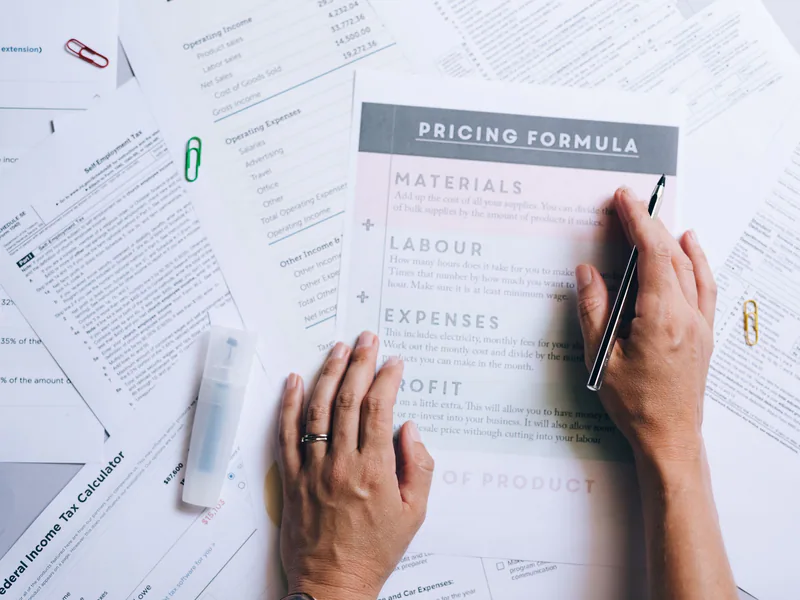
Break-even accepted parts = annual fixed in-house cost ÷ (outsourced landed cost per accepted part − in-house variable cost per accepted part)
Assume, purely as an example:
- annual fixed in-house cost: $72,000;
- outsourced landed accepted-part cost: $31;
- in-house variable accepted-part cost: $19.
The contribution toward fixed cost is $12 per accepted part, and break-even is 6,000 accepted parts per year.
The example is not a market quotation. Replace every value with the buyer’s evidence and run separate calculations for materially different families. A small flat bar and a multi-bend assembly should not share one fictional average.
Then test sensitivity:
| Variable | Downside question | Evidence to collect |
|---|---|---|
| demand | What if approved volume is 25% lower? | released orders and program probability |
| labor | What if a second operator or programmer is required? | time study and staffing plan |
| yield | What if first-year scrap exceeds target? | pilot runs and learning curve |
| outsourcing | What if supplier pricing falls at higher volume? | tiered quotation |
| uptime | What if a critical failure stops the only cell? | service and spare-parts plan |
For a capital-focused payback view after the make-or-buy boundary is established, use the CNC busbar machine ROI model, but replace any generic inputs with current documented costs.
Price the Operational Differences
Some differences do not appear on a purchase invoice but have measurable consequences.
Engineering-change response
Measure how many changes occur after initial release, the cost of obsolete inventory and the schedule impact of reordering. In-house processing can shorten the feedback loop, but only if program control, drawing revision and material traceability are disciplined.
Capacity and delivery risk
Calculate the margin or contractual exposure associated with a missed assembly date. Do not label the entire order value as a “saving.” Use the incremental cost or contribution genuinely at risk and multiply it by a defendable probability.
Quality ownership
Outsourcing transfers processing but not the manufacturer’s responsibility for the finished product. Compare supplier corrective-action effort with internal process control, gauge capability, training and containment cost. The switchgear busbar manufacturing reference helps connect fabricated-part control to final assembly.
Working capital
Supplier minimums and long replenishment can increase inventory. In-house production may reduce finished-part stock but increase raw copper and tooling holdings. Model days of inventory and payment terms rather than assuming insourcing always releases cash.
Compare Four Operating Models
| Model | Best fit | Main exposure |
|---|---|---|
| outsource | low or irregular volume, mature drawings, specialized vendor capability | lead time and supplier dependency |
| hybrid | variable demand, important urgent parts, staged learning | dual planning and duplicated controls |
| multi-function cell | diverse low-to-medium batches where handoffs matter | one shared resource can become the constraint |
| dedicated process cells | higher volume and simultaneous flow | more capital, space, transfers and balancing |
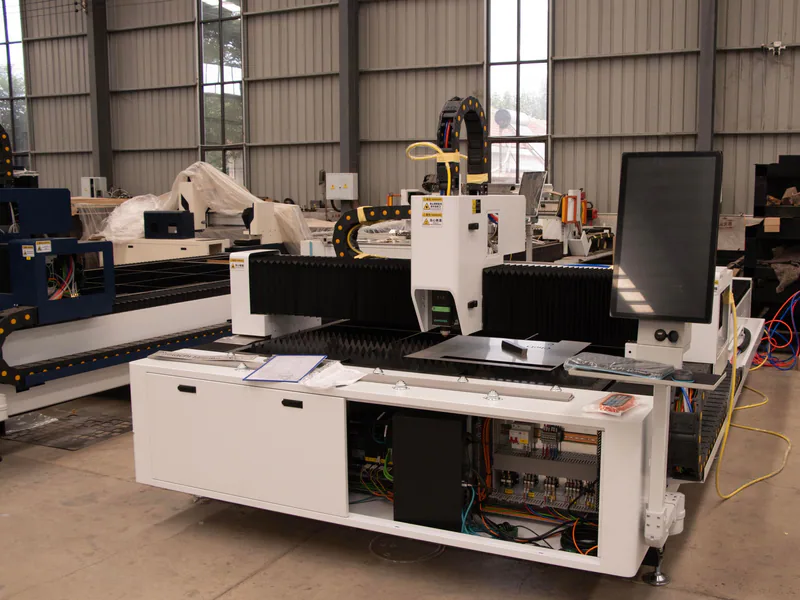
The choice should be revisited when product mix changes. A hybrid model can be a planned end state, not merely a transition: keep runners and urgent revisions internal, while qualified suppliers cover uncommon tools, overflow or secondary finishing.
Use Current Market Conditions as a Stress Test
Capital-equipment demand provides context for lead times and supplier capacity, but it does not prove demand for busbar machinery. On August 10, 2026, AMT reported that June US manufacturing-technology orders reached $672.7 million and first-half orders reached $3.44 billion, 36% above the first half of 2025—the strongest first half in the series that began in 1998. Treat that USMTO release as a broader metalworking investment signal, then obtain project-specific quotations and schedules.
Stress the decision against a longer equipment lead time, delayed tooling and a demand change during ramp-up. If the business case fails after a modest downside, it is not ready for approval.
Run a 90-Day Evidence Program
Before committing capital, close the largest unknowns:
- classify twelve months of parts into representative families;
- obtain an itemized outsourcing baseline and tiered quote;
- send controlled sample parts to shortlisted machine suppliers;
- time the proposed routes, including changeover and inspection;
- validate labor, utilities, space, safety and skill availability;
- calculate family-level break-even and downside cases;
- define which work remains outsourced during ramp-up and downtime;
- require a capacity, acceptance, training, spares and service plan.
Approve the model with named owners for demand, cost and operational assumptions. The decision becomes much easier to audit: outsource where external capability and flexibility are valuable, insource where control and repeatable economics justify the operating responsibility, and use a hybrid boundary where uncertainty is still expensive.
Frequently Asked Questions (FAQs)
When should a panel builder bring busbar fabrication in-house?
In-house production is strongest when demand is sufficiently stable, engineering changes are frequent, response time matters, suitable labor and quality controls are available, and the avoidable outsourcing premium supports the required equipment and operating cost.
How is the make-or-buy break-even volume calculated?
Divide annual fixed in-house cost by the outsourced landed cost per accepted part minus the in-house variable cost per accepted part. Test the result by product family because one average part can distort the decision.
Should copper purchase cost be included in both options?
Include only costs that differ or affect cash and yield. If both options use buyer-owned copper, compare yield, handling, transport and working-capital effects. If the supplier owns the copper, use the full landed accepted-part price and its commercial terms.
Can a hybrid busbar sourcing model be better than full insourcing?
Yes. A hybrid model can keep repeat and urgent work in-house while outsourcing overflow, uncommon tooling or highly specialized parts. It often reduces risk during demand ramp-up.
DH303-8P 3-in-1 CNC Busbar Processing Machine
Discover details, parameters, standard dies packages, and factory quotes.