
CNC Busbar Machine Manufacturer Comparison
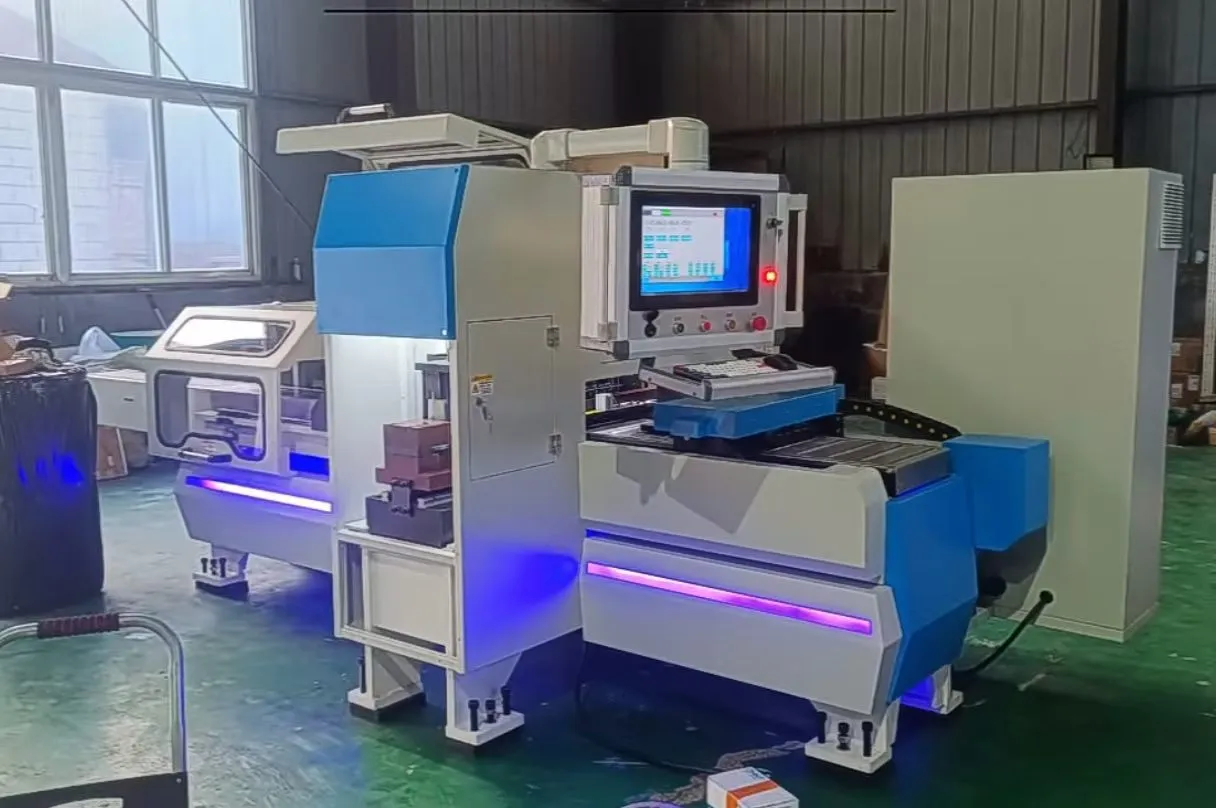
There is no defensible universal ranking of CNC busbar machine manufacturers. A factory making an excellent high-volume punching line may be the wrong source for a compact three-station workshop machine. A familiar brand may also quote a configuration that excludes the tooling, software or local service your project needs.
DH CNC publishes this comparison, so it should not be read as an independent ranking. Its purpose is to give buyers a scorecard that can be applied to DH CNC and every competing quotation on equal terms.
Begin With Process Fit
Classify the production problem before comparing brands:
| Production need | Architecture to evaluate | Main acceptance evidence |
|---|---|---|
| Mixed work with several operators | Three-station punching, shearing and bending workstation | simultaneous workflow, station capacity, die change and sample quality |
| Repeated holes, slots and cut lengths | CNC punching and shearing center | position data, program import, repeatability and sheet utilization |
| Controlled horizontal or vertical bends | Dedicated CNC busbar bender | angle method, springback workflow, tooling and consecutive-part results |
| High-volume connected line | Automated line or cells with handling | takt definition, buffer logic, changeover, uptime and recovery tests |
The CNC busbar machine selection guide explains these architectures in more detail. Remove any supplier that cannot meet a mandatory process envelope before comparing optional features.
Use One Requirement Package for Every Manufacturer
Send the same RFQ pack to each candidate. It should include:
- material grade, temper, width and thickness range;
- representative drawings and difficult features;
- batch size, product mix and shift pattern;
- required file formats and programming workflow;
- plant power and control-voltage requirements;
- safety, guarding and documentation requirements;
- included tooling and spare-part expectations;
- FAT method, measurement limits and sample count;
- destination and requested trade term;
- installation, commissioning and training boundary.
Without a common baseline, a low quote may simply omit more scope. Use the busbar machine RFQ checklist to normalize responses.
Comparison Dimension 1: Published Capability
Separate the published specification from the required working envelope. Record the evidence source and any restrictions.
| Item | What to record | Question to ask |
|---|---|---|
| Material capacity | grade, width and thickness by operation | Is the limit continuous, conditional or a one-off demonstration? |
| Punching | maximum force, die range and throat | Which features require custom tooling? |
| Shearing | supported section and cut type | How are flatness and edge condition evaluated? |
| Bending | force, usable width and orientation | How is springback handled for each material batch? |
| Positioning | axis travel, datum and feedback method | What exactly does the tolerance apply to? |
| Throughput | operation, part, operator and start/stop definition | Can the same test be witnessed during FAT? |
Do not combine unlike numbers. Hole-position tolerance, repeated pitch error, bend-angle tolerance and cut-length tolerance describe different measurements.
Comparison Dimension 2: FAT Evidence
The strongest manufacturer comparison is a controlled test on buyer-supplied parts. Require each supplier to state:
- the sample material and condition;
- drawing and program revisions;
- tooling identification and setup;
- number of consecutive parts;
- instruments and calibration status;
- individual measured values, not only an average;
- cycle-time boundaries and operator tasks;
- deviations, corrective action and retest result.
Video is useful context but does not replace the raw measurement sheet. If a claimed feature cannot be demonstrated before shipment, write the later acceptance method and remedy into the contract.
Comparison Dimension 3: Machine Construction and Serviceability
Frame terminology by itself does not prove performance. Review how the assembled machine is aligned, measured and maintained.
- Where are machine datums established?
- Which guide, stop, encoder or scale controls the position?
- What routine checks can the buyer perform without factory tools?
- Are hydraulic filters, lubrication points and electrical terminals accessible?
- Which settings and programs can be backed up?
- Which components are standard commercial parts, and which are proprietary?
- What happens if an approved component becomes unavailable during production?
Ask for the bill-of-material schedule attached to the quotation. “International brand components” is not a usable specification.
Comparison Dimension 4: Software and Data Ownership
Confirm the complete path from engineering drawing to repeat production:
| Workflow question | Evidence |
|---|---|
| Which file formats are imported? | live import of a buyer file |
| What geometry requires manual correction? | screen recording and saved revision |
| How are tool libraries maintained? | edit, export and restore demonstration |
| Are licenses permanent, subscription-based or device-bound? | written license terms |
| Can programs be backed up off the machine? | successful backup and restore |
| Who owns custom macros and post-processors? | contract clause and delivered files |
Nesting or automation should be evaluated against the buyer’s real drawings. A percentage saving is not transferable between different part mixes and stock lengths.
Comparison Dimension 5: Support and Spare Parts
Replace vague “lifetime support” language with operating details:
- named support channel and coverage hours;
- first-response and escalation targets in the contract;
- remote-access method and buyer IT approval;
- recommended critical spares with part numbers;
- stock location, lead time and shipping terms;
- manuals, electrical drawings, hydraulic diagrams and alarm list;
- installation prerequisites and responsibility matrix;
- warranty exclusions for parts, labor, travel and consumables.
Test the workflow by opening a sample technical question before placing the order.
Comparison Dimension 6: Delivered and Landed Scope
Compare a common total rather than headline machine price. Include:
- base machine and selected options;
- standard and custom tooling;
- software and licenses;
- electrical adaptation and safety scope;
- FAT material and third-party inspection;
- preservation, case, handling and transport;
- customs, duties and local fees confirmed for the destination;
- rigging, foundation, utilities and commissioning;
- training, initial consumables and critical spares.
The CNC busbar machine price guide provides a worksheet structure. Treat any online price as a planning range until the configuration, trade term and validity date are stated.
A Practical Weighted Scorecard
Set mandatory gates first, then apply weights that reflect your operation.
| Category | Example weight | Score only from |
|---|---|---|
| Process fit and capacity | 25% | signed specification and representative samples |
| FAT quality and repeatability | 25% | raw measurements and witnessed test |
| Software and workflow | 15% | live demonstration on buyer files |
| Maintainability and documentation | 15% | delivered lists, manuals and access checks |
| Support and spares | 10% | written service scope and tested response |
| Landed commercial scope | 10% | normalized quote and destination estimates |
Weights should change for the project. A job shop may prioritize changeover; a repetitive line may prioritize measured throughput and recovery; a remote plant may place more weight on standard components and spares.
Questions to Ask DH CNC and Other Suppliers
Use the same questions without giving DH CNC special treatment:
- Which requirement in our RFQ is not included in the quoted base configuration?
- Show the exact machine and component labels proposed for our order.
- Run our most difficult part and provide all measured results.
- Demonstrate program backup, restore and alarm recovery.
- Identify every custom or single-source component.
- State the owner and deadline for each FAT deviation.
- Provide the final packing, installation and support responsibility matrix.
This method may produce a different winner for different plants. That is the point: the best CNC busbar machine manufacturer is the one whose documented configuration and demonstrated result fit the buyer’s defined work—not the one that tops a self-published list.
Frequently Asked Questions (FAQs)
What is the best way to compare CNC busbar machine manufacturers?
Give every supplier the same material list, drawings, production mix and acceptance sheet. Compare mandatory capability first, then witnessed FAT results, delivered scope, maintainability and landed cost. Country of origin and brand reputation are context, not substitutes for machine-specific evidence.
Can quoted accuracy be used to select a manufacturer?
A quoted tolerance is useful only when its measurement basis is defined. Ask which material, feature, datum, instrument, sample count and operating condition produced the result, then repeat that method during FAT on your own parts.
DHCNC-BP-60 CNC Punching & Shearing Workstation
Discover details, parameters, standard dies packages, and factory quotes.