
Japan Busbar Market: JIS Standards and 50/60 Hz Grid
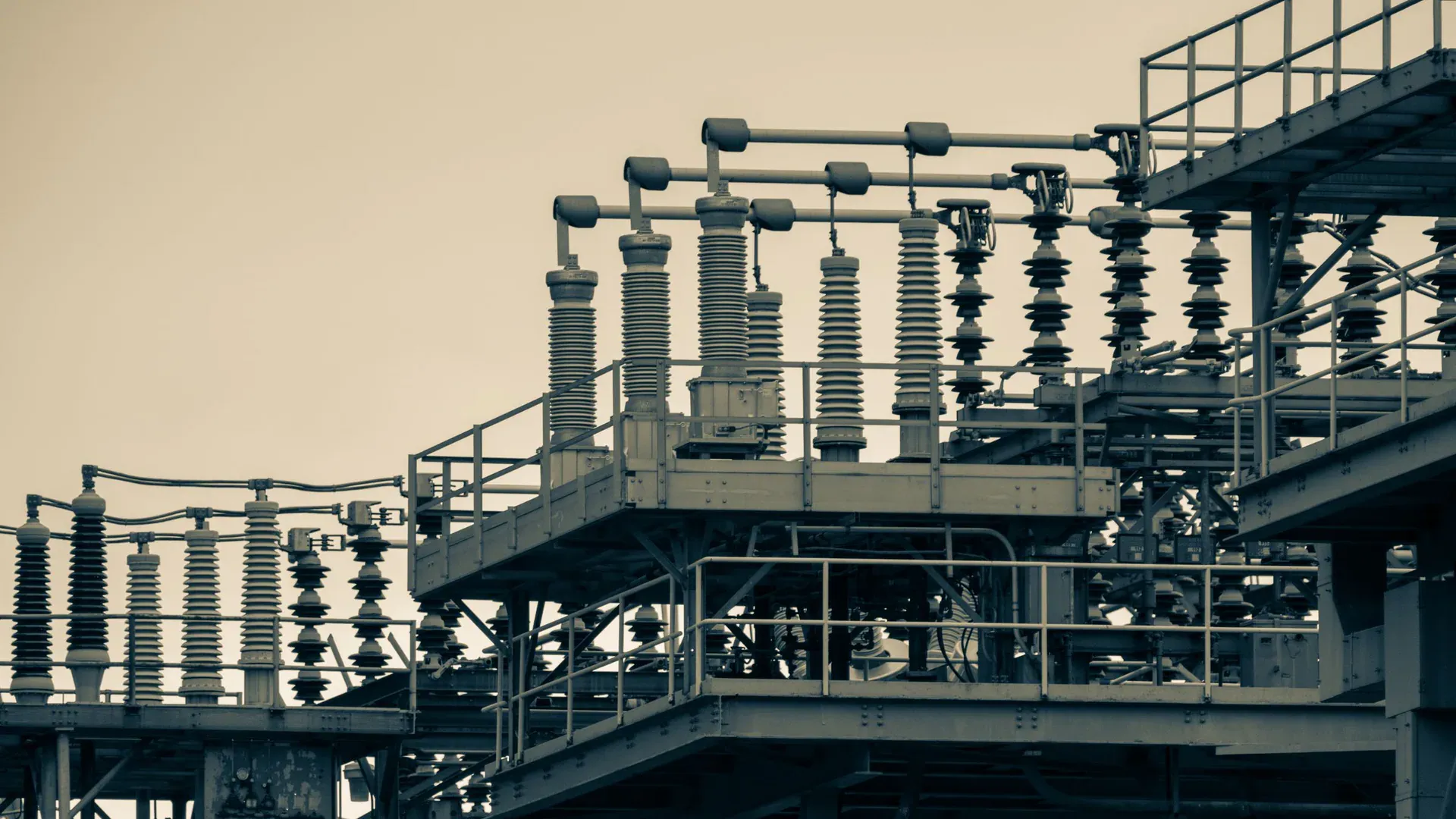
Japan is a distinctive busbar procurement environment because national projects cross two grid frequencies, local equipment categories are defined through JIS standards, and buyers often require detailed production and inspection evidence. Those characteristics are more useful than an unreliable market-size headline.
The original article combined USD 1,063.7 million in 2025, USD 1,922.7 million in 2030 and a 6.1% CAGR. The endpoints imply about 12.6% over five years, so the values likely came from different segments or assumptions and should not be published as one forecast.
Demand is supported by grid reinforcement and electrification
OCCTO coordinates cross-regional transmission planning and system operation. Its long-term expansion work includes reinforcements and interconnection capacity intended to move power between generation regions and major demand areas. The original content brief cited a ¥6–7 trillion planning range and new HVDC capacity from an OCCTO long-term transmission expansion paper. That figure should be described as a planning estimate tied to the cited scenario, not as a guaranteed procurement budget.
Additional demand channels include:
- replacement and resilience work in utility networks;
- renewable and storage connections;
- semiconductor, automotive and advanced-manufacturing facilities;
- data centers in major load areas;
- rail and infrastructure projects;
- factory automation and building distribution upgrades.
Japan’s current energy outlook also supports long-term network work. The Seventh Strategic Energy Plan presents renewables at 40–50% of the FY2040 power-generation mix, compared with a preliminary 22.9% in FY2023. That is a system-planning range, not a busbar-market CAGR.

The 50/60 Hz split affects the assembly, not passive copper alone
Eastern and western Japan use different nominal frequencies, with converter facilities transferring power between the systems. A passive copper or aluminum bar does not need a different geometry merely because it carries 50 Hz instead of 60 Hz at the same current and installation conditions.
Frequency can still change the equipment package:
- transformer, motor and fan ratings;
- protection and metering settings;
- auxiliary power supplies;
- test procedures and labels;
- harmonic and thermal studies for the actual load;
- customer documentation and spare-parts configuration.
Therefore the RFQ should state the installation region, voltage, frequency, fault level, environmental conditions and connected equipment. Avoid selling “dual-frequency busbars” when the frequency-sensitive items are elsewhere in the assembly.
JIS references must match the product category
Two JIS references frequently appear in Japanese busbar projects:
- JIS C 4620, associated with cubicle-type high-voltage receiving equipment;
- JIS C 8360, associated with bus ducts or busbar trunking systems.
The project may also use IEC-derived Japanese standards, utility requirements and customer specifications. Confirm the current edition and exact scope in the Japanese Industrial Standards system rather than relying on a copied summary.
JIS C 4620 does not create a universal ±0.1 mm busbar hole requirement, and JIS C 8360 does not make every bus duct identical to an IEC product. The equipment manufacturer owns its design and verification; the fabricator must meet the released part requirements that support that design.
For international busbar trunking context, IEC 61439-6 covers low-voltage busbar trunking systems. Its application and relationship to a Japanese product should be established by the responsible designer and certification route.
Japanese supplier qualification is evidence-intensive
Country stereotypes are not a useful quality plan. A Japanese customer can ask the same measurable questions as any demanding OEM, often with greater emphasis on revision control, inspection records and change notification.
A production package should define:
- drawing revision and datum scheme;
- material grade, mill certificate and lot identity;
- plating or insulation specification;
- hole, slot, cut and bend acceptance criteria;
- edge and contact-surface condition;
- measurement method, gauge calibration and sampling;
- non-conformance approval and corrective action;
- packaging that prevents deformation and surface damage;
- prior notification for material, process, software or tooling changes.
Translate documents where required, but do not replace numeric requirements with general claims about “Japanese precision.”
Match the machine to part families and batch mix
The DHCNC-BP-60 punching and shearing workstation publishes 600 kN nominal force, a maximum 6,000 × 200 × 15 mm workpiece and ±0.20 mm/m hole-pitch accuracy. It is a dedicated punching and shearing platform, not a bender.
For mixed, lower-volume punch/shear/bend work, the DH303-8P publishes ±0.5° bending accuracy. For a dedicated bender with a published ±0.2° specification, evaluate the DHAC-BB-H. The required model depends on the drawing set, throughput, changeover pattern and inspection plan—not on country name alone.
At FAT, run Japanese project parts or a representative test family. Include long bars, the smallest and largest holes, difficult bend orientations and both normal and high-mix sequences. Measure a batch after warm-up and provide results in the agreed report format.
A Japan-specific procurement checklist
Before placing an order, confirm:
- installation region and 50/60 Hz equipment implications;
- applicable JIS, IEC and utility/customer documents with editions;
- controlled busbar drawings and material standards;
- program and drawing revision workflow;
- inspection, gauge calibration and traceability records;
- Japanese or agreed-language manuals and HMI;
- local voltage configuration, transformer and auxiliary components;
- service access, spare parts and change-notification terms;
- FAT parts, batch size and acceptance method;
- packaging and corrosion protection for the shipping route.
This keeps the article distinct from broad Asia-Pacific market coverage: the Japan-specific value is the frequency boundary, JIS product scope, OCCTO planning and documentation discipline.
Frequently Asked Questions (FAQs)
Does Japan's 50/60 Hz split change the busbar itself?
Not normally. A passive busbar carries either frequency, but the regional frequency can affect connected transformers, motors, protection, metering, auxiliaries, test procedures and nameplates. The complete assembly must be specified for its installation region.
Which Japanese standards are relevant to busbar procurement?
JIS C 4620 is associated with cubicle-type high-voltage receiving equipment and JIS C 8360 with bus ducts. The buyer must confirm the current edition, scope and any project-specific utility requirements through the official Japanese standards system.
Can a CNC machine guarantee JIS compliance?
No. Compliance belongs to the relevant product or assembly. A CNC machine contributes only by producing released drawings within the agreed dimensions, edge condition, bend, material and inspection requirements.
DHCNC-BP-60 CNC Punching & Shearing Workstation
Discover details, parameters, standard dies packages, and factory quotes.