
How to Bend and Punch Tin-Plated Busbars Without Compromising the Coating?
Why Is the Integrity of Electrotinned Busbar Coatings Critical?
Processing tin-plated busbars without causing micro-cracks in the electrotinning coating requires maintaining a precise bend radius-to-thickness ratio (usually >1.5x) and utilizing closed-loop servo-hydraulic bending machines. According to the Institute of Electrical and Electronics Engineers (IEEE), a compromised tin coating exposed to ambient humidity can increase joint resistance by up to 35% within 12 months, leading to localized thermal failures. Our application engineers deploy the DHAC-BB-H Servo Bending Workstation to manage these delicate plated materials. By utilizing proprietary polyurethane die inserts and a strictly controlled bending velocity, we eliminate the mechanical shock that typically shears the plating layer. This ensures that the anti-corrosive properties of the tin layer remain fully intact, completely complying with the demanding atmospheric testing specifications required by IEC 61439 switchgear standards and NEMA regulations.
How We Solved a Switchgear Manufacturer’s Plating Delamination Issue
Recently, our technical team visited a coastal substation panel manufacturer in Southeast Asia. Due to the highly saline and humid environment, all their internal copper busbars required a strict 8-micron electrotinning process to prevent rapid oxidation.
They were purchasing pre-tinned copper bars to speed up production. However, during the bending phase using a generic hydraulic press brake, the tin coating on the outer radius of the bend was cracking and flaking off. Within six months of field deployment, these exposed micro-cracks oxidized, leading to alarming temperature rises during their thermographic inspections.
Our solution was twofold. First, we recalculated their bending radius to ensure the outer copper fibers did not stretch beyond the ductile limits of the tin layer. Second, we upgraded their facility to our servo-driven CNC bending workstation. By replacing their harsh steel V-dies with custom urethane-coated tooling and programming a slow, controlled bend cycle, we entirely eliminated the shearing force on the coating. Their thermographic failure rate dropped to zero.
What Are the Methods to Prevent Coating Damage During Machining?
Bending a bare copper bar is straightforward; bending a plated bar is an exercise in material science.
How Do Steel Dies and Urethane Dies Compare?
The following table outlines how tooling choices impact the survival of the busbar plating process.
| Tooling / Process Parameter | Standard Steel Tooling (Hydraulic) | Urethane Tooling (Servo-CNC) |
|---|---|---|
| Surface Contact | Metal-on-metal friction | Cushioned, non-marring contact |
| Pressure Application | Abrupt, high-shock | Gradual, programmable velocity |
| Coating Survival Rate | Low (cracking/flaking common) | High (>99% integrity) |
| Springback Compensation | Requires over-bending (stresses coating) | Closed-loop angle measurement |
| Best Used For | Bare copper | Pre-plated (Tin/Silver) copper |
How Does Punching Affect Pre-Plated Busbars?
While bending stresses the coating longitudinally, punching poses a different risk: peeling. When a punch die strikes a tinned busbar, a dull blade will drag the plating down into the hole, causing the surrounding coating to peel away from the copper substrate.
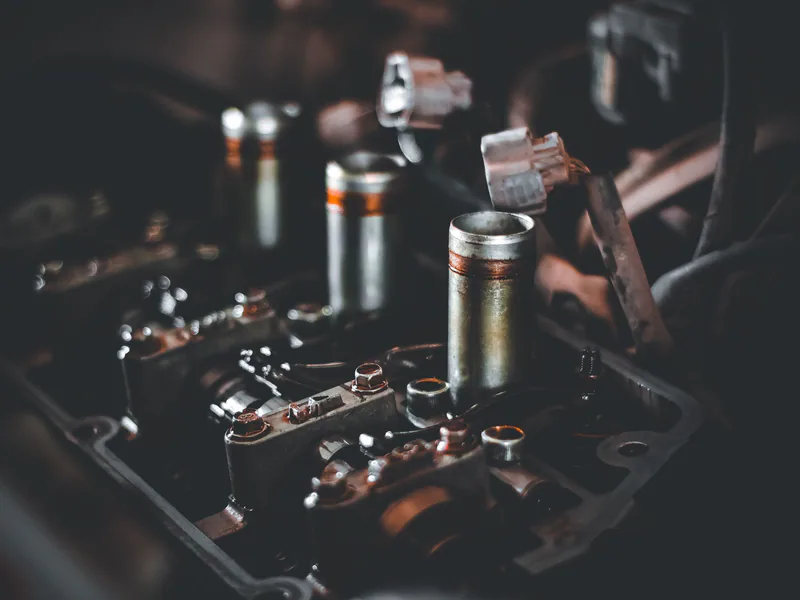
To combat this, the punching modules in our CNC workstations utilize high-carbon Cr12MoV vacuum-hardened steel dies with ultra-tight clearance ratios (specifically calibrated to the combined thickness of the copper and the plating). This ensures a clean, surgical shear that leaves the surrounding plating undisturbed and bonded firmly to the base metal.
How to Optimize Your Plated Busbar Production
If you are struggling with coating damage, high scrap rates, or failing thermal inspections due to compromised busbars, your current machinery is likely the root cause.
We invite engineering teams to review the specifications of our DHAC-BB-H Servo Bending Workstation and consult with us regarding custom non-marring tooling for your specific electrotinning requirements.
Frequently Asked Questions (FAQs)
Is it better to plate busbars before or after CNC processing?
While plating after processing guarantees 100% edge coverage, many high-volume manufacturers prefer pre-plated copper stock for supply chain speed. However, processing pre-plated stock requires specialized CNC machinery with urethane dies to prevent coating damage.
Why does the tin plating flake off during the bending process?
Flaking occurs when the bend radius is too sharp relative to the copper thickness (R < 1T), or when the bending machine operates with high mechanical shock rather than smooth, servo-controlled pressure.
DHAC-BB-H Servo-Hydraulic Busbar Bender
Discover details, parameters, standard dies packages, and factory quotes.