
Why Is Southeast Asia Emerging as the Next Major Busbar Manufacturing and Export Hub?
The Asia-Pacific region commands approximately 45% of the global $232.6 billion power transmission and distribution equipment market in 2026, according to Persistence Market Research, anchored by China’s State Grid investments, India’s ₹3.03 trillion RDSS program, and—increasingly—the rapidly electrifying economies of Southeast Asia. The Asia-Pacific busbar systems market is the largest regional segment globally, per Meticulous Research, driven by “the scale and pace of construction and power infrastructure investment in China, India, Japan, and Southeast Asia”. Within this regional picture, Southeast Asia—Vietnam, Thailand, Indonesia, Malaysia, the Philippines, and Singapore—is experiencing a distinct acceleration that our export data at DH CNC confirms: inquiry volume from Southeast Asian panel builders, switchgear manufacturers, and electrical contractors has grown approximately 180% year-over-year since 2024, outpacing every other region except India. The forces driving this growth are structural, not cyclical—supply chain diversification, domestic grid investment, data center construction, and competitive manufacturing costs—and they point toward Southeast Asia becoming the world’s third major busbar manufacturing cluster alongside China and India within the current decade.
How Is Supply Chain Diversification Reshaping Southeast Asian Busbar Manufacturing?
The trade policy shifts of 2024-2026—particularly the sustained Section 301 tariffs on Chinese-origin electrical equipment entering the US market and the EU’s increasing emphasis on supply chain resilience—have accelerated a relocation of electrical equipment manufacturing capacity from China to Southeast Asia that was already underway. Multinational switchgear and electrical equipment manufacturers who previously served global markets from a single factory in China are now establishing parallel production lines in Vietnam, Thailand, and Malaysia.
This trend has a direct implication for busbar fabrication equipment. When a global switchgear manufacturer opens a new factory in Vietnam’s Bac Ninh province or Thailand’s Eastern Economic Corridor (EEC), that factory needs busbar processing capability—either by importing fabricated busbars (which negates the tariff-avoidance purpose of the relocation) or by installing in-house CNC busbar fabrication equipment. The result is a wave of capital equipment procurement that our factory in Jinan is directly supplying.
Key relocation indicators in 2026:
| Country | Key Industrial Zones | Inward Investment Signal | Busbar Equipment Implication |
|---|---|---|---|
| Vietnam | Bac Ninh, Hai Phong, Dong Nai, Binh Duong | Samsung, LG, Foxconn expanding electrical component manufacturing; $20B+ FDI in 2025 | New busbar fab lines for export-oriented switchgear assembly |
| Thailand | EEC (Chonburi, Rayong, Chachoengsao) | “Thailand 4.0” policy; BYD, Great Wall Motor EV production; data center investments | EV busbar + data center trunking fabrication capacity |
| Malaysia | Penang, Johor, Selangor | Johor data center cluster (30+ projects); established semiconductor ecosystem | Data center busbar trunking; semiconductor equipment busbars |
| Indonesia | Batam, Cikarang, Karawang | PLN grid modernization; new capital city (IKN) electrical infrastructure | Substation and distribution switchgear busbars |
| Philippines | Clark, Subic, Batangas | PEZA-registered electronics manufacturing; 60Hz grid (US-compatible) | 60Hz-configured busbar machines; export-oriented fabrication |
A practical example from our order book: a Korean-owned switchgear manufacturer with existing production in China ordered two DH303-8P multi-function busbar processing machines in Q1 2026—one for their existing China facility and one for a new production line in Bac Ninh, Vietnam. The machines are mechanically identical, run the same Siemens PLC programs, and use interchangeable tooling. The Vietnam machine was configured for the local 50Hz/380V grid, which is the same electrical specification as their China facility—zero engineering change required. This replicability across regional facilities is one reason CNC busbar equipment from established Chinese manufacturers has an advantage in the Southeast Asian market: the machine platform is proven in high-volume Chinese production, and deploying it to a Vietnam or Thailand facility is a configuration exercise, not a development project.
How Much Grid Investment Is Southeast Asia Actually Deploying?
Beyond the supply chain relocation story, Southeast Asian countries are investing in their own domestic electrical infrastructure at levels that create substantial local demand for switchgear and busbar fabrication:
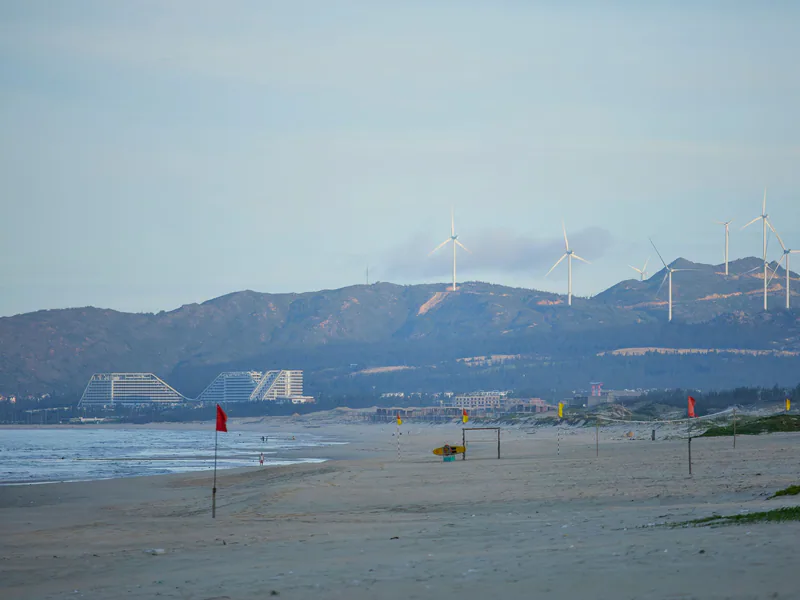
Vietnam. Electricity of Vietnam (EVN) is executing the country’s Power Development Plan 8 (PDP8), which targets approximately $135 billion in power sector investment through 2030, including substantial transmission and distribution network expansion to connect renewable generation (primarily solar in the central highlands and offshore wind in the south) to industrial load centers in the north. Vietnam’s industrial electricity demand has grown at 8-10% annually since 2020, driven by manufacturing FDI.
Thailand. The Power Development Plan 2024-2037 (PDP2024) allocates significant investment to grid modernization, smart grid deployment, and renewable energy integration. Thailand’s EEC industrial zone alone is projected to require several gigawatts of new electrical infrastructure. The country’s 50Hz system at 380-400V industrial voltage is standard for the region.
Indonesia. State utility PLN’s 2021-2030 Electricity Supply Business Plan (RUPTL) targets approximately 40 GW of new generation capacity and associated transmission and distribution infrastructure. Indonesia’s archipelagic geography makes grid interconnection physically challenging and capital-intensive—every island grid requires its own substations and switchgear. The country operates on 50Hz with regional voltage variations (380V in Java-Bali, 400V in some outer islands) that our machine configurations accommodate.
Malaysia. Tenaga Nasional Berhad (TNB) is investing in grid reinforcement to support the country’s rapidly growing data center load, particularly in the Johor-Singapore corridor where over 30 data center projects are in various stages of development. Malaysia’s 50Hz/415V industrial standard matches the broader regional configuration.
| Country | Grid Frequency | Industrial LV Voltage | Key Grid Investment Program | Approximate Investment (2025-2030) |
|---|---|---|---|---|
| Vietnam | 50Hz | 380V | PDP8 | ~$135B (full power sector) |
| Thailand | 50Hz | 380-400V | PDP2024, EEC infrastructure | ~$25B (T&D component) |
| Indonesia | 50Hz | 380-400V (regional variation) | PLN RUPTL 2021-2030 | ~$65B (full power sector) |
| Malaysia | 50Hz | 415V | TNB Grid of the Future | ~$15B (T&D component) |
| Philippines | 60Hz | 440-480V | NGCP transmission expansion | ~$10B (T&D component) |
| Singapore | 50Hz | 400V | EMA grid resilience + data center power | ~$5B (T&D + data center) |
What Regional Trade Advantages Benefit Busbar Equipment Procurement in ASEAN?
The Regional Comprehensive Economic Partnership (RCEP)—the world’s largest free trade agreement, covering China, Japan, South Korea, Australia, New Zealand, and all 10 ASEAN member states—progressively reduces tariffs on industrial machinery traded among member countries. For Chinese-origin CNC busbar machinery imported into ASEAN countries, the tariff implications are:
| Importing Country | MFN Rate (Non-RCEP) | RCEP Preferential Rate (2026) | Duty Savings on $75,000 Machine |
|---|---|---|---|
| Vietnam | 5-8% | 0-3% | $2,250-6,000 |
| Thailand | 5-10% | 0-5% | $3,750-7,500 |
| Indonesia | 5-10% | 0-5% | $3,750-7,500 |
| Malaysia | 5-10% | 0-5% | $3,750-7,500 |
| Philippines | 3-5% | 0-3% | $1,500-3,750 |
These are not trivial savings. On a $75,000 machine, a 5-10 percentage point duty reduction represents $3,750-7,500—which typically covers the ocean freight cost from Chinese ports (Shanghai, Ningbo, Shenzhen) to major ASEAN ports (Ho Chi Minh City, Laem Chabang, Jakarta, Port Klang, Manila) in full. In effect, RCEP eliminates the freight cost penalty for ASEAN customers compared to domestic Chinese buyers.
To claim RCEP preferential rates, the importer must provide a Certificate of Origin (Form RCEP) issued by the Chinese exporting authority. Our shipping documentation team prepares this certificate as a standard part of the export documentation package for ASEAN destinations. The importer’s customs broker files the certificate with the import declaration to claim the preferential rate. The process is well-established and typically adds no more than 1-2 business days to the customs clearance timeline.
What Technical Support Infrastructure Does DH CNC Provide in Southeast Asia?
Beyond shipping the machine, we have invested in regional support infrastructure because we have learned—sometimes the hard way—that a CNC busbar machine in Bac Ninh is only as productive as the technical support that backs it up.
English and regional language HMI. Our Siemens PLC HMI ships with English as standard, with Vietnamese, Thai, and Bahasa Indonesia language options available on request. Error messages, parameter settings, and maintenance reminders display in the operator’s language—eliminating the “what does this alarm mean?” calls that consume disproportionate support resources.
Remote commissioning via 4G industrial router. Every machine includes an industrial 4G router that enables our engineers in Jinan to connect remotely for commissioning support, parameter optimization, and fault diagnosis. We have commissioned machines in Ho Chi Minh City, Bangkok, and Jakarta without an on-site visit—saving $3,000-5,000 in travel costs that would otherwise be added to the machine’s installed cost.
ASEAN spare parts inventory. We maintain a regional spare parts depot in Singapore that stocks the most common consumables—Cr12MoV punching dies in standard sizes, HSS shear blades, bending mandrels, hydraulic seals, and filter elements. Replenishment shipments to ASEAN destinations typically arrive in 3-5 business days via DHL Express, compared to 7-10 days for shipments from China.
Local service partner network. We have established authorized service partnerships with industrial automation firms in Ho Chi Minh City (Vietnam), Bangkok (Thailand), and Jakarta (Indonesia) capable of on-site mechanical adjustment, hydraulic service, and electrical troubleshooting. For customers in the switchgear panel manufacturing segment who are operating production-critical lines, we recommend maintaining a prescribed spare parts kit and scheduling a preventive maintenance visit every 12 months.
What Should Southeast Asian Manufacturers Do to Capture This Regional Opportunity?
Based on what we have observed across multiple emerging manufacturing clusters, the Southeast Asian busbar fabricators who will capture disproportionate market share share three characteristics:
They invest in multi-material capability. The Southeast Asian market is more price-sensitive than North America or Europe, which means aluminum busbars are more prevalent—particularly in low-voltage distribution switchgear. A CNC busbar machine that processes both copper and aluminum with quick-change material parameter libraries gives the fabricator flexibility to quote competitively on both material specifications. Our DH303-8P platform supports this dual-material workflow with dedicated tooling stations and software parameter sets switchable in under two minutes.
They pursue international quality certifications early. As Southeast Asian busbar fabricators move up the value chain from domestic distribution panels to export-oriented switchgear assemblies, customer quality requirements escalate. ISO 9001 is the entry ticket; IATF 16949 (for automotive) and IEC 61439 compliance documentation (for switchgear) are the differentiators. A fabricator who begins the certification process now will be qualified to bid on export contracts that competitors without certification cannot touch.
They build copper and aluminum supply relationships beyond China. While China remains the dominant supplier of copper and aluminum semi-finished products to Southeast Asia, regional alternatives are developing. Vietnam has domestic aluminum smelting capacity. Malaysia and Indonesia produce refined copper. Thailand has a well-developed metal service center industry. Diversifying raw material sources reduces exposure to China-specific supply disruptions and, in some cases, offers logistics cost advantages for intra-ASEAN sourcing.
For manufacturers evaluating equipment for custom switchgear solutions or substation busbar fabrication, our application engineering team provides configuration proposals matched to your specific grid parameters, material requirements, and production volumes. We also recommend reviewing our guide on specifying 60Hz-ready CNC busbar machines for Latin America—the Philippines market requires the same 60Hz motor configuration covered in that article.
Frequently Asked Questions (FAQs)
Why is Southeast Asia becoming a major busbar manufacturing hub in 2026?
Four structural forces are converging: (1) Supply chain diversification away from China—multinational electrical equipment manufacturers are establishing parallel production capacity in Vietnam, Thailand, and Malaysia to reduce geographic concentration risk; (2) Domestic grid investment—Indonesia's PLN, Vietnam's EVN, and Thailand's EGAT are executing multi-billion-dollar transmission and distribution expansion programs; (3) Data center boom—Singapore, Malaysia (Johor), and Thailand are attracting hyperscale data center investments that require substantial busbar trunking and switchgear fabrication; (4) Competitive manufacturing costs—Southeast Asian industrial wages remain 40-60% below Chinese coastal manufacturing rates, while free trade agreements (RCEP, ASEAN FTA network) provide preferential market access to Japan, Korea, Australia, and China. The Asia-Pacific busbar systems market dominates globally with the largest regional share in 2026, per Meticulous Research.
What grid voltage and frequency specifications apply to busbar machines for Southeast Asian markets?
Southeast Asia uses a mix of 50Hz and 60Hz systems: Vietnam, Thailand, Indonesia, Malaysia, Singapore, Cambodia, Laos, and Myanmar operate on 50Hz at 380-400V phase-to-phase for industrial low voltage; the Philippines operates on 60Hz at 440-480V. Most of the region shares the 50Hz standard with China and Europe, which means standard 50Hz motor and VFD configurations work without modification. The Philippines (60Hz) requires dedicated motor windings similar to our North American configuration. Our machines ship with multi-tap control transformers that accommodate the 380V-to-440V variation across the region, and we configure VFD parameters for the specific country's nominal voltage during pre-shipment testing.
How does the RCEP trade agreement affect busbar equipment procurement in Southeast Asia?
The Regional Comprehensive Economic Partnership (RCEP), which entered into force for most ASEAN members in 2022-2023, progressively reduces tariffs on industrial machinery traded among member countries—including China, Japan, South Korea, Australia, New Zealand, and all 10 ASEAN states. For Chinese-origin CNC busbar machinery imported into ASEAN countries, the applicable tariff rate under RCEP is typically 0-5%, compared to MFN rates of 5-10% for non-RCEP origin equipment. This creates a meaningful cost advantage for Chinese busbar processing equipment in Southeast Asian markets—the tariff differential of 5-10 percentage points on a $75,000 machine represents $3,750-7,500 in duty savings, which often covers the ocean freight cost from China to Southeast Asian ports.
DH303-8P 3-in-1 CNC Busbar Processing Machine
Discover details, parameters, standard dies packages, and factory quotes.