
Copper vs. Aluminum Busbars: Conductivity, Joints and Machining
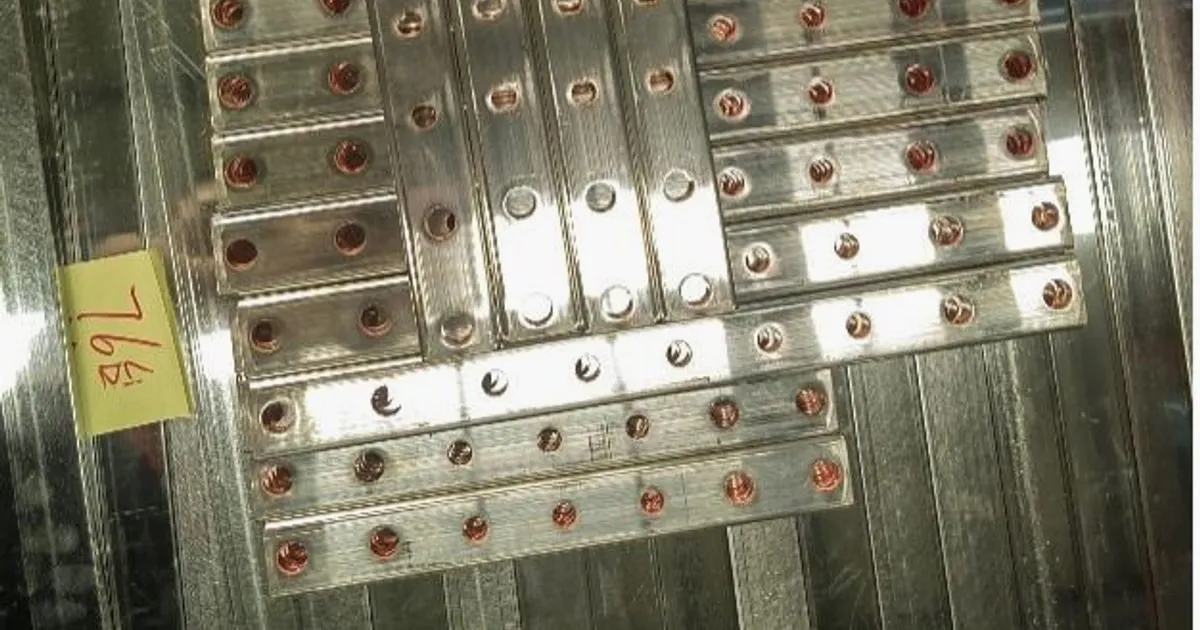
Changing from copper to aluminum is a busbar-system redesign, not simply a cheaper material on the same cutting list. A larger aluminum section may reduce conductor mass while changing the enclosure space, terminal interface, supports, handling and tooling needed to manufacture it.
This guide connects the material decision to the shop-floor specification. It is not an ampacity table or an electrical design approval. DH CNC supplies fabrication equipment; the machine’s ability to process a bar does not establish the current rating or compliance of the finished assembly.
Compare specified grades, not just metal names
Obtain the material designation, temper, dimensions, conductivity requirement and surface condition for both options. Do not assign one conductivity, strength or minimum bend radius to all copper grades or all aluminum alloys. Supplier certificates and the controlled drawing should identify the actual material.
| Decision factor | Copper option | Aluminum option |
|---|---|---|
| Conductivity and envelope | Higher-conductivity grades can support a compact conductor layout | A larger section may be needed for a comparable resistance target |
| Weight and handling | Check actual part mass, supports and lifting method | Lower density can reduce mass, but calculate it using the revised section |
| Mechanical performance | Verify grade, temper, support spacing and fault-load design | Repeat those checks; equal resistance does not mean equal stiffness or strength |
| Joints and surface | Specify contact finish and compatible termination | Define oxide control, compatible termination and any dissimilar-metal transition |
| Forming | Qualify radius, orientation and springback for the supplied temper | Qualify separately; do not inherit the copper bending recipe |
| Cost | Include material, fabrication, joints, losses and service | Compare the same complete scope, including any redesign or larger enclosure |
The guide Copper for Busbars, revised May 2014 distinguishes conductivity, mechanical properties and assembly design. Use it for engineering background, not as a substitute for current project requirements.
Equal resistance is not equal ampacity
For a uniform conductor at a defined temperature, the basic DC relationship is:
R = L / (σ × A)
Here, R is resistance, L is length, σ is electrical conductivity and A is cross-sectional area. Use consistent units: ohms, metres, siemens per metre and square metres.
At equal length and temperature, equal DC resistance requires:
A_Al = A_Cu × σ_Cu / σ_Al
There is no square root in this area ratio. For an illustrative comparison using copper at 100% IACS and aluminum at 61% IACS, the ratio is 100/61, approximately 1.64. A 100 mm² copper section would correspond to about 164 mm² of aluminum for this resistance comparison only.
The IACS reference conductivity is 58 MS/m at 20°C. Actual grade and temper data must replace the illustrative assumptions. Do not infer the conductivity of 6060, 6101 or another alloy from the generic word “aluminum.”
The calculation does not specify a permissible current. Cooling surface, bar orientation, spacing, enclosure ventilation, ambient temperature, AC skin and proximity effects, joints and permitted temperatures all matter. Do not turn the area ratio into a universal ampacity multiplier or apply a single temperature-rise limit to every assembly.
Keep thermal movement and joint design in the material decision
The bar, fasteners, supports and adjoining equipment can expand differently during temperature cycles. The joint design must retain the required contact condition without unacceptable stress, creep or relaxation. That cannot be established by a material price comparison.
For each termination, specify:
- the materials and finishes on both contact faces;
- the connector or transition system and its intended application;
- the approved surface-preparation and assembly method;
- fasteners, washers, tightening method and acceptance record;
- allowance for thermal movement and support loads;
- inspection and maintenance requirements.
A copper-to-aluminum interface needs a suitable connection design for its environment. A bimetallic transition or compatible connector may form part of that design. Generic tin-plating thickness or adding a spring washer alone is not proof of long-term compatibility. Follow the specified joint system rather than inventing a universal remedy.
Requalify punching and shearing
The required force depends on the actual material resistance, thickness and cutting perimeter—not on density alone. Both material families can be processed on suitable busbar equipment, but tooling and machine limits still apply.
For the first trial, record:
- grade, temper, thickness, width and material lot;
- punch/die identification and clearance, including whether the value is per side or total;
- lubrication and compatibility with later cleaning, plating or insulation;
- hole size, position, cut length and edge squareness;
- burr, rollover, tearing, material pickup and tool condition;
- support and unloading arrangements for the actual bar length and mass.
Do not widen or narrow die clearance by a universal percentage when changing metals. Obtain a tooling recommendation and confirm the result on samples. Inspect aluminum pickup and galling where present; also inspect copper edges and surface marking rather than assuming one metal always cuts cleanly.
Use the DHCNC-BP-60 punching and shearing page to define the proposed machine scope, and the tooling package guide to specify the dies and replacement parts.
Establish a separate bending recipe
Springback is affected by strength, elastic properties, thickness, radius, orientation and the bending method. Lower elastic modulus alone is not enough to rank every copper and aluminum grade. Neither a universal minimum radius nor one compensation angle is suitable for every temper.
For each material and section, confirm the permitted inside radius with the material and tooling specifications. Run representative bends, inspect the outer surface and measure angle, bend location, twist and nearby features after unloading. Record the compensation recipe and repeat the first-off check after a relevant material or setup change.
A CNC or servo-controlled machine can repeat a commanded movement; it does not remove material variation. Match the DHAC-BB-H bending configuration to the actual part geometry and use the springback reference for the setup and measurement workflow.
Release the material change with a complete acceptance package
Before buying equipment or releasing a replacement material to production, connect these records:
- the revised electrical and mechanical design, including the relevant verification;
- the specified material and supplier certificate requirements;
- the joint, surface-treatment and insulation requirements;
- the drawing revision, tools and qualified processing recipes;
- measured sample results and the agreed production acceptance limits;
- the updated bill of materials, handling plan, inspection records and cost comparison.
A DH303-8P three-station workstation may suit mixed-material production when its tooling and capacities match the parts. Separate punching/shearing and bending machines may better fit a different routing or bottleneck. Use the machine selection guide for that equipment decision.
Keep material selection and machine acceptance connected but distinct. Lower conductor mass does not establish lower installed cost, and accurate fabrication does not by itself validate electrical performance.
Frequently Asked Questions (FAQs)
Can I replace a copper busbar with aluminum of the same dimensions?
Not as a direct material substitution. Conductivity, temperature rise, joint design, mechanical strength, thermal expansion and fabrication behavior must be checked for the complete assembly. The same width and thickness do not establish an equivalent current rating.
Does a 1.64-times larger aluminum cross-section guarantee equal ampacity?
No. That approximate ratio can describe equal DC resistance at equal length and temperature for specified conductivity assumptions. Ampacity also depends on heat dissipation, geometry, enclosure, AC effects, joints and the applicable design limits.
Can copper and aluminum use the same punching and bending setup?
A machine may process both, but the actual grades, tempers and sections need separate verification. Confirm cutting force, punch/die clearance, lubrication, bend radius, compensation and surface condition with the tool supplier and representative sample parts. Do not copy settings based only on the metal name.
DH303-8P 3-in-1 CNC Busbar Processing Machine
Discover details, parameters, standard dies packages, and factory quotes.