Understanding CNC Busbar Machine Pricing: 10 Key Factors
Sourcing Summary
Sourcing industrial CNC busbar processing machinery represents a capital-intensive, long-cycle investment for switchgear manufacturers, power grid panel builders, and transformer assembly plants. When auditing quotes from machinery manufacturers, procurement managers often struggle to reconcile massive pricing discrepancies—where machines with seemingly identical specifications vary by thousands of dollars.
In the heavy machinery export sector, lower-cost configurations almost always mask structural shortcuts, including lightweight welded sheet-steel frames, repurposed agricultural-grade hydraulic valves, and generic PLCs. Understanding the true drivers of CNC busbar machine pricing is crucial to secure long-term operational reliability and prevent costly downtime.
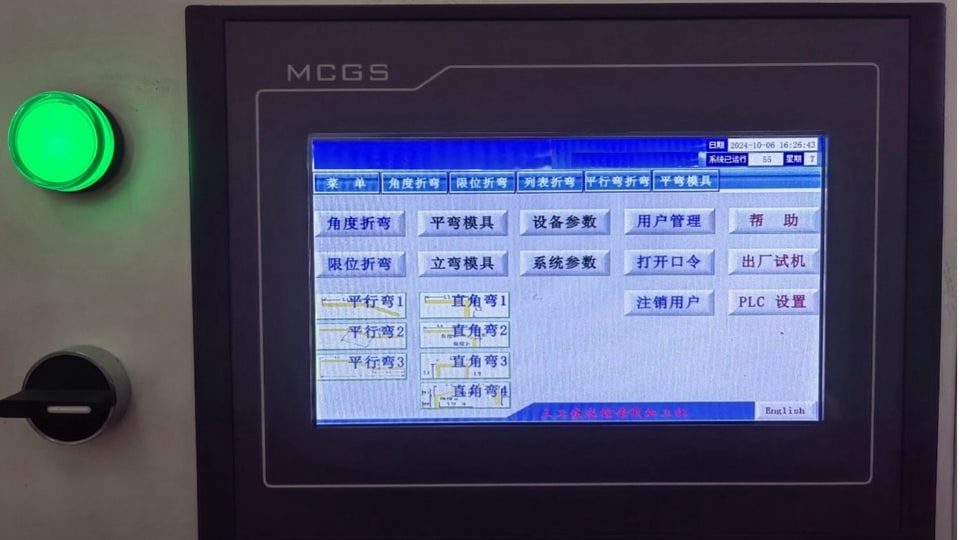
Here is a technical analysis of the 10 primary factors that dictate the pricing structure of professional B2B busbar machines.
1. Monoblock Cast-Iron Frames vs. Welded Sheet-Steel Plates
The core structural skeleton of the machine is the most significant pricing differentiator. Cheaper competitor machines utilize welded structural steel plates that are prone to mechanical deflection under continuous tonnage peaks.
Professional workstations (such as our DHCNC-BP-60 Punching & Shearing Center) are cast from heavy-duty, dense ductile iron on a single monoblock frame. This monoblock construction undergoes thermal stress-relieving processes to eliminate micro-cracks. It ensures absolute geometry lock, meaning the alignment of the punching turret and the shearing blades never shifts during ocean transit or 24/7 high-impact strikes.
2. Shared Pump Single-Drives vs. Independent Triple-Pumps
In multi-function 3-in-1 busbar machinery, hydraulic circuit architecture governs performance:
- Single-Pump Systems (Low Price): A single hydraulic motor and pump are shared across the punching, bending, and shearing stations via selector valves. If two operators attempt to work simultaneously, pressure drops drastically, causing cylinder stalling and motor overheating.
- Three-Pump Independent Systems (Premium B2B Standard): Machines like our DH303-8P Multi-Function Workstation integrate three separate 31.5 MPa hydraulic pumps and three custom-wound electric motors. This allows three operators to blank, punch, and form copper busbars concurrently with zero pressure drop, doubling plant throughput.
3. Proportional Solenoid Valves vs. Conventional Valves
The feedback mechanism of the hydraulic system directly determines bending angular precision and coordinate punching repeatability:
- Proportional Hydraulics: Proportional flow control valves modulate fluid volume dynamically based on digital PLC feedback. This is essential to achieve a ±0.2° bending repeatability on servo-hydraulic benders like the DHAC-BB-H Servo-Hydraulic Bending Machine.
- Solenoid On/Off Valves: Cheaper machines use binary on/off solenoids, which cause harsh hydraulic shock, seal degradation, and angular variances up to ±1.5° due to oil temperature fluctuations.
4. CNC Controller & Industrial HMI Systems
The brain of a modern CNC busbar processor represents a significant portion of its build cost. Low-end suppliers install generic microcontrollers running basic firmware that requires operators to manually calculate trigonometric blanking lengths.
Premium configurations feature high-performance industrial PCs (typically Siemens or proprietary industrial HMIs) that accept direct vector inputs (STEP and DXF files). These systems run complex mathematical algorithms, such as integrated 3D nesting software, which automatically optimize copper bar yields.
5. Tooling Metallurgy: Cr12MoV vs. Budget Alloys
The lifespan of punching dies, bending mandrels, and shearing blades dictates ongoing operating expenses:
- Cr12MoV Tool Steel: Professional dies are machined from high-carbon, high-chromium Cr12MoV tool steel, vacuum-hardened to HRC 58-62. This metallurgy withstands over 100,000 punching strikes on high-conductivity T2 copper before requiring resharpening.
- Budget Alloys: Cheap machines ship with standard carbon steel dies that dull quickly, producing significant burrs that violate IEC 61439-1 electrical clearance standards.
6. Guide Rails and Linear Positioning Coordinates
High-speed coordinate punching requires rigid, heavy-duty linear motion systems. Premium CNC punching workstations utilize dual-axis linear ball guides (such as HIWIN or equivalent class) and high-lead ball screws driven by closed-loop AC servo motors. These systems achieve coordinates positioning accuracies of ±0.15mm across a 6-meter copper bar. Cheaper platforms substitute open-loop stepper motors and friction slides, which lose position over time due to hydraulic dust and oil residue.
7. Local Grid Pre-Calibration & Motor Standards
Operating a machine with mismatched power grid frequencies causes premature motor burnout and pump failure. Cheap suppliers ship generic 50Hz motors to 60Hz regions (like Mexico and Central America) without modifications, which causes the pump to run 20% faster, leading to fluid overheating and cavitation. Custom-wound motors matched to local industrial grids (220V/60Hz, 440V/60Hz, or 380V/50Hz) represent a critical engineering compliance cost that direct B2B manufacturers configure prior to shipping.
8. Export Seaports Packaging & Vacuum Protection
Heavy hydraulic machinery is highly susceptible to sea-salt corrosion during ocean transit:
- Standard Packaging: Simple plastic wrapping on a basic wooden pallet. Salt air penetrates easily, causing hydraulic cylinder scoring and rusted linear rails upon arrival.
- Industrial Seaworthy Packaging: Complete moisture barrier vacuum wrapping, silica gel desiccant packs, and heavy steel-frame fumigation-free export crates. This high-standard protection is essential to preserve the calibration of the machine.
9. Safety Enclosures and Compliance Certification
Under international machinery safety standards and rigorous ISO 9001:2015 B2B protocols, machines must feature:
- Dual-loop safety foot switches.
- Polycarbonate physical punch guards.
- Low-voltage control circuits (24V DC).
- Physical emergency stop loops. Bypassing these safety guidelines decreases supplier costs but exposes buyers to severe workplace safety risks and regulatory non-compliance.
10. Remote Maintenance Gateways & Technical Support
Modern B2B machinery sourcing must account for ongoing software updates and remote diagnostics. Integrated PLC gateways allow factory engineers in China to access error logs, update software, and recalibrate proportional valves remotely via securely encrypted cloud connections. Standard manual machines lack this digital infrastructure, leaving buyers stranded during technical setbacks.
Cost vs. Value Sourcing Matrix
| Metric | Budget Machine ($3,000 - $6,000) | Professional B2B Workstation ($8,000 - $25,000+) |
|---|---|---|
| Frame Type | Welded Steel Plates (high flex) | Monoblock Cast-Iron (zero flex) |
| Hydraulics | Single Shared Pump (stalls) | Three Independent Pumps (simultaneous work) |
| Bending Accuracy | ±1.5° (Manual corrections needed) | ±0.2° (Closed-loop auto-compensation) |
| Nesting Software | Manual input (12-15% copper scrap) | Dynamic 3D Import (under 3% copper scrap) |
| Support Warranty | Parts-only, no remote gateway | 12-Month full warranty + remote diagnostics |
When planning your plant expansion, we highly encourage engineering procurement managers to request a custom tooling engineering evaluation to review CAD drawings and specify the correct grid parameters before committing to a machine model.
Standards and Citations
- IEC 60204-1 - Safety of machinery; electrical equipment of machines.
- ISO 12100 - Safety of machinery; general principles for design.
- GB/T 19001-2016 - Quality management systems requirements (China ISO equivalent).
Frequently Asked Questions (FAQs)
Why do monoblock cast-iron frame machines carry a pricing premium compared to split-body plates?
A monoblock cast-iron structure is poured as a single continuous bed and stress-relieved via industrial thermal cycles. This ensures that the punching, bending, and shearing centers never lose alignment during transit or high-frequency shearing operations, saving $3,000–$5,000 in on-site calibration fees.
How does the DH303-8P hydraulic motor configuration prevent voltage drop downtime?
Unlike cheaper multi-function processors that use a single shared pump, the DH303-8P utilizes three independent 31.5 MPa hydraulic pumps and motors, allowing three operators to punch, shear, and bend simultaneously without pressure fluctuations or electrical overload.
DH303-8P 3-in-1 CNC Busbar Processing Machine
Discover details, parameters, standard dies packages, and factory quotes.