
EV Busbar Fabrication: Bending, Punching and Acceptance Checks
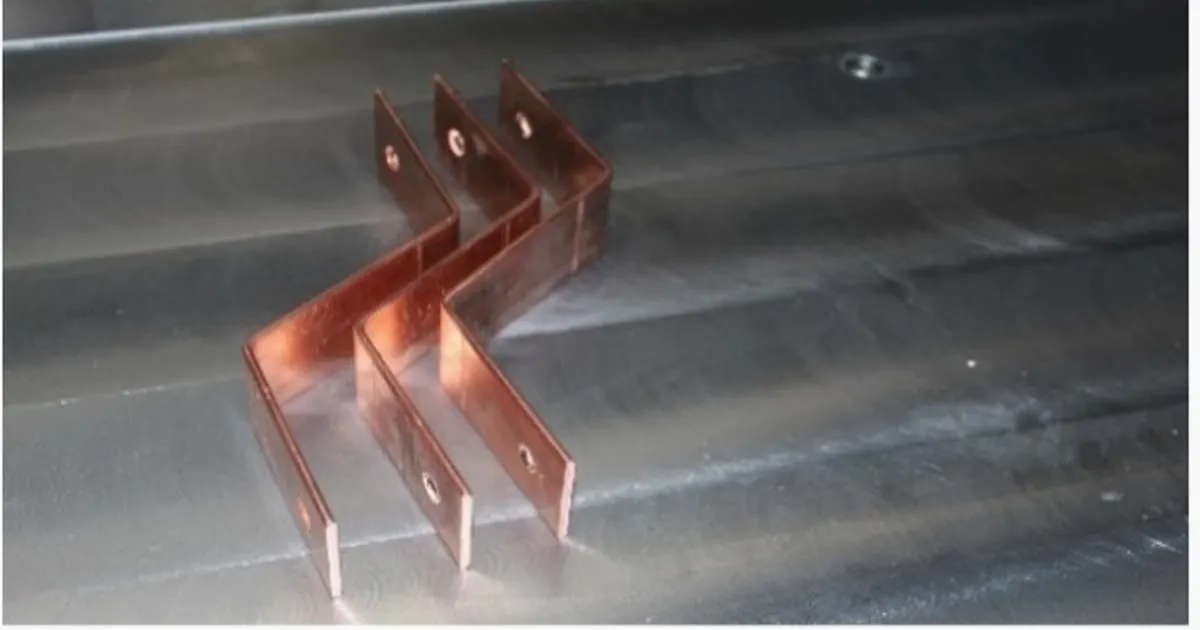
Rigid copper and aluminum conductors can reduce packaging volume and create repeatable connection points inside an EV power-distribution assembly. The fabrication problem is not solved by a machine label or voltage class alone. Buyers need a controlled link between the approved part drawing, material condition, tooling, process settings and inspection record.
Start With the Approved Busbar Drawing
For equipment selection, provide a representative drawing set rather than a nominal voltage alone. The review should identify material grade and temper, thickness and width range, bend radii, hole and slot geometry, datum scheme, surface or insulation protection, inspection method and expected part mix. Safety clearances and electrical performance belong to the vehicle or pack design authority; the fabrication supplier should not infer them from generic examples.
Fabrication Risks to Include in a Trial
The trial should use buyer-approved material and tooling that represents the production process. Record measured results instead of relying on broad claims about accuracy or surface quality.
| Fabrication Challenge | Impact on EV Performance | CNC Machining Solution |
|---|---|---|
| Tight packaging envelope | A part may interfere with adjacent components or fixtures. | Inspect datums, bend locations and overall envelope on a representative part. |
| Material springback | Angle and leg length can change with alloy, temper, thickness and grain direction. | Establish compensation values by material lot and verify them during setup. |
| Hole and edge quality | Burrs or distortion can affect assembly and contact preparation. | Agree the allowable burr, edge condition and inspection method before FAT. |
| Coating or insulation damage | Tool contact and small radii can mark a finished surface. | Trial the actual surface system and approve contact areas, radii and protective tooling. |
[!WARNING] Acceptance limits must come from the buyer’s controlled drawing, specification and quality plan. A machine demonstration is not a substitute for product-level electrical, environmental or safety validation. See the available EV busbar manufacturing solution and request a trial against your own parts.
Control Bending Without Overstating the Result
During bending, the outside of the bend is placed in tension and the inside in compression. A suitable tooling radius and controlled stroke can make the process more repeatable, but they do not by themselves prove fatigue life, conductivity or safety. For the DHAC-BB-H bending machine, confirm capacity with the actual material, cross-section, bend orientation and minimum flange geometry, then measure sample parts using the agreed datums.
Build the FAT Around Measurable Parts
An equipment FAT should state the sample material, drawing revision, tooling identification, program revision, measurement equipment and acceptance limits. Useful checks may include hole position, bend angle, leg length, overall envelope, visible surface damage and cycle observations. The buyer remains responsible for deciding which product standards, validation tests and traceability records apply to the final EV assembly.
Before requesting a quotation, send a small representative drawing set and identify which characteristics are critical to assembly. That gives the supplier a defensible basis for tooling selection and turns the demonstration into evidence instead of a generic sales video.
Frequently Asked Questions (FAQs)
Why are precision EV busbars critical for 800V automotive architectures?
The approved part drawing controls conductor geometry, clearance, mounting alignment and interface dimensions. Fabrication capability should be verified against those tolerances with representative material and an agreed inspection plan; voltage alone does not define the machine requirement.
How does CNC busbar bending improve EV battery pack manufacturing?
A controlled bending process can store repeatable programs and compensation values, but the result still depends on alloy, temper, thickness, bend direction, tooling radius and inspection method. Approve the process with sample parts before production release.
DHAC-BB-H Servo-Hydraulic Busbar Bender
Discover details, parameters, standard dies packages, and factory quotes.